 Back
BackHomologous Recombination Repair and Transposable Elements: Mechanisms and Genetic Impact
Study Guide - Smart Notes
 Tailored notes based on your materials, expanded with key definitions, examples, and context.
Homologous Recombination Repair (HRR)
Mechanism of Homologous Recombination Repair
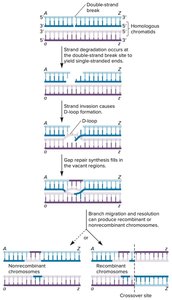
Homologous recombination repair (HRR) is a critical pathway for repairing double-strand breaks (DSBs) in DNA, ensuring genomic stability. This process utilizes a homologous DNA sequence, typically a sister chromatid, as a template for accurate repair.
Double-strand break: Both DNA strands are severed, creating a DSB.
End resection: The broken ends are processed to generate single-stranded 3' overhangs.
Strand invasion: The single-stranded DNA invades a homologous region on the sister chromatid, forming a displacement loop (D-loop).
DNA synthesis: DNA polymerase extends the invading strand using the homologous template.
Resolution: The resulting Holliday junctions are resolved, leading to either crossover or non-crossover products.
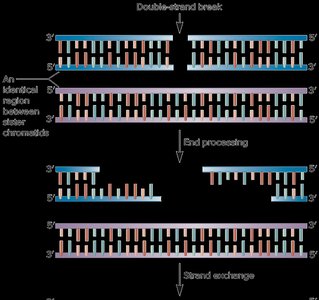
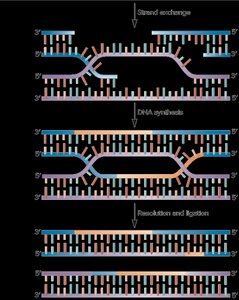
Example: HRR is essential during the S and G2 phases of the cell cycle when sister chromatids are available.
Synthesis-Dependent Strand Annealing (SDSA)
SDSA is a sub-pathway of HRR that results in non-crossover repair. After strand invasion and DNA synthesis, the newly synthesized strand dissociates and anneals to the other processed end, avoiding the formation of stable Holliday junctions.
Strand displacement and annealing: The newly synthesized strand returns to its original DNA molecule.
Non-crossover outcome: No exchange of chromosome arms occurs.
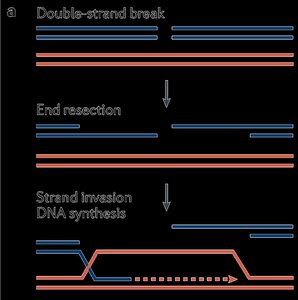
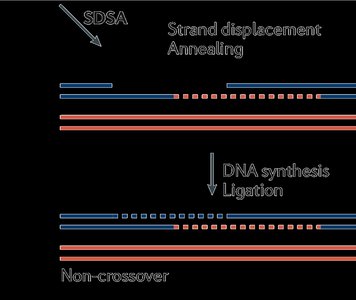
Double-Strand Break Repair (DSBR) and Holliday Junctions
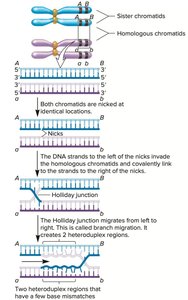
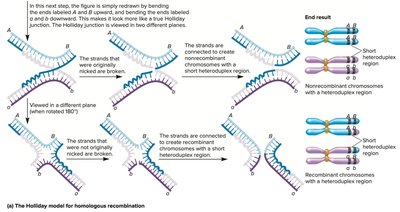
DSBR involves the formation of two Holliday junctions, which are cross-shaped DNA structures. The resolution of these junctions determines whether crossover or non-crossover products are formed.
Holliday junction: A four-stranded DNA structure formed during strand exchange.
Branch migration: The junction can move along the DNA, extending the region of heteroduplex.
Resolution: Enzymatic cleavage of the junctions produces either recombinant (crossover) or non-recombinant (non-crossover) chromosomes.
Transposable Elements (TEs)
Definition and Significance
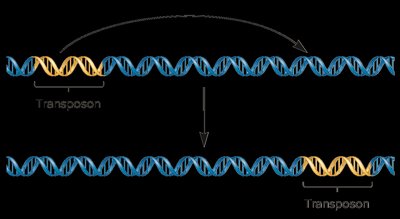
Transposable elements (TEs) are DNA sequences capable of moving within and between chromosomes. They are found in all organisms and constitute a significant portion of many genomes, including humans.
Mutagenic potential: TEs can disrupt gene function by inserting into coding or regulatory regions.
Chromosomal rearrangements: TE activity can cause inversions, translocations, and double-strand breaks.
Evolutionary impact: TEs provide raw material for genetic variation and adaptation.
Categories of Transposable Elements
TEs are classified into two main categories based on their mechanism of movement:
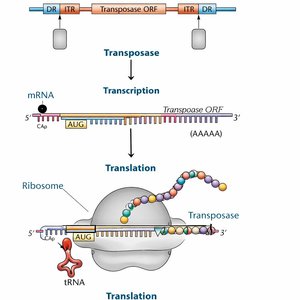
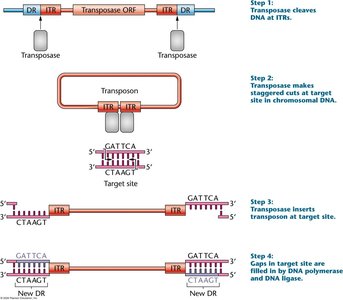
DNA Transposons (Class II): Move directly as DNA via a "cut-and-paste" mechanism, mediated by the enzyme transposase.
Retrotransposons (Class I): Move via an RNA intermediate using "copy-and-paste" mechanism, increasing their copy number through reverse transcription.
DNA Transposons: Structure and Mechanism
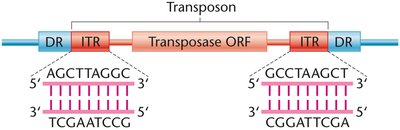
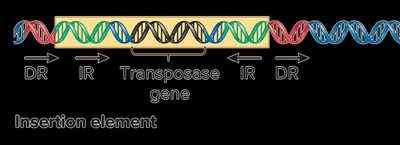
DNA transposons contain an open reading frame (ORF) encoding transposase and are flanked by inverted terminal repeats (ITRs). Upon excision, they leave behind direct repeats (DRs) at the insertion site.
Autonomous elements: Encode their own transposase and can move independently.
Non-autonomous elements: Lack transposase and rely on autonomous elements for movement.
Retrotransposons: Structure and Mechanism
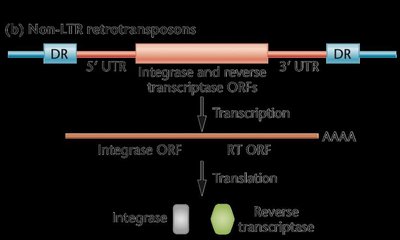
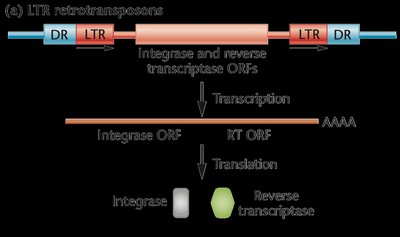
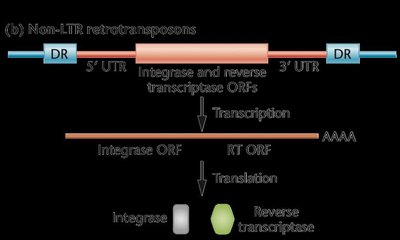
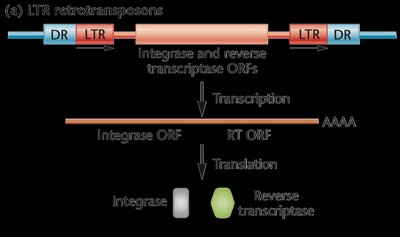
Retrotransposons move via an RNA intermediate and are classified as LTR (long terminal repeat) or non-LTR elements. They encode reverse transcriptase and integrase, facilitating their integration into the genome.
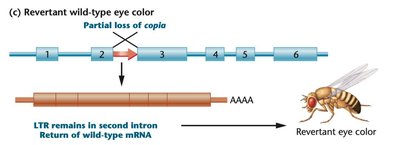
LTR retrotransposons: Contain LTRs similar to retroviruses.
Non-LTR retrotransposons: Include LINEs (autonomous) and SINEs (non-autonomous).
Impact of Transposable Elements on Genes and Genomes
TE insertions can cause mutations, alter gene expression, and promote chromosomal rearrangements. They are a major source of genetic diversity and have been repurposed for genetic engineering applications.
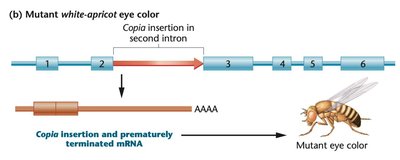
Gene disruption: Insertion into coding regions may cause frameshifts or premature stop codons.
Regulatory effects: Insertion into promoters or enhancers can alter gene expression.
Evolutionary adaptation: TE-derived sequences may be co-opted for beneficial functions.
Examples of TE-Induced Mutations
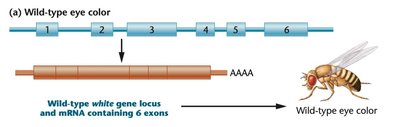
TEs are responsible for a variety of mutations in different organisms. For example, the insertion of a LINE-1 element into the F8 gene causes hemophilia in humans, while copia elements in Drosophila affect eye color.
Summary Table: Types of Transposable Elements
Category | TE Element | Example | Organism |
|---|---|---|---|
LTR, autonomous | Ty1-copia group | copia | Plants, animals, algae |
LTR, non-autonomous | Large retrotransposon derivatives (LARDS) | Dasheng | Plants |
Non-LTR, autonomous | LINE elements | L1 | Humans, other organisms |
Non-LTR, non-autonomous | SINE elements | Alu | Humans, other organisms |
Conclusion
Homologous recombination repair and transposable elements are fundamental to understanding genetic stability, mutation, and evolution. Their mechanisms and impacts are central topics in genetics, with broad implications for genome engineering and disease research.
