 Back
BackHuman Genome and Human Genetic Variation: Applications in Medicine, Forensics, and Evolution
Study Guide - Smart Notes
 Tailored notes based on your materials, expanded with key definitions, examples, and context.
Human Genome and Human Genetic Variation
Introduction to Human Genetic Variation
Human genetic variation refers to the differences in DNA sequences among individuals. These variations are the foundation for understanding heredity, disease susceptibility, forensics, and human evolution. The sequencing of the human genome has enabled scientists to explore these variations in detail, leading to advances in medicine, ancestry tracing, and evolutionary biology.
Applications of Personal Genetic Information:
Mapping human disease genes
Determining susceptibility to diseases
Forensics and identity testing
Understanding human evolution
Tracing migration and ancestry
The Human Genome Project and Advances in Sequencing
The first human genome was sequenced in 2003, taking 13 years and costing $3 billion. Since then, technological advances have dramatically reduced the cost and time required for sequencing, enabling large-scale studies of genetic variation across diverse populations.
Current Efforts:
Sequencing genomes from different ethnic groups
Cataloging genetic variants associated with diseases and traits
Genome-Wide Association Studies (GWAS)
Principles of GWAS
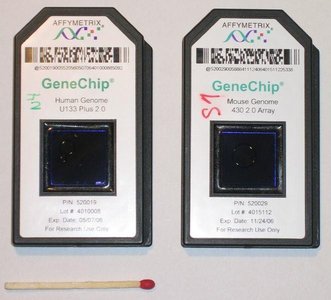
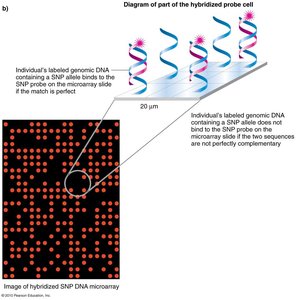
GWAS are studies that scan the genomes of many individuals to find genetic markers (usually SNPs) associated with specific diseases or traits. These studies use high-throughput technologies such as SNP chips to analyze hundreds of thousands of genetic variants simultaneously.
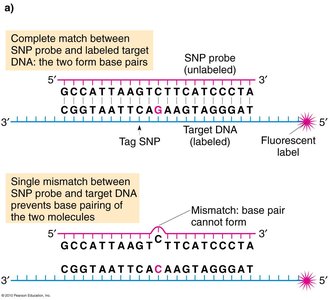
SNP (Single Nucleotide Polymorphism): A single base pair change in the DNA sequence that is common in the population.
GWAS Process:
Collect DNA from thousands of individuals with and without a disease.
Analyze SNPs using SNP chips.
Identify SNPs statistically associated with the disease.
Interpretation: SNPs identified may not cause the disease but can indicate increased risk (polygenic risk score).
Applications of GWAS
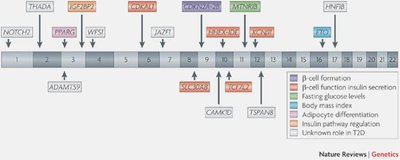
Identification of genetic risk factors for complex diseases (e.g., heart disease, diabetes, cancer).
Calculation of polygenic risk scores for disease prediction.
Pharmacogenomics
Genetic Variation and Drug Response
Pharmacogenomics studies how genetic variation affects individual responses to drugs. Identifying SNPs that influence drug metabolism can help physicians prescribe medications more effectively and safely.
Example: The enzyme CYP2D6 metabolizes codeine into morphine. Genetic variants can abolish or enhance enzyme activity, affecting drug efficacy and safety.
Direct-to-Consumer Genetic Testing
Opportunities and Limitations
Direct-to-consumer (DTC) genetic testing services provide individuals with information about their ancestry, disease risk, and traits. However, interpretation of results requires caution, as most doctors may not be fully trained in genetics, and environmental factors also play a significant role in phenotype.
Key Point: DNA is not destiny; phenotype results from genetics, epigenetics, lifestyle, and environment.
Human Genetic Variation in Forensics
STR Analysis and Individual Identification
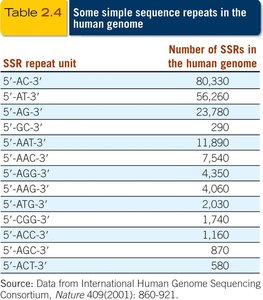
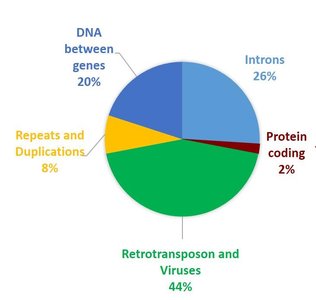
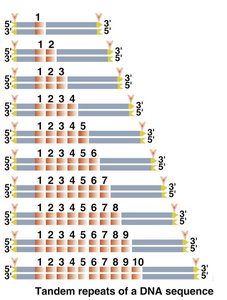
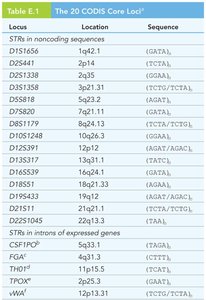
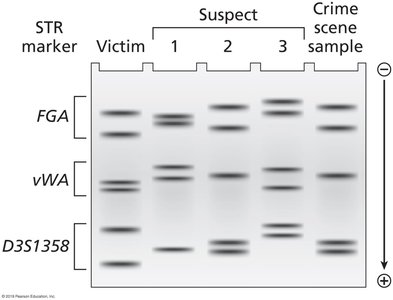
Short Tandem Repeats (STRs) are highly polymorphic regions in the genome used for individual identification in forensic science. The FBI uses a set of 20 STR loci to genotype individuals and match crime scene samples.
STR (Simple Tandem Repeat): A DNA region where a short sequence is repeated multiple times. Highly variable among individuals.
Applications:
Crime scene investigation
Paternity testing
Identification of disaster victims
Polymerase Chain Reaction (PCR) in Forensics
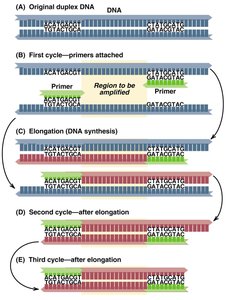
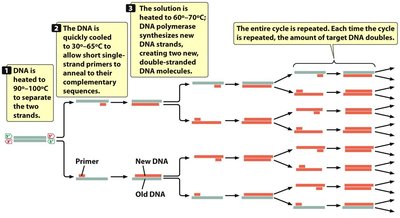
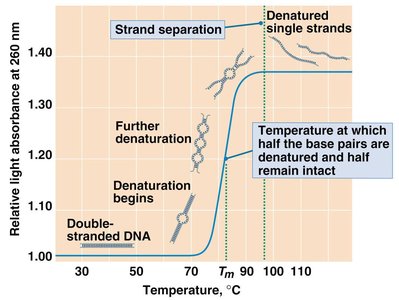
PCR is used to amplify STR regions from small DNA samples, enabling analysis even from trace evidence. The process involves repeated cycles of DNA denaturation, primer annealing, and extension by a thermostable DNA polymerase (Taq polymerase).
Steps of PCR:
Denaturation (95°C): DNA strands separate.
Annealing (50–60°C): Primers bind to target sequences.
Extension (72°C): Taq polymerase synthesizes new DNA strands.


STR Genotyping and Probability Calculations
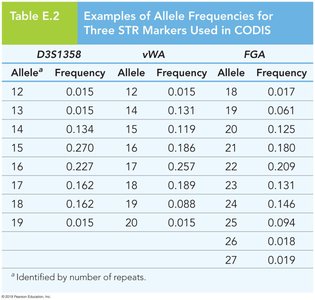
STR profiles are compared between crime scene samples and suspects. The probability of a random match is calculated by multiplying the frequencies of each allele in the population, resulting in extremely low probabilities for coincidental matches.
Human Genetic Variation in Paternity and Identity Testing
Paternity Testing
Paternity is established by comparing STR alleles between the child, mother, and potential fathers. At each locus, the child inherits one allele from each parent, allowing exclusion or inclusion of possible fathers.
Human Genetic Variation in Evolution and Ancestry
Mitochondrial DNA (mtDNA) and Maternal Lineage
Mitochondria contain their own small, circular DNA genome, inherited exclusively from the mother. mtDNA does not undergo recombination, making it a powerful tool for tracing maternal ancestry and studying human evolution.
Uniparental Inheritance: Only mothers pass on mtDNA to offspring.
Mitochondrial Eve: The most recent common ancestor of all human mtDNA, estimated to have lived about 200,000 years ago.
Y Chromosome and Paternal Lineage
The Y chromosome is inherited from father to son and does not recombine with the X chromosome. Mutations in the Y chromosome are passed down the male lineage, allowing reconstruction of paternal ancestry.
Y Chromosome Adam: The most recent common ancestor of all human Y chromosomes, estimated to have lived about 200,000 years ago.
Human Migration and the Out-of-Africa Hypothesis
Analysis of mtDNA and Y chromosome variation supports the hypothesis that modern humans originated in Africa and a small population migrated out to populate the rest of the world about 100,000 years ago.
Genetic Ancestry Testing and Haplotypes
Haplotypes are combinations of alleles at multiple loci that are inherited together. By comparing haplotypes in modern populations, scientists can infer geographic origins and migration patterns of human ancestors.
Interbreeding with Archaic Humans
Whole genome sequencing of Neanderthals and Denisovans has revealed that non-African modern humans carry small percentages of DNA from these archaic species, indicating interbreeding events after humans migrated out of Africa.
Additional info: This guide covers material relevant to the following genetics chapters: Genomics, Human Genetic Variation, Genetic Mapping, Forensics, Population Genetics, and Human Evolution. It integrates key concepts, definitions, and applications, and includes only images that directly reinforce the scientific explanations provided.
