 Back
BackIntroduction to Genetics: Foundations, History, and Modern Applications
Study Guide - Smart Notes
 Tailored notes based on your materials, expanded with key definitions, examples, and context.
Introduction to Genetics
Overview of Genetics
Genetics is the branch of biology concerned with the study of heredity and variation in living organisms. It explores how traits are passed from one generation to the next and how genetic information is expressed and regulated. The field has evolved rapidly, especially with the advent of molecular biology and biotechnology.
Heredity: The transmission of genetic traits from parents to offspring.
Variation: Differences in genetic traits among individuals within a population.
Gene: A segment of DNA that encodes a functional product, usually a protein.
Historical Foundations of Genetics
Early Use and Theories of Genetics
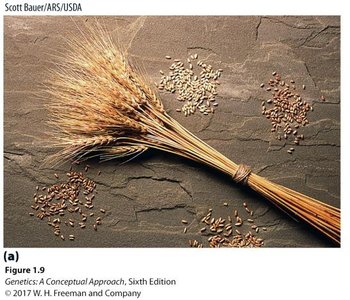
Humans have practiced genetic selection for thousands of years, domesticating plants and animals for desirable traits. Early thinkers such as Aristotle and Hippocrates speculated on mechanisms of inheritance, though their ideas were often incorrect.
Domestication: Early humans selected for traits in wheat, peas, lentils, barley, dogs, goats, and sheep.
Pangenesis: An early, incorrect theory suggesting that "seeds" from all parts of the body are collected and passed to offspring.
Inheritance of Acquired Characteristics: Proposed by Jean-Baptiste Lamarck, this theory (now disproven) suggested that traits acquired during an organism's life could be inherited by offspring.

The Dawn of Modern Biology
Key advances in the 17th to 19th centuries laid the groundwork for modern genetics.
Cell Theory (Schleiden & Schwann, 1830): All living organisms are composed of cells.
Disproving Spontaneous Generation (Pasteur): Life arises from pre-existing life, not from nonliving matter.
Theory of Epigenesis (Harvey): Organs and structures develop progressively from an undifferentiated embryo.
Darwin and the Theory of Evolution
Charles Darwin's publication of "The Origin of Species" in 1859 introduced the concept of evolution by natural selection, providing a mechanism for evolutionary change and the diversity of life.
Descent with Modification: Species change over time, giving rise to new species.
Natural Selection: The process by which organisms better adapted to their environment tend to survive and produce more offspring.
Progression from Mendel to DNA
Mendelian Genetics
Gregor Mendel's experiments with pea plants in 1866 established the basic principles of heredity. He demonstrated that traits are inherited as discrete units (now known as genes) and formulated the laws of segregation and independent assortment.
Law of Segregation: Each individual has two alleles for each gene, which segregate during gamete formation.
Law of Independent Assortment: Genes for different traits assort independently during gamete formation.
Chromosomal Theory of Inheritance
Walter Sutton and Theodor Boveri proposed that genes are located on chromosomes, which segregate and assort independently during meiosis, mirroring Mendel's observations.
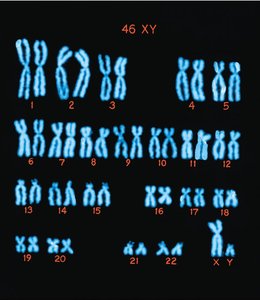
Diploid Number (2n): Most eukaryotes have chromosomes in pairs (homologous chromosomes).
Haploid Number (n): Gametes contain half the number of chromosomes.

Alleles and Genetic Variation
Alleles are alternative forms of a gene. Mutations create new alleles, which are the source of genetic variation. The genotype is the set of alleles for a trait, while the phenotype is the observable expression of those alleles.
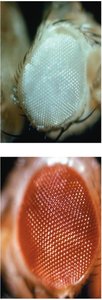
Example: The white-eyed mutation in Drosophila melanogaster (fruit fly) demonstrates how a single gene can affect phenotype.
DNA as the Genetic Material
Discovery of DNA's Role
Early 20th-century experiments established DNA as the carrier of genetic information, not protein.
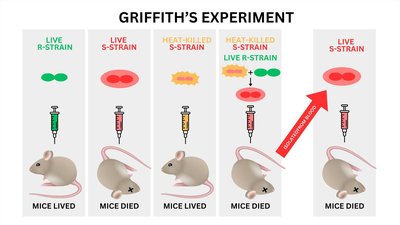
Griffith's Experiment: Demonstrated transformation in bacteria, suggesting a "transforming principle."
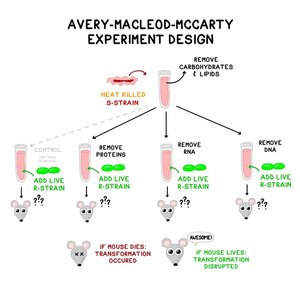
Avery, MacLeod, and McCarty: Identified DNA as the transforming principle in 1944.
Hershey and Chase: Used bacteriophages to confirm that DNA, not protein, is the genetic material.

Structure of DNA and RNA
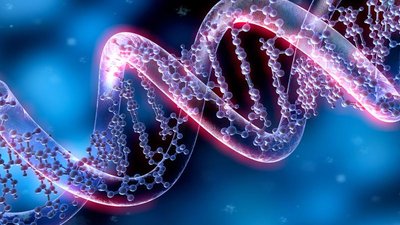
James Watson and Francis Crick, with data from Rosalind Franklin, described the double helix structure of DNA in 1953. DNA is composed of nucleotides, each containing a deoxyribose sugar, a phosphate group, and a nitrogenous base (adenine, thymine, cytosine, or guanine). RNA is similar but usually single-stranded, contains ribose sugar, and uses uracil instead of thymine.
Complementary Base Pairing: Adenine pairs with thymine (A–T), and guanine pairs with cytosine (G–C).
Antiparallel Strands: The two DNA strands run in opposite directions.
The Central Dogma of Molecular Biology
The central dogma describes the flow of genetic information: DNA is transcribed into RNA, which is then translated into protein.
Transcription: Synthesis of RNA from a DNA template.
Translation: Synthesis of proteins based on the sequence of codons in mRNA.
Equation:
The Genetic Code and Proteins
The genetic code consists of triplet codons in mRNA, each specifying an amino acid. Proteins, composed of 20 different amino acids, are the functional products of gene expression and determine phenotype.
Example: Sickle-cell anemia is caused by a single-nucleotide mutation in the hemoglobin gene, leading to an altered protein and disease phenotype.
Recombinant DNA Technology and Biotechnology
Restriction Enzymes and Cloning
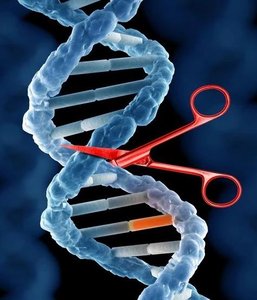
Restriction enzymes, discovered in the 1970s, cut DNA at specific sequences, enabling the development of recombinant DNA technology. This allows scientists to clone genes, create genomic libraries, and transfer genes across species, producing transgenic organisms.
Applications of Biotechnology
Biotechnology has revolutionized agriculture, medicine, and industry. Genetically modified crops exhibit increased resistance to pests and environmental stresses, while biotechnology-derived medicines include insulin, antibiotics, and personalized therapies.
Genetic Testing: Used for prenatal diagnosis and detection of heritable disorders.
Personalized Medicine: Tailoring treatments based on individual genetic profiles.
Genomics, Proteomics, and Bioinformatics
New and Expanding Fields
The Human Genome Project and advances in sequencing technologies have given rise to new disciplines:
Genomics: Study of the structure, function, and evolution of genomes.
Proteomics: Analysis of the complete set of proteins in a cell or organism.
Bioinformatics: Application of computational tools to manage and analyze biological data.
Model Organisms in Genetics
Criteria for Model Organisms
Model organisms are species that are easy to grow, have short life cycles, produce many offspring, and are amenable to genetic analysis. They are essential for studying gene function and modeling human diseases.
Examples: Drosophila melanogaster (fruit fly), Escherichia coli (bacterium), Saccharomyces cerevisiae (yeast), and various viruses.
The Age of Genetics and Future Directions
Societal Impacts and Ethical Considerations
Genetics now influences many aspects of society, from healthcare to agriculture. Advances such as CRISPR gene editing have raised ethical questions about gene therapy, germline modification, and genetic privacy.
Current Issues: Prenatal testing, gene ownership, access to gene therapy, and the safety of genetic interventions.
Summary Table: Key Milestones in Genetics
Year/Period | Milestone | Significance |
|---|---|---|
10,000–12,000 years ago | Domestication of plants and animals | Early genetic selection |
1866 | Mendel's experiments | Foundation of classical genetics |
1900s | Chromosomal theory of inheritance | Genes located on chromosomes |
1944 | Avery, MacLeod, McCarty | DNA identified as genetic material |
1953 | Watson & Crick | Discovery of DNA double helix |
1970s | Restriction enzymes | Birth of recombinant DNA technology |
2003 | Human Genome Project completed | Comprehensive mapping of human genes |
