 Back
BackLecture 1
Study Guide - Smart Notes
 Tailored notes based on your materials, expanded with key definitions, examples, and context.
Introduction to Genetics
What is Genetics?
Genetics is the scientific study of heredity and variation in living organisms. It explores how traits are passed from parents to offspring and how genetic differences contribute to the diversity of life.
Traits include structure, appearance, behavior, and physiology.
Some traits are influenced by the environment, while others are heritable (passed from parent to offspring).
Genetics explains why offspring resemble their parents but also exhibit differences, enabling evolution by natural selection.
The Genetic Blueprint
Each organism possesses a unique genetic blueprint, or genome, which determines its development and function as a member of its species.
Differences in the genome (mutations) result in variations in appearance and behavior.
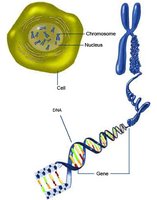
Genetic information is stored in chromosomes and transmitted across generations.
The gene is the fundamental unit of heredity.
Definitions of a Gene
Genetic definition: A gene controls some aspect of an organism’s phenotype (form, function, or behavior).
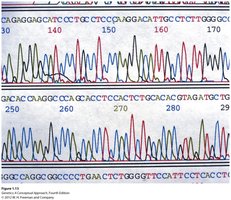
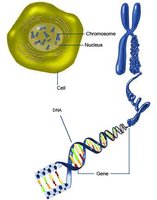
Molecular definition: A gene is a segment of DNA that contains the information to express a protein (or functional RNA) that performs a cellular function.
Major Areas of Genetics
Transmission (Classical/Mendelian) Genetics
This area focuses on the basic principles of heredity and how traits are passed from one generation to the next. It examines the behavior of chromosomes and the arrangement of genes on chromosomes, with a focus on the organism as a whole.
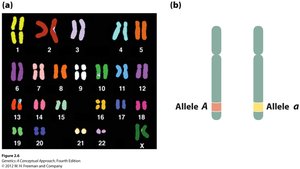
Alleles: Different versions of a gene.
Genotype: The specific allelic composition of an organism.
Phenotype: The observable traits or behaviors of an organism.
Molecular Genetics
Molecular genetics investigates the chemical nature of the gene, including how genetic information is stored, encoded, replicated, and expressed. The focus is on DNA and the gene itself.
The complete set of DNA in an organism is its genome.
Changes in DNA sequence are called mutations.
This field led to the development of molecular biology.
The Central Dogma of Molecular Biology
The central dogma describes the flow of genetic information:
DNA → RNA → Protein
This process determines how genotype produces phenotype.
Population Genetics
Population genetics studies the behavior of genes and alleles in populations. It examines how changes in allele frequencies lead to evolution and the formation of new species.
This area is not covered in detail in this course.
Genetics as a Tool or Methodology
Genetic and molecular biology tools are used to study biological processes, modify organisms, and understand or treat human diseases.
Applications include genetic engineering, gene therapy, and functional genomics.
Model Organisms in Genetics
Importance of Model Systems
Model organisms are species that are widely used in genetic research due to their experimental advantages, such as short generation times, ease of maintenance, and well-characterized genomes.
Drosophila melanogaster (fruit fly)
Escherichia coli (bacterium)
Bacteriophage T2 (virus that infects bacteria)
Zebrafish (for studying pigmentation genes)
Course Structure and Policies
Course Components
Lectures and discussions are the primary modes of instruction.
Weekly online homework assignments on the Mastering Genetics site (10% of final grade).
In-class assessment questions (ICQs) using Poll Everywhere (15% of final grade).
Additional study resources are available in the 'Study Area' and 'Study Prep' sections of the Mastering Genetics site.
Learning Goals
Explain the storage, transmission, and expression of genetic information in different organisms.
Describe how changes in genetic material can lead to phenotypic changes and disease.
Understand the use of molecular and genomic technologies to manipulate and analyze genomes.
Critically evaluate statements about genetic information in the media.
Key Terms and Concepts
Gene: A segment of DNA that encodes a functional product.
Allele: A variant form of a gene.
Genotype: The genetic makeup of an organism.
Phenotype: The observable characteristics of an organism.
Mutation: A change in the DNA sequence.
Genome: The complete set of genetic material in an organism.
Summary Table: Areas of Genetics
Area | Main Focus | Key Questions |
|---|---|---|
Transmission Genetics | Inheritance patterns, chromosome behavior | How are traits passed from parent to offspring? |
Molecular Genetics | Gene structure, function, and regulation | How is genetic information stored and expressed? |
Population Genetics | Allele frequencies in populations | How do populations evolve over time? |
Genetics as a Tool | Applications in research and biotechnology | How can genetics be used to solve biological problems? |
Example: The Golden Gene in Zebrafish and Humans
A gene called golden was identified as necessary for proper pigmentation in zebrafish. A related gene in humans is associated with differences in skin pigmentation among populations.
Conclusion
Genetics is a foundational discipline in biology, providing insights into heredity, variation, and the molecular mechanisms underlying life. Understanding genetics is essential for advances in medicine, agriculture, and biotechnology.
