 Back
BackIntroductory Genetics: Foundations, Key Concepts, and Human Disease Applications
Study Guide - Smart Notes
 Tailored notes based on your materials, expanded with key definitions, examples, and context.
Introduction to Genetics
Overview of Genetics
Genetics is the scientific study of heredity and variation, focusing on how traits controlled by genes are transmitted through gametes from generation to generation. The discipline explores the molecular nature, organization, replication, expression, regulation, and inheritance of genetic material.
Transmission of Traits: Traits are passed from parents to offspring via genes, which are segments of DNA.
Central Dogma: The flow of genetic information follows the pathway: DNA → RNA → Protein.
Genotype and Phenotype: The genotype is the set of alleles for a given trait, while the phenotype is the observable expression of the genotype.
Course Structure and Assessment
Grade Distribution
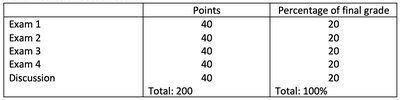
The course assessment is divided into four exams and a discussion component, each contributing equally to the final grade.
Component | Points | Percentage of Final Grade |
|---|---|---|
Exam 1 | 40 | 20% |
Exam 2 | 40 | 20% |
Exam 3 | 40 | 20% |
Exam 4 | 40 | 20% |
Discussion | 40 | 20% |
Total | 200 | 100% |
Key Topics in Genetics
Cell Division: Mitosis and Meiosis
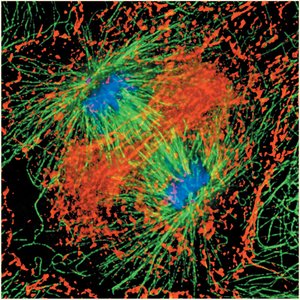
Cell division in eukaryotes occurs via mitosis and meiosis, which are essential for growth, development, and reproduction.
Mitosis: Produces two daughter cells, each with a diploid set (2n) of chromosomes identical to the parent cell.
Meiosis: Produces gametes with a haploid set (n) of chromosomes, ensuring genetic diversity through recombination.
Chromosome Theory of Inheritance
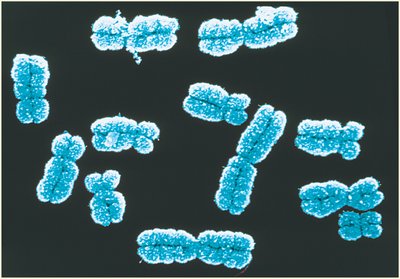
The chromosome theory of inheritance, proposed by Sutton and Boveri in 1902, states that genes are carried on chromosomes, which are faithfully transmitted through gametes, maintaining genetic continuity across generations.
Homologous Chromosomes: Chromosomes exist in pairs in diploid cells (2n = 46 in humans).
Gene Mapping: Chromosomes can contain hundreds of genes, each with a specific location.
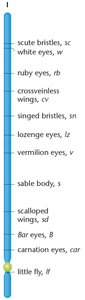
Genetic Variation and Mutation
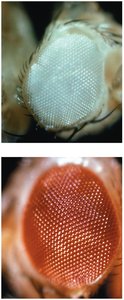
Genetic variation arises from mutations, which are heritable changes in the DNA sequence. Mutations produce alleles, alternative forms of a gene, leading to diversity in genotype and phenotype.
Allele: Alternative form of a gene.
Mutation: Source of genetic variation; can modify or eliminate protein function, resulting in altered phenotypes.
Chemical Nature of Genes
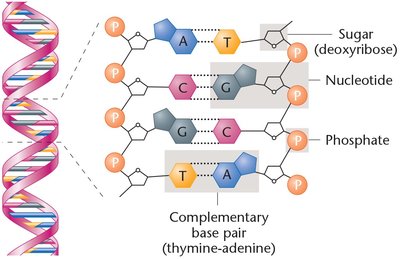
Genes are composed of DNA, a double-stranded antiparallel helix made up of nucleotides. Each nucleotide consists of a sugar, a phosphate group, and a nitrogenous base (Adenine, Cytosine, Guanine, Thymine).
Complementary Base Pairing: A pairs with T, and G pairs with C via hydrogen bonds.
The Central Dogma of Genetics
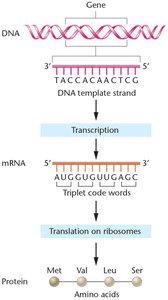
The central dogma describes the flow of genetic information from DNA to RNA to protein. This process involves transcription (DNA to mRNA) and translation (mRNA to protein).
Transcription: Synthesis of RNA from a DNA template.
Translation: Synthesis of proteins from mRNA on ribosomes.
Genotype to Phenotype: Human Disease Example
Sickle Cell Anemia
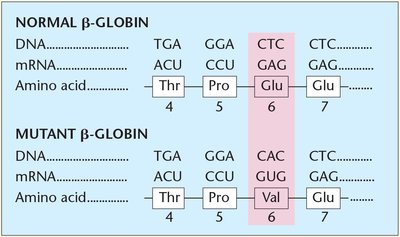
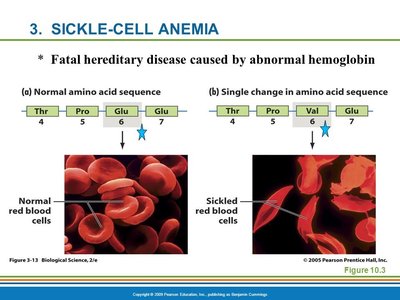
Sickle cell anemia is a hereditary disease caused by a single-nucleotide mutation in the β-globin gene, resulting in abnormal hemoglobin structure and function.
Normal β-globin: DNA sequence CTC codes for Glu (glutamic acid).
Mutant β-globin: DNA sequence CAC codes for Val (valine), leading to sickle-shaped red blood cells.
Phenotypic Effects: Sickle cells are fragile, block capillaries, and cause anemia and organ damage.
DNA | mRNA | Amino Acid | |
|---|---|---|---|
Normal β-globin | CTC | GAG | Glu |
Mutant β-globin | CAC | GUG | Val |
Model Organisms in Genetics
Importance of Model Organisms
Model organisms are used in genetics research because they share fundamental genetic mechanisms with humans, are easy to grow, have short life cycles, produce many offspring, and allow straightforward genetic analysis.
Examples: Escherichia coli, Saccharomyces cerevisiae, Drosophila melanogaster, Caenorhabditis elegans, Danio rerio, Mus musculus
Applications: Study of human diseases such as cancer, diabetes, neurological disorders, and genetic syndromes.
Societal and Ethical Issues in Genetics
Contemporary Issues
Genetics raises important societal and ethical questions, including prenatal testing, genetic editing, discrimination, gene ownership, access to gene therapy, and genetic privacy. These issues require careful consideration as genetic technologies advance.
Prenatal Testing: Screening for genetic diseases before birth.
Genetic Editing: Technologies like CRISPR allow modification of genes.
Genetic Discrimination: Potential misuse of genetic information.
Gene Therapy: Treatments for genetic disorders.
Summary Points
Many scientists contributed to the foundation of genetics.
Genes and chromosomes are fundamental units in the chromosomal theory of inheritance.
The central dogma of genetics explains the flow of genetic information.
Genetic mutations underlie many human diseases.
Additional Info
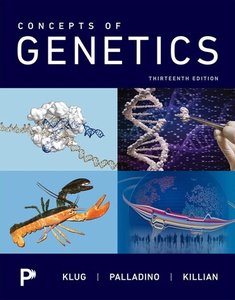
Course textbook: Concepts of Genetics by Klug, Palladino, and Killian (13th edition).
Model organisms are essential for understanding genetic mechanisms and human disease.
