 Back
BackLinkage, Recombination, and Gene Mapping: Study Notes
Study Guide - Smart Notes
 Tailored notes based on your materials, expanded with key definitions, examples, and context.
Linkage, Recombination, and Gene Mapping
Linked Genes and Linkage Groups
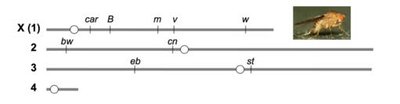
Linked genes are genes located on the same chromosome that tend to be inherited together because they do not assort independently during meiosis. The concept of linkage groups refers to sets of genes found on the same chromosome. The number of linkage groups in an organism typically corresponds to the number of chromosome pairs in its haploid genome.
Linked Genes: Genes that are physically close on the same chromosome and are usually inherited together.
Linkage Group: All genes on a single chromosome form a linkage group.
Example: In Drosophila melanogaster (fruit fly), there are four linkage groups, corresponding to its four chromosome pairs.
Genetic Linkage and Recombination
Genetic linkage results in the parental combinations of alleles being more frequent than recombinant types. Recombination occurs through crossing over during meiosis, which can separate linked genes and produce new allele combinations.
Parental (Nonrecombinant) Types: Offspring with allele combinations identical to those of the parents.
Recombinant Types: Offspring with new combinations of alleles due to crossing over.
Recombination Frequency: The proportion of recombinant offspring, used to estimate the distance between genes.
Key Point: The farther apart two genes are, the higher the probability of a crossover event between them.
Configurations of Linked Genes: Coupling and Repulsion
Linked genes can be arranged in two configurations in heterozygotes:
Cis (Coupling) Configuration: Both dominant (or wild-type) alleles are on one chromosome, and both recessive (or mutant) alleles are on the homologous chromosome (e.g., AB/ab).
Trans (Repulsion) Configuration: Each chromosome has one dominant and one recessive allele (e.g., Ab/aB).
Testcross Outcomes: The configuration affects the types and frequencies of progeny in a testcross.
Measuring Genetic Distance: Map Units and CentiMorgans
Geneticists use recombination frequencies to estimate the distance between genes on a chromosome. This distance is measured in map units (mu) or centiMorgans (cM), where 1 mu = 1% recombination frequency.
Formula:
Additivity: Genetic distances are additive for closely linked genes, but double crossovers can complicate calculations for distant genes.
Two-Point and Three-Point Testcrosses
Testcrosses are used to determine the arrangement and distance between genes:
Two-Point Testcross: Involves two genes; calculates recombination frequency to estimate map distance.
Three-Point Testcross: Involves three genes; provides gene order and more accurate distances by detecting double crossovers.
Steps in Three-Point Testcross:
Determine gene arrangement (parental and recombinant types).
Identify gene order by comparing double crossover classes.
Calculate recombination frequencies for each region.
Draw the genetic map.
Double Crossovers and Chromatid Interference
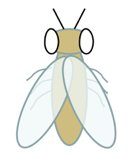
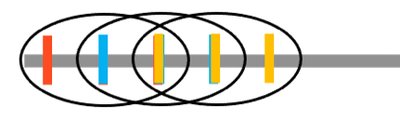
Double crossovers can occur between three linked genes, and their detection is crucial for accurate gene mapping. Chromatid interference refers to the phenomenon where the occurrence of one crossover affects the likelihood of another nearby crossover.
Double Crossover: Two separate crossover events between three genes.
Interference: The degree to which one crossover event inhibits another; calculated as:
Interpretation: If interference = 1, complete interference (no double crossovers); if interference = 0, no interference (crossovers independent).
Traditional vs. Modern Approaches to Gene Mapping
Traditional gene mapping relies on observable genetic markers and recombination frequencies, while modern approaches use molecular markers and genome-wide association studies (GWAS).
Genetic Marker: A gene or DNA sequence with a known location used as a reference point.
Molecular Markers: Include restriction fragment length polymorphisms (RFLPs), microsatellites, and single-nucleotide polymorphisms (SNPs).
GWAS: Identifies associations between genetic markers and traits across the genome, allowing for high-resolution mapping of gene locations.
Application: SNPs closely associated with a phenotype indicate the location of the relevant gene.
Summary Table: Number of Linkage Groups in Model Organisms
Organism | No. of Linkage Groups |
|---|---|
Drosophila | 4 |
Mouse | 20 |
Humans | 23 |
Chicken | 39 |
Additional info: The images included above are directly relevant to the explanation of linkage groups, gene mapping, and testcross analysis in Drosophila genetics.
