 Back
BackMeiosis: Mechanisms, Stages, and Gamete Development
Study Guide - Smart Notes
 Tailored notes based on your materials, expanded with key definitions, examples, and context.
Meiosis and Its Role in Genetics
Overview of Meiosis
Meiosis is a specialized type of cell division that occurs in diploid reproductive cells, resulting in four genetically unique haploid nuclei. This process is essential for sexual reproduction in all diploid organisms, as it ensures genetic diversity and maintains chromosome number across generations.
Meiosis only occurs in germ cells (testes in males, ovaries in females).
It consists of two consecutive divisions: Meiosis I (reductional) and Meiosis II (equational).
Produces haploid gametes (sperm or egg) from diploid cells.
Sexual Reproduction and Genetic Variation
Sexual reproduction involves the fusion of two gametes, resulting in offspring with unique combinations of genes. This process increases genetic variation within a population.
Offspring inherit genes from both parents, leading to genetic diversity.
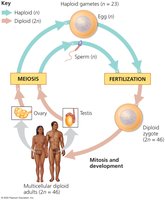
Occurs via the union of haploid gametes (fertilization), forming a diploid zygote.
Chromosome Number and Ploidy
Diploid and Haploid Cells
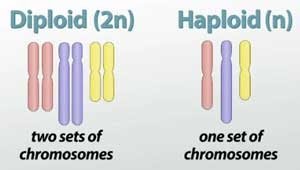
Ploidy refers to the number of sets of chromosomes in a cell. Human somatic cells are diploid (2n), while gametes are haploid (n).
Diploid (2n): Two sets of chromosomes (46 in humans).
Haploid (n): One set of chromosomes (23 in humans).
Chromosome Structure in Human Cells
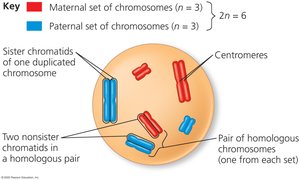
Each chromosome consists of two sister chromatids joined at the centromere. Homologous chromosomes are pairs, one from each parent.
Homologous pairs contain similar genes but may have different alleles.
Meiosis separates homologous chromosomes, reducing chromosome number.
Meiosis: Process and Stages
Meiosis I: Reductional Division
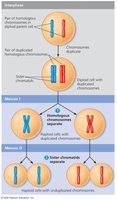
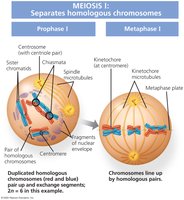
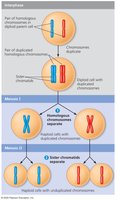
Meiosis I separates homologous chromosomes, reducing the chromosome number from diploid to haploid. It consists of four phases: Prophase I, Metaphase I, Anaphase I, and Telophase I.
Prophase I: Chromosomes condense, nuclear envelope disappears, tetrads form, and crossing over occurs.
Metaphase I: Tetrads align at the metaphase plate, spindle fibers attach to kinetochores.
Anaphase I: Homologous chromosomes are separated, but sister chromatids remain attached.
Telophase I: Chromosomes reach poles, nuclear envelope reforms, cytokinesis produces two haploid cells.
Crossing Over and Genetic Variation
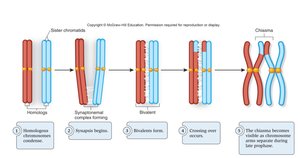
During Prophase I, homologous chromosomes exchange genetic material through crossing over, increasing genetic diversity.
Chiasma: The site where chromatids remain crossed after exchange.
Crossing over results in new combinations of alleles.
Meiosis II: Equational Division
Meiosis II is similar to mitosis, where sister chromatids are separated. Both haploid cells from Meiosis I undergo Meiosis II, resulting in four haploid cells.
Prophase II: Chromosomes condense, nuclear envelope disappears.
Metaphase II: Chromatids align at the metaphase plate.
Anaphase II: Sister chromatids are pulled apart.
Telophase II: Chromosomes reach poles, nuclear envelope reforms, cytokinesis occurs.
Comparison: Meiosis vs. Mitosis
Key Differences
Both meiosis and mitosis are forms of nuclear division, but they serve different purposes and produce different outcomes.
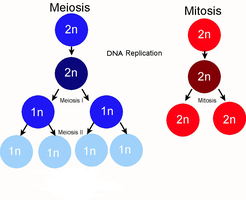
Mitosis: Produces two genetically identical diploid cells for growth and repair.
Meiosis: Produces four genetically unique haploid cells for sexual reproduction.
Meiosis involves crossing over and reduction of chromosome number; mitosis does not.
Development of Gametes: Spermatogenesis vs. Oogenesis
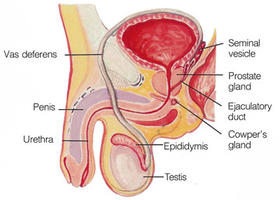
Spermatogenesis
Spermatogenesis is the process of sperm formation in the testes. It results in four haploid spermatids from each primary spermatocyte.
Primary spermatocyte undergoes Meiosis I to produce two secondary spermatocytes.
Secondary spermatocytes undergo Meiosis II to produce four spermatids.
Oogenesis
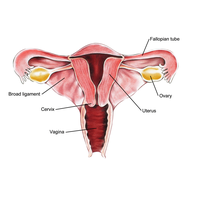
Oogenesis is the process of ovum formation in the ovaries. It produces one ovum and three polar bodies due to unequal cytoplasmic division.
Primary oocyte undergoes Meiosis I and II.
Only one daughter cell receives most of the cytoplasm and becomes the ovum; others become polar bodies.
Meiosis in Plant and Fungi Life Cycles
Role of Meiosis in Life Cycles
Meiosis is critical for reducing the diploid amount of genetic information to haploid, enabling sexual reproduction in plants and fungi.
Fungi: Haploid vegetative cells arise via meiosis and proliferate via mitosis.
Plants: Life cycle alternates between diploid sporophyte and haploid gametophyte stages.
Summary Table: Mitosis vs. Meiosis
Feature | Mitosis | Meiosis |
|---|---|---|
Number of Divisions | 1 | 2 |
Number of Daughter Cells | 2 | 4 |
Chromosome Number | Diploid (2n) | Haploid (n) |
Genetic Variation | None | High (crossing over, independent assortment) |
Function | Growth, repair | Sexual reproduction |
Key Equations
Diploid chromosome number:
Haploid chromosome number:
Meiosis reduces chromosome number:
Conclusion
Meiosis is a fundamental process in genetics, ensuring genetic diversity and proper chromosome number in sexually reproducing organisms. Understanding its stages, mechanisms, and differences from mitosis is essential for mastering genetics.
