 Back
BackMeiosis: Mechanisms, Stages, and Genetic Consequences
Study Guide - Smart Notes
 Tailored notes based on your materials, expanded with key definitions, examples, and context.
Meiosis: Overview and Biological Significance
Introduction to Meiosis
Meiosis is a specialized type of cell division that reduces the chromosome number by half, resulting in the formation of four haploid gametes or spores from a single diploid cell. This process is essential for sexual reproduction and ensures genetic diversity among offspring.
Ploidy Reduction: Meiosis transforms diploid cells (2n) into haploid cells (n).
Genetic Variation: Each gamete contains a unique combination of genetic material due to crossing over and independent assortment.
Gamete Formation: In animals, meiosis produces gametes (sperm and eggs); in plants and fungi, it produces spores.
Stages of Meiosis
Interphase
Prior to meiosis, the cell undergoes interphase, during which DNA is replicated and chromosomes are duplicated. This sets the stage for the subsequent division phases.
DNA Synthesis: Chromosomes are replicated, resulting in sister chromatids.
Preparation for Division: Centrosomes duplicate and cellular machinery is assembled.
Meiosis I: Reductional Division
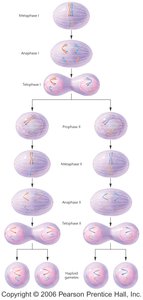
Meiosis I separates homologous chromosomes, reducing the chromosome number by half. This stage is characterized by the pairing of homologs, crossing over, and segregation.
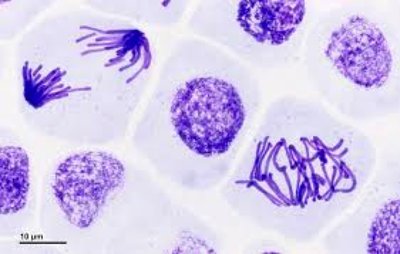
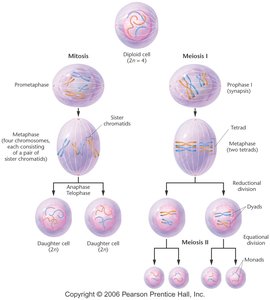
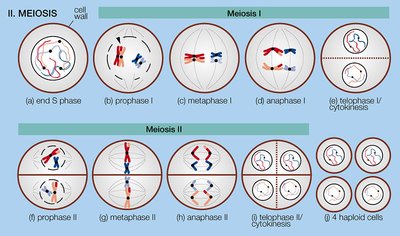
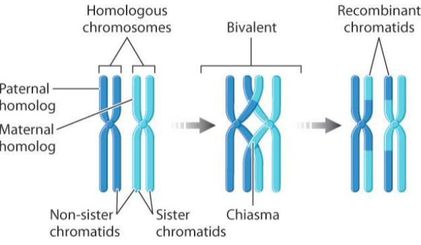
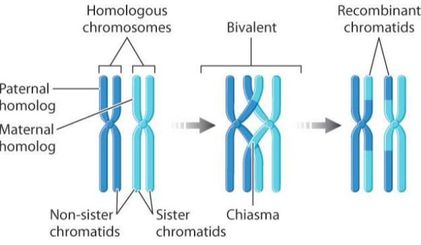
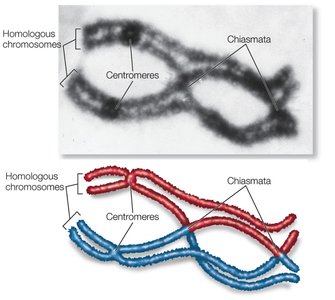
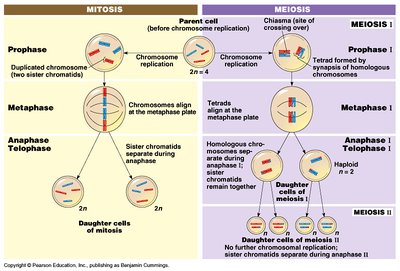
Prophase I: Homologous chromosomes pair via synapsis, forming tetrads. Crossing over occurs at chiasmata, exchanging genetic material between non-sister chromatids.
Metaphase I: Tetrads align at the metaphase plate.
Anaphase I: Homologous chromosomes (not sister chromatids) are separated and move to opposite poles (disjunction).
Telophase I: Chromosomes elongate, nuclear membranes reform, and cytokinesis produces two haploid cells.
Meiosis II: Equational Division
Meiosis II resembles mitosis, separating sister chromatids in each haploid cell produced by meiosis I. No DNA replication occurs between meiosis I and II.
Prophase II: Nuclear envelope breaks down, spindle forms, chromosomes attach to spindle fibers.
Metaphase II: Chromosomes align at the equator.
Anaphase II: Sister chromatids separate and move to opposite poles.
Telophase II: Chromosomes decondense, nuclear membranes reform, and cytokinesis produces four genetically distinct haploid cells.
Key Concepts and Terminology
Homologous Chromosomes, Tetrads, and Chiasmata
Understanding the structure and behavior of chromosomes during meiosis is crucial for grasping genetic variation mechanisms.
Homologous Chromosomes: Chromosome pairs, one from each parent, carrying the same genes but possibly different alleles.
Tetrad: Structure formed by synapsis of homologous chromosomes during prophase I, consisting of four chromatids.
Chiasma (plural: chiasmata): The physical site where crossing over occurs between non-sister chromatids, leading to genetic recombination.
Genetic Variation: Mechanisms and Consequences
Sources of Genetic Diversity in Meiosis
Meiosis generates genetic variation through two primary mechanisms: crossing over and independent assortment.
Crossing Over: Exchange of genetic material between non-sister chromatids during prophase I, resulting in recombinant chromosomes.
Independent Assortment: Random distribution of maternal and paternal chromosomes to gametes during metaphase I.
Genetic Consequences: Each gamete is genetically unique, contributing to variation in offspring.
Comparison: Mitosis vs. Meiosis
Key Differences and Similarities
Mitosis and meiosis are both forms of cell division, but they serve different purposes and have distinct outcomes.
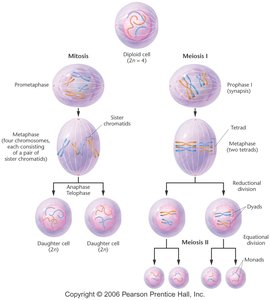
Mitosis: Produces two genetically identical diploid cells for growth and repair.
Meiosis: Produces four genetically distinct haploid cells for sexual reproduction.
Similarities: Both involve stages of prophase, metaphase, anaphase, and telophase.
Differences: Meiosis includes two division cycles and features crossing over and independent assortment.
Feature | Mitosis | Meiosis |
|---|---|---|
Number of Divisions | One | Two |
Number of Daughter Cells | Two | Four |
Genetic Identity | Identical | Unique |
Ploidy | Diploid (2n) | Haploid (n) |
Role | Growth/Repair | Sexual Reproduction |
Consequences of Meiosis
Genetic and Cellular Outcomes
The end result of meiosis is the production of four haploid cells, each genetically distinct from the parent cell and from each other. This process is fundamental for maintaining chromosome number across generations and for promoting genetic diversity.
Reduction in Chromosome Number: Ensures stability of species' chromosome number.
Genetic Variation: Provides raw material for evolution and adaptation.
Formation of Gametes: Essential for sexual reproduction in eukaryotes.
Review Questions
Conceptual Understanding
How does mitosis work?
How does meiosis work?
What are key concepts (terms) used to describe each?
What are the consequences of mitosis and meiosis?
How does the genetic condition of an animal change during the sexual life cycle?
Summary Table: Stages of Meiosis
Stage | Main Events | Chromosome Number |
|---|---|---|
Prophase I | Synapsis, crossing over, tetrad formation | 2n |
Metaphase I | Tetrads align at equator | 2n |
Anaphase I | Homologs separate | n |
Telophase I | Two haploid cells form | n |
Prophase II | Spindle reforms | n |
Metaphase II | Chromosomes align at equator | n |
Anaphase II | Sister chromatids separate | n |
Telophase II | Four haploid cells form | n |
Key Equations
Genetic Variation Calculation
The number of possible combinations of chromosomes due to independent assortment is given by:
where n is the haploid number of chromosomes.
Summary Equation for Chromosome Number Reduction
After meiosis:
Conclusion
Meiosis is a fundamental process in genetics, ensuring the continuity of species and the generation of genetic diversity. Its stages, mechanisms, and consequences are central to understanding inheritance and evolution.
