 Back
Mendelian Genetics and Meiosis: Principles, Patterns, and Cellular Mechanisms
Study Guide - Smart Notes
 Tailored notes based on your materials, expanded with key definitions, examples, and context.
Single Inheritance Patterns
Introduction to Mendelian Genetics
Mendelian genetics forms the foundation of classical genetics, focusing on how traits are inherited from one generation to the next. Gregor Mendel's experiments with pea plants established the basic principles of inheritance, including the concepts of dominant and recessive traits.
Mutants and Wild Type: Geneticists often hunt for mutants to understand gene function by comparing them to the wild type (normal phenotype).
Model Organisms: Pea plants were chosen for their clear, discrete traits and ease of controlled breeding.
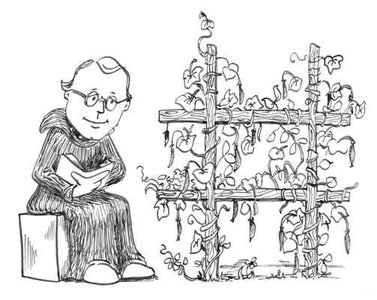
Mendel’s Experimental Design
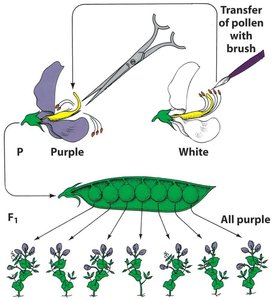
Mendel used self-fertilization and cross-fertilization to control the inheritance of traits in pea plants. He selected traits with only two possible phenotypes, simplifying the analysis of inheritance patterns.
Self-fertilization (selfing): Ensures genetic purity by allowing plants to breed with themselves.
Cross-fertilization (cross breeding): Enables the study of inheritance by mixing traits from different plants.
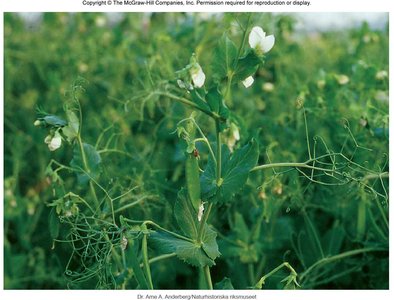
Discrete Characteristics and Phenotypes
Mendel chose traits with clear, binary phenotypes, such as tall vs. dwarf plants, round vs. wrinkled seeds, and purple vs. white flowers. This allowed for straightforward analysis of inheritance patterns.
Phenotype: Observable trait (e.g., flower color).
Genotype: Genetic makeup underlying the phenotype.
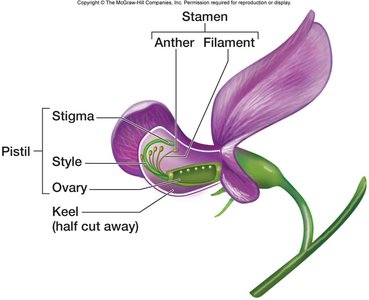
Mendel’s Laws of Inheritance
Monohybrid Crosses
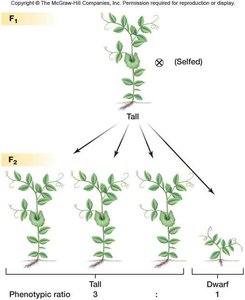
Monohybrid crosses involve the study of a single trait. Mendel crossed pure-breeding (homogeneous) plants to observe the inheritance of traits across generations.
P1 (Parental Generation): Pure-breeding tall and dwarf plants.
F1 (First Filial Generation): All offspring were tall, indicating dominance.
F2 Generation: Self-crossing F1 plants produced a 3:1 ratio of tall to dwarf plants.
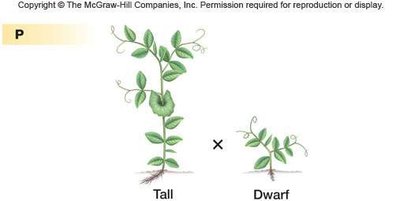
Principles of Dominance and Recessiveness
Mendel observed that one trait would mask the presence of another in the F1 generation, but the masked trait reappeared in the F2 generation. He defined these as dominant and recessive traits.
Dominant allele: Expressed in the phenotype when present.
Recessive allele: Masked in the presence of a dominant allele but reappears in subsequent generations.
Mendel’s First Law: Law of Segregation
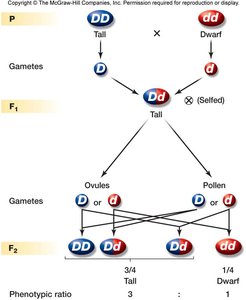
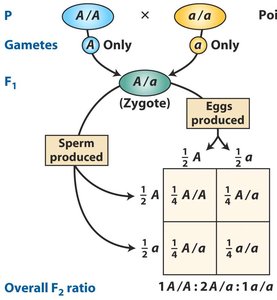
The Law of Segregation states that each individual has two alleles for each gene, which segregate during gamete formation so that each gamete receives only one allele. Fertilization is random, restoring the diploid state.
Genotypic ratio: 1:2:1 (homozygous dominant : heterozygous : homozygous recessive).
Phenotypic ratio: 3:1 (dominant : recessive).
Examples of Mendelian Ratios
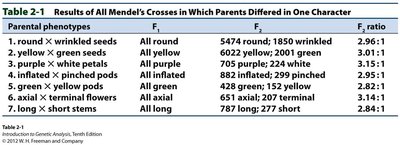
Mendel’s experiments consistently produced a 3:1 phenotypic ratio in the F2 generation for all seven traits he studied.
Parental phenotypes | F1 | F2 | F2 ratio |
|---|---|---|---|
round × wrinkled seeds | All round | 5474 round; 1850 wrinkled | 2.96:1 |
yellow × green seeds | All yellow | 6022 yellow; 2001 green | 3.01:1 |
purple × white petals | All purple | 705 purple; 224 white | 3.15:1 |
inflated × pinched pods | All inflated | 882 inflated; 299 pinched | 2.95:1 |
green × yellow pods | All green | 428 green; 152 yellow | 2.82:1 |
axial × terminal flowers | All axial | 651 axial; 207 terminal | 3.14:1 |
long × short stems | All long | 787 long; 277 short | 2.84:1 |
Genotype and Phenotype
The genotype refers to the genetic constitution of an organism, while the phenotype is the observable expression of the genotype. Dominant and recessive alleles interact to produce these outcomes.
Homozygous dominant (e.g., DD): Both alleles are dominant.
Homozygous recessive (e.g., dd): Both alleles are recessive.
Heterozygous (e.g., Dd): One dominant and one recessive allele.
Testcross: Determining Genotype
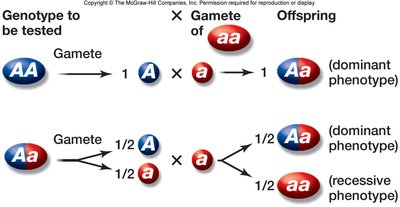
A testcross is used to determine the genotype of an organism expressing the dominant phenotype by crossing it with an organism expressing the recessive phenotype.
If all offspring show the dominant phenotype, the tested organism is homozygous dominant.
If offspring show both dominant and recessive phenotypes, the tested organism is heterozygous.
Molecular Basis of Variation
Alleles and Mutation
Alleles are different forms of a gene. Variation arises through mutation, which can lead to changes in phenotype.
Mutation: A change in DNA sequence that can create new alleles.
Example: Seed color gene in peas (Y/y).
Mitosis and Meiosis
Meiosis: Generation of Haploid Cells
Meiosis is the process by which diploid cells produce haploid gametes, essential for sexual reproduction. It involves two cell divisions: Meiosis I and Meiosis II.
Meiosis I: Homologous chromosomes separate.
Meiosis II: Sister chromatids separate, similar to mitosis.
Result: Four haploid cells from one diploid cell.
Prophase I: Leptonema and Zygonema
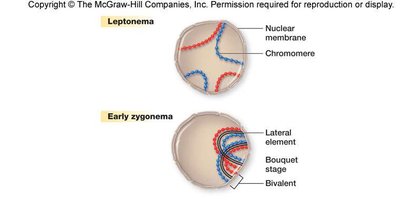
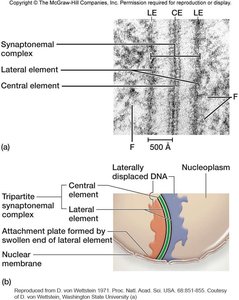
During Prophase I, chromosomes condense and pair up. The synaptonemal complex forms, facilitating recombination between homologous chromosomes.
Leptonema: Chromosomes condense and attach to the nuclear membrane.
Zygonema: Homologous chromosomes pair (bivalents) and synapsis occurs.
Synaptonemal complex: Structure mediating recombination.
Prophase I: Pachynema and Recombination
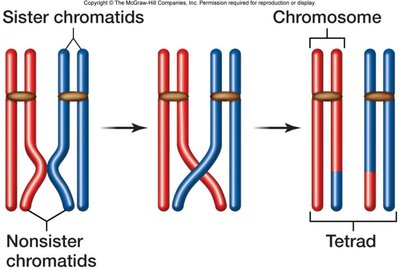
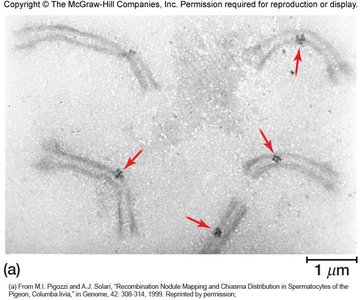
Recombination, or crossing over, occurs between nonsister chromatids, increasing genetic diversity. Recombination nodules are enzymatic sites where this exchange takes place.
Crossing over: Exchange of genetic material between homologous chromosomes.
Recombination nodule: Site of enzymatic activity for recombination.
Diplonema and Diakinesis
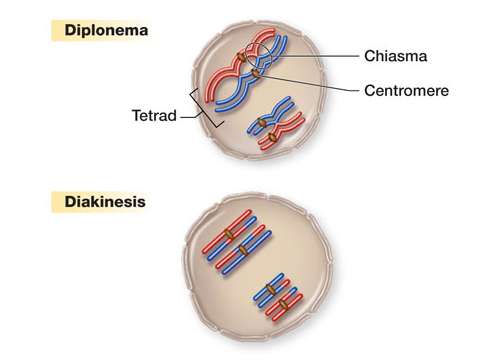
In Diplonema, the synaptonemal complex disintegrates, and chiasmata (sites of crossing over) remain visible. Diakinesis marks the final stage of Prophase I, with further chromosome separation and spindle fiber attachment.
Chiasma: Site where crossing over has occurred.
Terminalization: Movement of chiasmata toward chromosome ends.
Metaphase I and Anaphase I
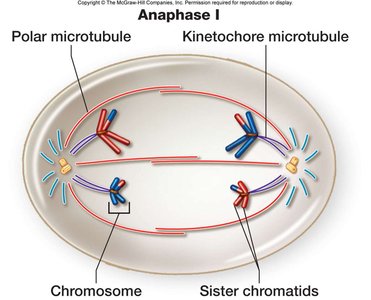
During Metaphase I, tetrads align at the metaphase plate. In Anaphase I, homologous chromosomes are pulled to opposite poles, reducing chromosome number from diploid (2n) to haploid (1n).
Reductional division: Chromosome number is halved.
Dyad: Two sister chromatids representing one chromosome.
Centrosome and Microtubule Organization
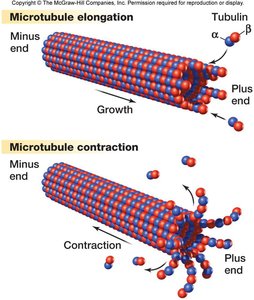
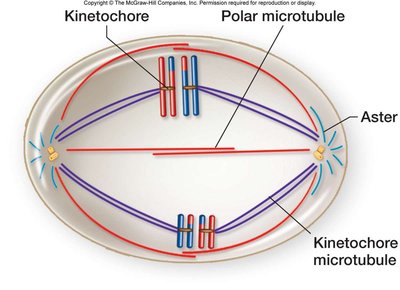
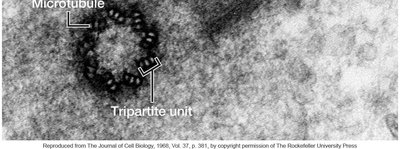
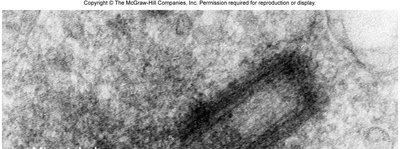
The centrosome organizes microtubules, which form the spindle apparatus during cell division. Microtubules are composed of α and β tubulin subunits and exhibit polarity.
Centrosome: Microtubule organizing center (MTOC).
Microtubule polarity: Minus end anchored at centrosome; plus end extends outward.
Mechanisms of Chromosome Movement
Chromosomes are moved during anaphase by motor proteins at the kinetochore and by microtubule depolymerization.
Kinetochore motor: Hydrolyzes ATP to move chromosomes toward the centrosome.
Microtubule depolymerization: Plus end disintegrates, pulling chromosomes.
Meiosis II
Meiosis II is similar to mitosis, separating sister chromatids without DNA replication. Each cell entering meiosis produces four haploid cells.
Result: Four genetically distinct haploid cells.
Summary of Meiosis
Meiosis reduces chromosome number by half and introduces genetic diversity through random alignment and recombination. Mendel’s Law of Independent Assortment is based on the random separation of tetrads during meiosis I.
Genetic diversity: Produced by recombination and independent assortment.
*Additional info: Academic context was added to clarify the stages of meiosis, the molecular basis of variation, and the principles of Mendelian inheritance, ensuring completeness and self-contained study notes.*
