 Back
BackMendelian Genetics: Principles of Heredity and Experimental Foundations
Study Guide - Smart Notes
 Tailored notes based on your materials, expanded with key definitions, examples, and context.
Basic Principles of Heredity
Subtopic 3.1 – Mendel and the Monohybrid Cross
The foundation of classical genetics was established by Gregor Mendel through his experiments with the garden pea (Pisum sativum). Mendel's work demonstrated how hereditary characteristics are transmitted from one generation to the next, using controlled crosses and careful counting of offspring phenotypes.
Selective Breeding: Mendel used selective breeding to study the inheritance of specific traits in pea plants.
Model Organism: The garden pea was chosen for its easily distinguishable traits and ability to self- or cross-fertilize.
Key Traits Studied: Mendel examined seven characteristics, each with two contrasting forms (e.g., seed shape: round vs. wrinkled; flower color: purple vs. white).
Experimental Approach: Mendel tested hypotheses by counting thousands of plants over ten years, ensuring statistical reliability.
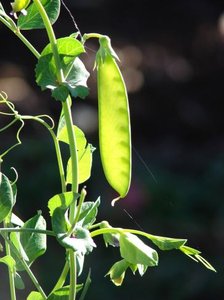


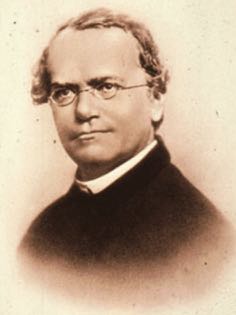
Gregor Mendel: The Birth of Genetics
Mendel's systematic approach and quantitative analysis of inheritance patterns laid the groundwork for the science of genetics. He is recognized for his innovative use of mathematics in biology and for formulating the basic laws of heredity.
True-breeding Strains: Mendel began with parental (P) plants that consistently produced offspring with the same trait.
Monohybrid Cross: A cross between two strains differing in one characteristic (e.g., flower color).
Generational Analysis: The P generation is crossed to produce the F1 generation, which is then self-fertilized to produce the F2 generation.
Counting and Ratios: Mendel meticulously counted the number of each phenotype in the F1 and F2 generations.

Mendel’s Results and Observations
Mendel observed consistent patterns in the inheritance of traits, leading to the formulation of key genetic principles.
Dominance: In the F1 generation, only one of the two parental traits (the dominant trait) appeared.
Segregation: In the F2 generation, both traits reappeared in a 3:1 ratio (dominant:recessive).
Reciprocal Crosses: Crossing male and female parents with swapped traits yielded similar results, indicating that inheritance was not sex-dependent for these traits.
No Blending: Traits did not blend but remained discrete across generations.
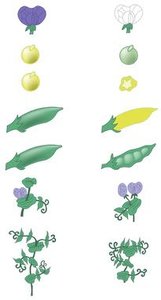
Mendel’s Hypotheses and Genetic Terminology
Mendel proposed that each organism carries two factors (now called alleles) for each trait, which segregate during gamete formation. One allele may be dominant over the other.
Genotype: The genetic constitution (e.g., PP, Pp, pp).
Phenotype: The observable trait (e.g., purple or white flowers).
Homozygous: Two identical alleles (PP or pp).
Heterozygous: Two different alleles (Pp).
Punnett Square: A tool to predict offspring genotypes and phenotypes from parental crosses.

Testcross and Additional Crosses
A testcross is used to determine the genotype of an individual with a dominant phenotype by crossing it with a homozygous recessive individual.
Testcross: Reveals whether the dominant phenotype is homozygous or heterozygous.
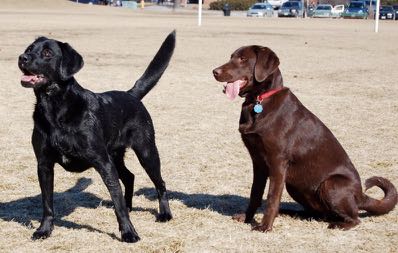
Example: In dogs, black (B) is dominant to chocolate (b). Crossing a black dog of unknown genotype with a chocolate dog can reveal the black dog’s genotype based on offspring phenotypes.
Subtopic 3.2 – Mendel’s Principle of Segregation
The principle of segregation states that alleles for a trait separate during gamete formation, ensuring that each gamete receives only one allele from each gene pair. This principle explains the 3:1 ratio observed in the F2 generation of a monohybrid cross.
Mechanism: Separation of homologous chromosomes during meiosis.
Consequence: Heterozygotes produce gametes with either allele, leading to segregation of traits in progeny.
Lag Time: The phenotypic effect of segregation may not appear until the F2 generation.
Genetic Symbols: Different organisms use different conventions for gene symbols (e.g., uppercase for dominant, lowercase for recessive; wild-type vs. mutant notation in Drosophila).
Subtopic 3.3 – Mendel’s Principle of Independent Assortment
The principle of independent assortment states that alleles of different genes assort independently during gamete formation, provided the genes are on different chromosomes. This principle was demonstrated by Mendel’s dihybrid crosses.
Dihybrid Cross: Cross between individuals differing in two traits (e.g., seed color and seed shape).
F2 Phenotypic Ratio: 9:3:3:1 ratio for two independently assorting traits.
Mechanism: Independent alignment and separation of chromosome pairs during meiosis.
Number of Gamete Types: For n pairs of chromosomes, an individual can produce different gamete combinations.
Subtopic 3.4 – Chi-square Analysis
Chi-square analysis is a statistical method used to determine whether observed genetic ratios deviate significantly from expected ratios due to chance.
Chi-square Test: Compares observed and expected counts to assess fit to Mendelian ratios.
Calculation: , where O = observed, E = expected.
Degrees of Freedom (df): , where n is the number of phenotypic classes.
Interpretation: If P ≥ 0.05, differences are likely due to chance; if P < 0.05, differences are statistically significant.
Subtopic 3.5 – Using Pedigrees to Study Human Inheritance
Pedigree analysis is used to study inheritance patterns in humans, where controlled crosses are not possible. Pedigrees help distinguish between dominant and recessive traits, autosomal and sex-linked inheritance, and homozygous versus heterozygous individuals.
Symbols: Standardized symbols represent individuals, relationships, and affected status.
Dominant Traits: Affected individuals appear in every generation and have at least one affected parent.
Recessive Traits: Traits may skip generations; affected individuals can have unaffected carrier parents.
Examples: Autosomal dominant (e.g., Huntington’s disease), autosomal recessive (e.g., cystic fibrosis).
Trait Type | Pattern in Pedigree | Examples |
|---|---|---|
Autosomal Dominant | Appears in every generation | Huntington’s disease, Achondroplasia |
Autosomal Recessive | May skip generations | Cystic fibrosis, Albinism |
