 Back
BackMendelian Inheritance: Foundations of Classical Genetics
Study Guide - Smart Notes
 Tailored notes based on your materials, expanded with key definitions, examples, and context.
Introduction to Genetics
The Importance of Genetics
Genetics is the study of heredity and variation in living organisms. It explains how traits are passed from one generation to the next and how genetic information shapes the physical and psychological characteristics of organisms, including humans. Advances in genetics allow us to predict, analyze, and manipulate DNA, which has profound implications for medicine, agriculture, and understanding biological diversity.
Historical Perspectives on Heredity
Pre-Mendelian Theories
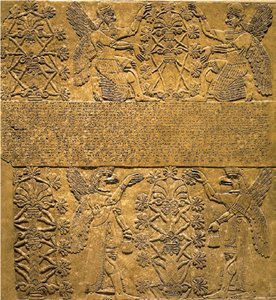
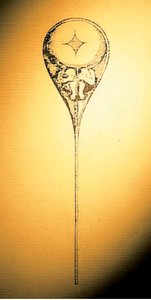
Before Gregor Mendel, the mechanisms of inheritance were poorly understood. Breeders recognized that traits could be selected through controlled mating, but the underlying principles were unclear. Two major misconceptions prevailed:
Unequal Parental Contribution: The belief that one parent contributed more to the offspring's traits than the other.
Blending Inheritance: The idea that offspring were a blend of parental traits, resulting in intermediate characteristics.
Gregor Mendel and the Birth of Genetics
Mendel's Experimental Approach
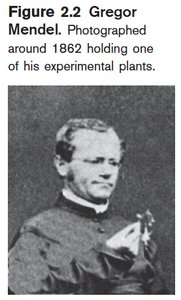
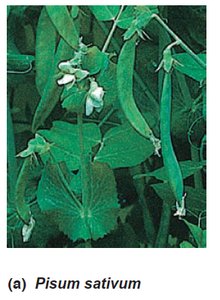
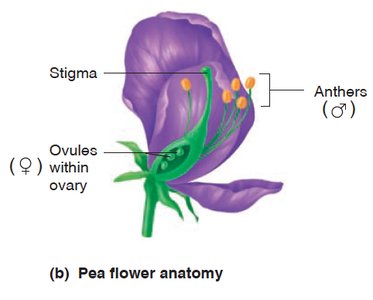
Gregor Mendel (1822–1884) is considered the father of modern genetics. His experiments with pea plants (Pisum sativum) established the foundational principles of heredity. Mendel's success was due to several key factors:
Choice of Organism: Pea plants have a short generation time and can be easily bred in controlled experiments.
Discrete Traits: Mendel studied traits with clear, distinct variations (e.g., round vs. wrinkled seeds).
Pure-Breeding Lines: He established lines that consistently produced the same trait, allowing for clear analysis of inheritance patterns.
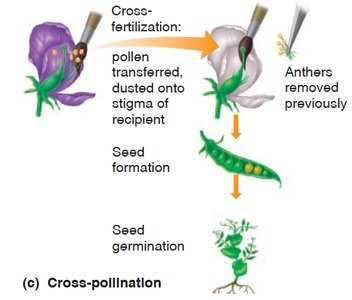
Controlled Crosses: Mendel could manipulate pollination to test specific hypotheses about inheritance.
Quantitative Analysis: He applied statistical rigor to his experiments, counting and analyzing large numbers of offspring.
Mendel's Antagonistic Pairs
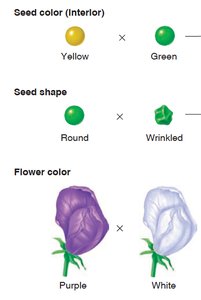
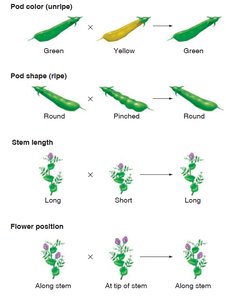
Mendel focused on antagonistic pairs—traits that exist in two mutually exclusive forms. Examples include:
Seed color: yellow vs. green
Seed shape: round vs. wrinkled
Flower color: purple vs. white
Mendel's Experiments and Laws
Monohybrid Crosses and the Law of Segregation
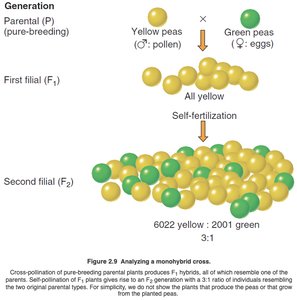
A monohybrid cross examines the inheritance of a single trait. Mendel crossed pure-breeding plants with contrasting traits and observed the following:
All F1 offspring displayed only one of the parental traits (the dominant trait).
When F1 plants were self-fertilized, the F2 generation showed a 3:1 ratio of dominant to recessive traits.
This led to the Law of Segregation:
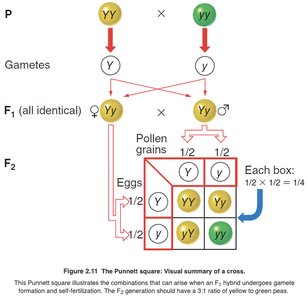
Each individual carries two alleles for each gene, which segregate during gamete formation so that each gamete receives only one allele.
Equation:
Genotype vs. Phenotype
Genotype refers to the genetic makeup (e.g., YY, Yy, yy), while phenotype is the observable trait (e.g., yellow or green peas). Individuals with the same phenotype may have different genotypes (e.g., YY and Yy both yield yellow peas).
Testcrosses
A testcross involves crossing an individual with a dominant phenotype (unknown genotype) with a homozygous recessive individual. The offspring's phenotypes reveal the genotype of the tested parent.
Dihybrid Crosses and the Law of Independent Assortment
A dihybrid cross examines the inheritance of two traits simultaneously. Mendel found that alleles for different genes assort independently during gamete formation, leading to new combinations of traits in the offspring. This is the Law of Independent Assortment.
Equation:
Summary Table: Mendel's Key Concepts
Concept | Description |
|---|---|
Law of Segregation | Alleles separate during gamete formation; each gamete receives one allele. |
Law of Independent Assortment | Alleles of different genes assort independently during gamete formation. |
Dominant Trait | Trait expressed in F1 hybrids; masks recessive trait. |
Recessive Trait | Trait masked in F1 but reappears in F2. |
Genotype | Genetic constitution (e.g., YY, Yy, yy). |
Phenotype | Observable trait (e.g., yellow or green peas). |
Applications and Importance
Understanding Mendelian inheritance is fundamental for predicting genetic outcomes, breeding plants and animals, diagnosing genetic disorders, and advancing biotechnology. The principles established by Mendel remain central to modern genetics and genomics.
