 Back
BackMitosis and the Cell Cycle: Structure, Process, and Regulation
Study Guide - Smart Notes
 Tailored notes based on your materials, expanded with key definitions, examples, and context.
Mitosis and the Cell Cycle
Quick Review of Basic Concepts
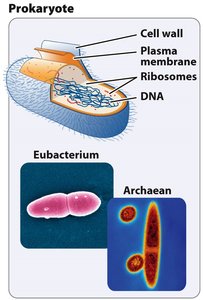
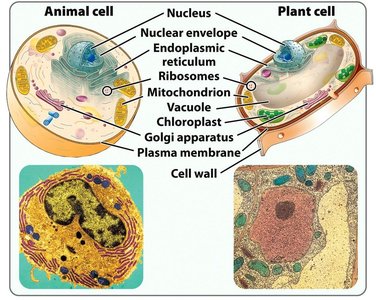
The cell is the fundamental unit of life, and its structure varies between prokaryotes and eukaryotes. Understanding cell structure is essential for grasping the molecular basis of heredity and cell division.
Prokaryotic Cells: Lack a nucleus and membrane-bound organelles. DNA is located in the cytoplasm.
Eukaryotic Cells: Possess a nucleus and various organelles. DNA is packaged into chromosomes within the nucleus.
Chromosomes: Structures composed of DNA and proteins, essential for genetic inheritance.
Chromosome Structure and Terminology
Chromosomes are highly organized structures that ensure accurate transmission of genetic material during cell division.
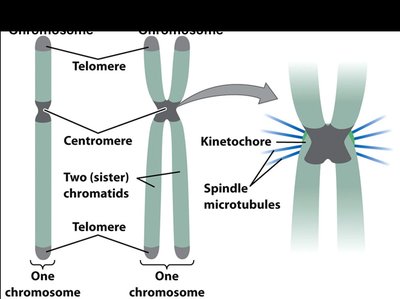
Chromosome: Packaged DNA with a centromere; can be replicated or unreplicated.
Chromatid: One-half of two identical copies of a replicated chromosome; each is a DNA molecule.
Centromere: Constricted region joining sister chromatids; site of kinetochore formation.
Telomere: Specialized structure at chromosome ends, important for DNA stability and replication.
Homologous Chromosomes and Ploidy
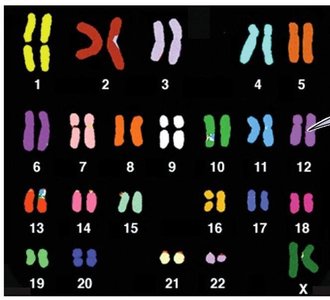
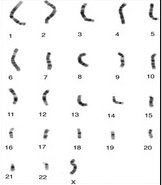
Homologous chromosomes are pairs that carry the same genes in the same order but may have different alleles. Ploidy refers to the number of chromosome sets in a cell.
Homologous Chromosomes: Same length, centromere location, and gene order; one from each parent.
Diploid (2n): Two sets of chromosomes; typical of somatic cells.
Haploid (n): One set of chromosomes; typical of gametes.
Mitosis
Overview of Mitosis
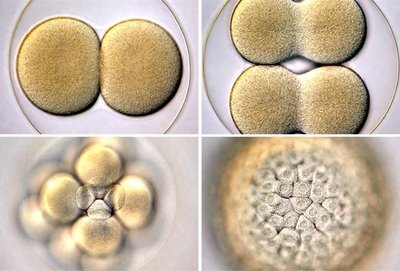
Mitosis is the process by which somatic cells divide to produce two genetically identical daughter cells. It is essential for growth, development, and tissue repair.
Purpose: Maintain genetic continuity by copying and distributing chromosomes.
Result: Two daughter cells, each with the same chromosome number as the original cell.
Phases of Mitosis
Mitosis consists of several distinct phases, each characterized by specific events and structural changes.
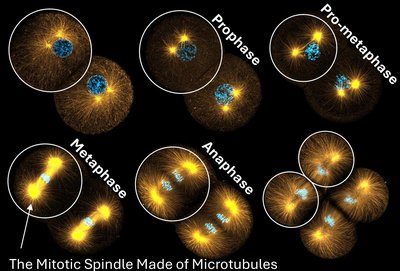
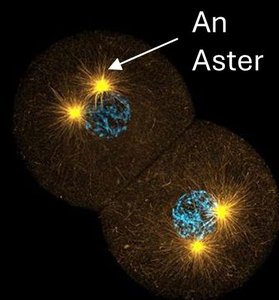
Prophase: Chromosomes condense; asters form at centrosomes (microtubule organizing centers).
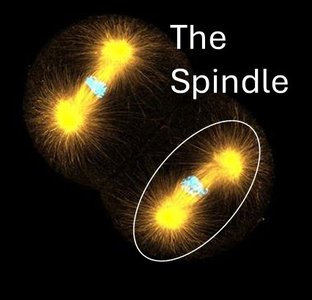
Prometaphase: Nuclear envelope breaks down; spindle forms; microtubules attach to kinetochores.
Metaphase: Chromosomes align on the metaphase plate; spindle fully formed.
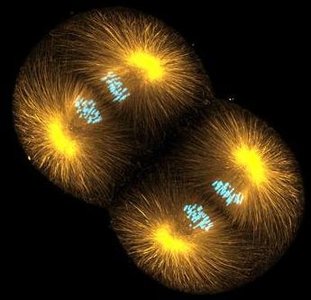
Anaphase: Cohesin proteins cleaved; sister chromatids pulled apart to opposite poles.
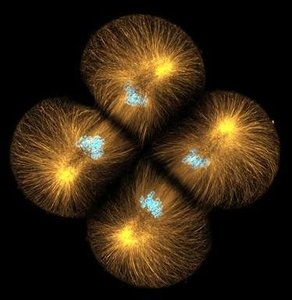
Telophase: Nuclear envelope reforms; chromosomes relax; spindle breaks down.
Cytokinesis: Division of cytoplasm; formation of cell membrane/wall.
Chromosome and Chromatid Numbers During Mitosis
The number of chromosomes, chromatids, and DNA molecules changes throughout the cell cycle and mitosis.
G1 Phase: Chromosomes are unreplicated (one chromatid each).
G2 Phase: Chromosomes are replicated (two sister chromatids each).
Metaphase: Chromosomes are still replicated; chromatids are aligned.
Anaphase: Sister chromatids separate, becoming individual chromosomes.
Telophase: Each daughter cell has unreplicated chromosomes.
The Cell Cycle
Phases of the Cell Cycle
The cell cycle is a series of events that cells go through as they grow and divide. It consists of four main phases:
G1 Phase: Cell growth; chromosomes unreplicated.
S Phase: DNA replication; chromosomes become replicated (two sister chromatids).
G2 Phase: Preparation for mitosis; chromosomes remain replicated.
M Phase: Mitosis and cytokinesis; cell divides.
Checkpoints and Cell Cycle Regulation
Checkpoints are control mechanisms that ensure the integrity of the cell's genetic material and proper progression through the cell cycle.
Spindle Assembly Checkpoint: Ensures chromosomes are properly attached and aligned before separation.
DNA Damage Checkpoint: Detects DNA damage and delays cell cycle progression until repair occurs.
Importance: Prevents propagation of errors; defective checkpoints can lead to cancer.
Summary Table: Chromosome and Chromatid Numbers
This table summarizes the relationship between chromosomes, chromatids, and DNA molecules before and after replication.
Type of DNA | G1 (Unreplicated) | G2 (Replicated) |
|---|---|---|
Chromosomes | 1 | 1 |
Chromatids | 1 | 2 |
DNA Molecules | 1 | 2 |
Key Definitions and Concepts
Chromosome: A DNA molecule with associated proteins, visible during cell division.
Chromatid: One of two identical halves of a replicated chromosome.
Homologous Pair: Two chromosomes, one from each parent, with the same genes.
Centromere: Region joining sister chromatids; site of kinetochore formation.
Telomere: Chromosome end, important for stability.
Diploid (2n): Two sets of chromosomes.
Haploid (n): One set of chromosomes.
Checkpoint: Molecular pathway ensuring proper cell cycle progression.
Example Calculation: Chromosome Numbers
For a diploid organism with 2n = 6:
G1 Phase: 6 chromosomes, 6 chromatids, 6 DNA molecules.
G2 Phase: 6 chromosomes, 12 chromatids, 12 DNA molecules.
After Mitosis: Each daughter cell has 6 chromosomes, 6 chromatids, 6 DNA molecules.
Summary
Mitosis produces two genetically identical daughter cells.
The cell cycle is tightly regulated by checkpoints to ensure genetic integrity.
Understanding chromosome structure and cell cycle phases is fundamental to genetics.
