 Back
BackMolecular Genetics: Foundations, Mechanisms, and Applications
Study Guide - Smart Notes
 Tailored notes based on your materials, expanded with key definitions, examples, and context.
Introduction to Molecular Genetics
Overview of Genetics and Molecular Genetics
Genetics is the study of heredity and variation, focusing on how traits and diseases are transmitted from one generation to the next. Molecular genetics examines genetic material at the molecular level, including its storage, replication, transmission, and activity. This field provides the foundation for understanding cellular function, development, disease, and evolution.
Genetic Material: DNA is the primary genetic material in most organisms, storing and transmitting hereditary information.
Applications: Molecular genetics techniques are essential for medicine, agriculture, biotechnology, and evolutionary studies.
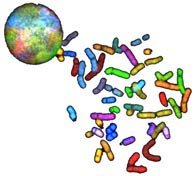
Structure and Function of DNA
DNA as the Genetic Material
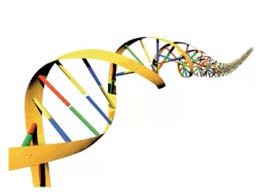
DNA (deoxyribonucleic acid) is a double-helical molecule composed of nucleotides. It encodes genetic information through the sequence of its four bases: adenine (A), thymine (T), guanine (G), and cytosine (C). The structure of DNA allows for accurate replication and transmission of genetic information.
Double Helix: Two antiparallel strands held together by complementary base pairing (A-T and G-C).
Replication: DNA can be copied precisely, ensuring genetic continuity.
Central Dogma of Molecular Biology
Flow of Genetic Information
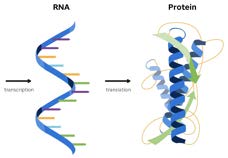
The central dogma describes the flow of genetic information from DNA to RNA to protein. This process involves two key steps: transcription and translation.
Transcription: DNA is transcribed into messenger RNA (mRNA).
Translation: mRNA is translated into a polypeptide (protein) sequence.
Mechanisms of DNA Replication
Semiconservative Replication
DNA replication is semiconservative, meaning each new DNA molecule consists of one old (parental) strand and one newly synthesized strand. The process is catalyzed by DNA polymerases and involves several steps, including unwinding, primer synthesis, elongation, and ligation.
Origin of Replication: Replication begins at specific sites called origins.
Enzymes: Helicase unwinds DNA, primase synthesizes RNA primers, DNA polymerase extends the new strand, and ligase joins fragments.
Gene Expression: Transcription and Translation
Transcription
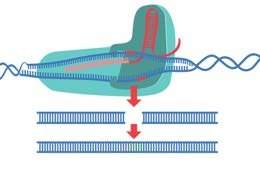
Transcription is the synthesis of RNA from a DNA template. RNA polymerase binds to the promoter region of a gene and synthesizes a complementary RNA strand. In eukaryotes, the primary transcript (pre-mRNA) undergoes processing, including 5' capping, splicing, and 3' polyadenylation.
Translation
Translation is the process by which ribosomes synthesize proteins using the sequence of codons in mRNA. Transfer RNAs (tRNAs) bring amino acids to the ribosome, where they are joined in the order specified by the mRNA.
Genetic Code: The code is triplet, non-overlapping, and nearly universal.
Start and Stop Codons: AUG is the start codon; UAA, UAG, and UGA are stop codons.
Experimental Approaches in Molecular Genetics
Forward and Reverse Genetics
Genetic screens and targeted gene manipulation are used to study gene function:
Forward Genetics: Mutagenesis followed by screening for phenotypes of interest, then identifying the mutated gene.
Reverse Genetics: Targeted mutation of a specific gene to observe resulting phenotypes (e.g., gene knockouts).
Model Organisms in Genetics
Caenorhabditis elegans (C. elegans)
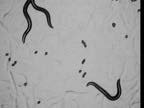
C. elegans is a widely used model organism in molecular genetics due to its simple anatomy, transparent body, and well-characterized nervous system. It is used for genetic screens to identify genes involved in development and behavior.
Gene Structure and Mutations
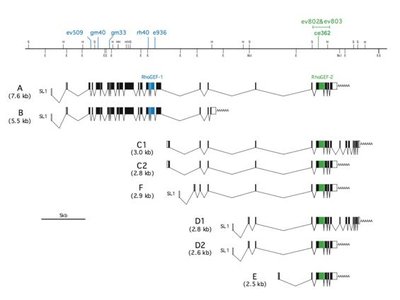
Gene structure can be analyzed by mapping mutations and mRNA isoforms. Mutations in genes such as unc-73/Trio in C. elegans can affect nervous system development and function.
Summary Table: Key Concepts in Molecular Genetics
Concept | Description | Example/Application |
|---|---|---|
Genetic Material | DNA stores and transmits hereditary information | DNA double helix structure |
Replication | Semiconservative mechanism ensures genetic continuity | Meselson-Stahl experiment |
Gene Expression | Transcription and translation produce proteins from genes | Central dogma: DNA → RNA → Protein |
Model Organisms | Used to study gene function and inheritance | C. elegans, Drosophila, mice |
Genetic Screens | Identify genes involved in specific processes | Forward and reverse genetics |
Additional info: The images included above are directly relevant to the structure of chromosomes, DNA, the process of replication, gene expression, and model organism research, all of which are foundational topics in molecular genetics.
