 Back
Molecular Techniques in Genetics: PCR and DNA Sequencing
Study Guide - Smart Notes
 Tailored notes based on your materials, expanded with key definitions, examples, and context.
Recombinant DNA Technology
Molecular Techniques Relying on DNA Replication
Molecular genetics utilizes advanced techniques to manipulate and analyze DNA. Two foundational methods are the Polymerase Chain Reaction (PCR) and DNA sequencing, both of which rely on the principles of DNA replication to amplify and determine the order of nucleotides in genetic material.
Polymerase Chain Reaction (PCR)
Principle and Purpose of PCR
The Polymerase Chain Reaction (PCR) is a technique used to make numerous copies of a specific DNA sequence. It enables researchers to amplify DNA without the need for vectors or host cells, making it a cornerstone of molecular biology.
Template DNA: The DNA sequence to be amplified.
Oligonucleotide Primers: Short, synthetic DNA fragments (15-20 nucleotides) that are complementary to the ends of the target sequence.
Deoxynucleoside triphosphates (dNTPs): The building blocks for new DNA synthesis.
Thermostable DNA Polymerase: An enzyme (e.g., Taq polymerase) that can withstand high temperatures required for PCR.
These components are combined in a machine called a thermocycler, which automates the temperature changes necessary for PCR.
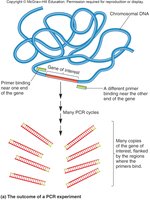
Steps of PCR
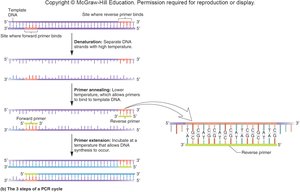
PCR consists of three main steps, repeated for 20-40 cycles to exponentially amplify the target DNA:
Denaturation: The double-stranded DNA is heated to separate into single strands.
Annealing: The temperature is lowered to allow primers to bind to their complementary sequences on the DNA.
Extension (Synthesis): DNA polymerase extends the primers, synthesizing new DNA strands.
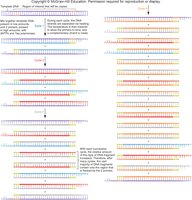
Each cycle doubles the amount of target DNA, resulting in millions of copies after multiple cycles.
Variations of PCR
Several variations of PCR are used for specialized applications:
Reverse Transcriptase PCR (RT-PCR): Used to quantify RNA by converting it to complementary DNA (cDNA) before amplification.
Real-Time PCR (qPCR): Allows quantification of DNA by measuring fluorescence during amplification.
These methods are crucial for diagnostics, such as COVID-19 testing, where RT-PCR and qPCR are used to detect viral RNA.
DNA Sequencing
Principle of DNA Sequencing
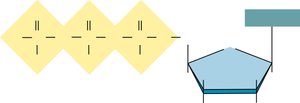
DNA sequencing determines the precise order of nucleotides (A, G, C, T) in a DNA molecule. The most common method is Sanger sequencing, which uses DNA polymerase and special nucleotide analogs called dideoxyribonucleotides (ddNTPs).
Dideoxyribonucleotides (ddNTPs): These lack a 3' hydroxyl group, causing chain termination when incorporated into a growing DNA strand.
DNA Polymerase: Synthesizes new DNA strands using a template and primers.
When a ddNTP is incorporated, no further nucleotides can be added, resulting in DNA fragments of varying lengths.
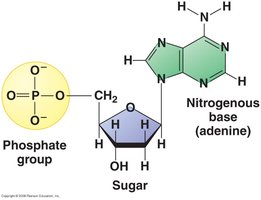
How Sanger Sequencing Works
In Sanger sequencing, a mixture of normal nucleotides (dNTPs) and fluorescently labeled ddNTPs is used. DNA fragments are generated, each ending at a ddNTP. These fragments are separated by gel electrophoresis, and the sequence is determined by detecting the fluorescence.
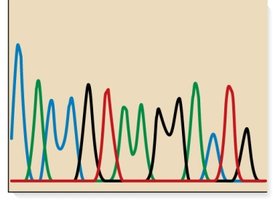
Automated DNA Sequencing: Uses a laser to excite fluorescent dyes attached to ddNTPs, and a detector records the emission.
Output: The sequence is displayed as colored peaks, each representing a nucleotide.

Applications of DNA Sequencing
DNA sequencing is essential for:
Determining the order of nucleotides in genes or genomes
Identifying allele sequences associated with traits or diseases
Comparing genetic sequences within and between species for evolutionary studies
Species identification
Summary Table: PCR vs. DNA Sequencing
Technique | Purpose | Key Components | Applications |
|---|---|---|---|
PCR | Amplify specific DNA sequences | Template DNA, primers, dNTPs, thermostable polymerase | Diagnostics, cloning, forensics, research |
DNA Sequencing | Determine nucleotide order | Template DNA, primers, dNTPs, ddNTPs, polymerase | Genomics, disease allele identification, evolutionary studies |
Additional info: PCR and DNA sequencing are foundational to recombinant DNA technology, enabling genetic analysis, manipulation, and diagnostics in modern genetics.
