 Back
BackMolecular Techniques in Genetics: PCR and DNA Sequencing
Study Guide - Smart Notes
 Tailored notes based on your materials, expanded with key definitions, examples, and context.
Chapter 17: Molecular Techniques that Rely on DNA Replication
Introduction
This chapter explores essential molecular techniques in genetics that utilize the principles of DNA replication. The focus is on the Polymerase Chain Reaction (PCR) and DNA sequencing, both of which are foundational for modern genetic analysis, diagnostics, and research.
Polymerase Chain Reaction (PCR)
Principle and Purpose
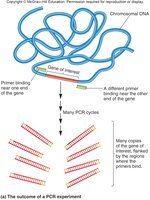
Polymerase Chain Reaction (PCR) is a technique used to amplify specific DNA sequences, generating millions of copies from a small initial sample. PCR is fundamental for genetic analysis, cloning, diagnostics, and forensic science.
Definition: PCR is an in vitro method that mimics natural DNA replication to exponentially amplify a target DNA region.
Applications: Gene cloning, mutation detection, pathogen identification, forensic analysis, and more.
Key Components:
Template DNA: The DNA segment to be amplified.
Oligonucleotide Primers: Short, synthetic DNA sequences (15–20 nucleotides) that flank the target region and provide starting points for DNA synthesis.
Deoxynucleoside Triphosphates (dNTPs): Building blocks for new DNA strands.
Thermostable DNA Polymerase: Enzyme (e.g., Taq polymerase) that synthesizes new DNA at high temperatures.
PCR Steps
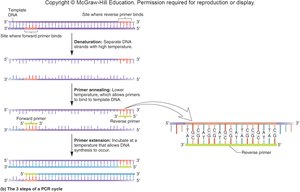
PCR consists of repeated cycles, each with three main steps:
Denaturation: Double-stranded DNA is heated (typically 94–98°C) to separate into single strands.
Annealing: Temperature is lowered (50–65°C) to allow primers to bind (anneal) to their complementary sequences on the template DNA.
Extension (Elongation): DNA polymerase extends the primers, synthesizing new DNA strands (usually at 72°C).
PCR Cycle Amplification
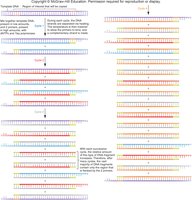
Each cycle doubles the amount of target DNA, leading to exponential amplification. After 30 cycles, over a billion copies can be produced from a single DNA molecule.
PCR Variations
Reverse Transcriptase PCR (RT-PCR): Used to amplify RNA by first converting it to complementary DNA (cDNA) using reverse transcriptase. Useful for studying gene expression.
Quantitative PCR (qPCR or Real-Time PCR): Measures the amount of DNA amplified in real time using fluorescent markers. Allows quantification of DNA or RNA in samples.
PCR-based COVID Testing: Combines RT-PCR and qPCR to detect viral RNA.
DNA Sequencing
Principle and Purpose
DNA sequencing is the process of determining the precise order of nucleotides (A, G, C, T) in a DNA molecule. Sequencing is essential for gene identification, mutation analysis, evolutionary studies, and biotechnology.
Applications: Gene discovery, disease diagnosis, evolutionary biology, species identification, and quality control in genetic engineering.
Sanger (Dideoxy) Sequencing
The classic Sanger sequencing method uses chain-terminating dideoxynucleotides (ddNTPs) to generate DNA fragments of varying lengths, each ending at a specific nucleotide. The fragments are separated by size, and the sequence is deduced.
Key Components: Template DNA, primer, DNA polymerase, dNTPs, and fluorescently labeled ddNTPs.
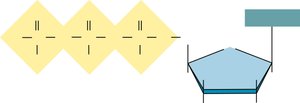
Mechanism: Incorporation of a ddNTP terminates DNA synthesis because ddNTPs lack a 3' hydroxyl group required for chain elongation.
Automated DNA Sequencing
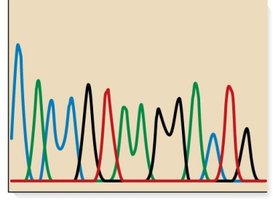
Modern sequencing uses fluorescently labeled ddNTPs and automated capillary electrophoresis. A laser excites the fluorescent tags, and a detector records the emission, producing a chromatogram that reveals the DNA sequence.
High-Throughput (Next-Generation) Sequencing
Next-generation sequencing (NGS) technologies allow rapid, parallel sequencing of millions of DNA fragments, enabling whole-genome sequencing and large-scale genetic studies.
Examples: Illumina, Ion Torrent, and other platforms.
Advantages: High speed, scalability, and reduced cost per base compared to Sanger sequencing.
Applications of DNA Sequencing
Determining the sequence of genes or entire genomes.
Verifying cloned DNA sequences and detecting mutations.
Identifying alleles associated with traits or diseases.
Comparing genetic sequences within and between species for evolutionary and ecological studies.
Species identification and biodiversity assessment.
Summary Table: PCR vs. DNA Sequencing
Technique | Main Purpose | Key Components | Applications |
|---|---|---|---|
PCR | Amplify specific DNA regions | Template DNA, primers, dNTPs, DNA polymerase | Cloning, diagnostics, forensics, gene expression |
DNA Sequencing | Determine nucleotide order | Template DNA, primer, DNA polymerase, dNTPs, ddNTPs | Gene discovery, mutation analysis, evolutionary studies |
Key Terms
Oligonucleotide Primer: Short, synthetic DNA used to initiate DNA synthesis.
dNTP: Deoxynucleoside triphosphate, the building block of DNA.
ddNTP: Dideoxynucleoside triphosphate, a chain-terminating nucleotide used in sequencing.
Thermocycler: Machine that automates the temperature changes required for PCR.
cDNA: Complementary DNA synthesized from an RNA template.
qPCR: Quantitative PCR, used to measure DNA or RNA amounts in real time.
NGS: Next-generation sequencing, high-throughput DNA sequencing technology.
