 Back
BackMutations and DNA Repair: Mechanisms, Types, and Effects
Study Guide - Smart Notes
 Tailored notes based on your materials, expanded with key definitions, examples, and context.
Mutations and DNA Repair
Introduction to Mutations
Mutations are alterations in the DNA sequence or chromosome structure that generate new alleles, providing the basis for genetic diversity, evolution, and the inheritance of genetic diseases. Mutations can occur in both somatic (non-heritable) and germ cells (heritable), and may affect coding or noncoding regions of genes.
Mutation Definition: Any change in the DNA sequence, including base-pair substitutions, insertions, deletions, or major chromosomal alterations.
Heritability: Germ cell mutations are passed to offspring, while somatic mutations are not.
Regions Affected: Mutations can occur in exons (coding), introns, promoters, enhancers, and other regulatory sequences.
Regulation of Gene Expression and Post-Translational Modifications
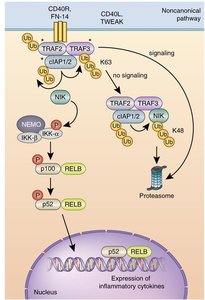
Gene expression is tightly regulated at multiple levels, including post-translational modifications. The noncanonical NF-κB pathway illustrates how protein stability and activity are controlled by mechanisms such as ubiquitination, phosphorylation, cleavage, and translocation.
Ubiquitination: Targets proteins for degradation or regulates signaling complexes.
Phosphorylation: Activates or inhibits proteins, affecting signaling pathways and transcription factor activity.
Cleavage: Proteolytic processing converts inactive precursors into active proteins.
Translocation: Movement of regulatory proteins into the nucleus enables gene expression.
Protein Targeting and Translation Regulation
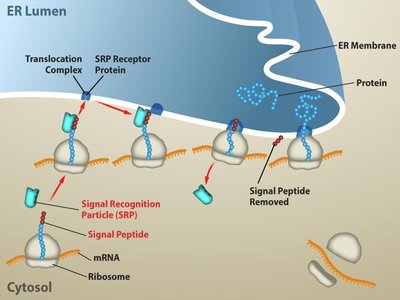
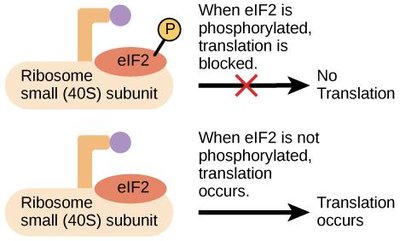
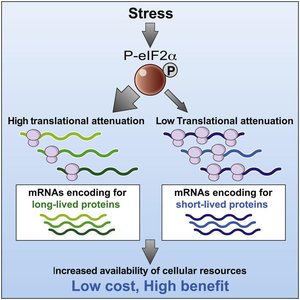
Proteins destined for secretion are co-translationally targeted to the endoplasmic reticulum (ER) via a signal sequence recognized by the signal recognition particle (SRP). Regulation of translation initiation is also crucial, as phosphorylation of eIF2 can block translation, a mechanism observed in stress responses and neurodegenerative diseases.
Signal Sequence: Directs ribosome to ER membrane for protein translocation.
SRP: Recognizes signal sequence and targets ribosome to ER.
eIF2 Phosphorylation: Blocks translation initiation, regulating protein synthesis under stress.
Classification of Gene Mutations
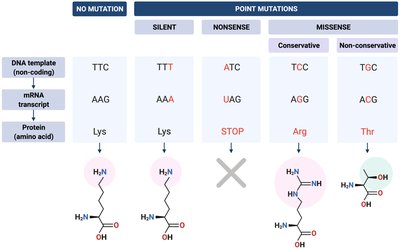
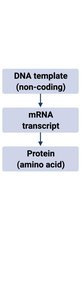
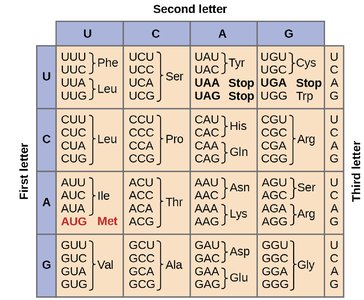
Gene mutations are classified by their molecular changes and effects on protein function. Point mutations (base substitutions) can be silent, missense, or nonsense, depending on their impact on the encoded amino acid.
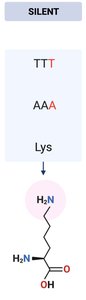
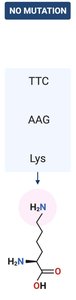
Silent Mutation: Synonymous codon change; no effect on amino acid.
Nonsense Mutation: Introduces a stop codon; premature termination of translation.
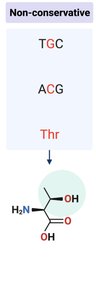
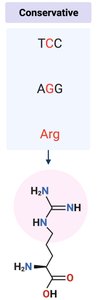
Missense Mutation: Changes amino acid; can be conservative (similar properties) or non-conservative (different properties).
Frameshift Mutation: Insertions or deletions shift the reading frame, altering downstream amino acids.
Wobble Hypothesis and Codon Redundancy
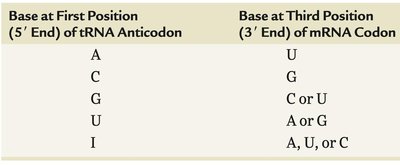
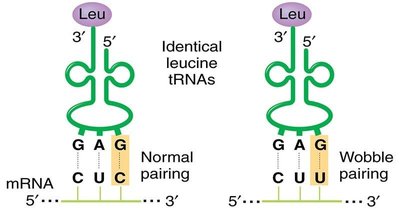
The genetic code is degenerate, meaning multiple codons can encode the same amino acid. The wobble hypothesis explains how the third base of a codon pairs flexibly with tRNA, allowing fewer tRNAs to recognize multiple codons and making many mutations in this position silent.
Wobble Pairing: Flexible pairing at the third codon position.
Degeneracy: Multiple codons for one amino acid.
Inosine: A modified base in tRNA that pairs with A, U, or C.
Types of Base Substitutions: Transitions and Transversions
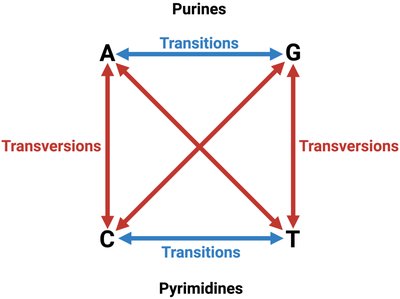
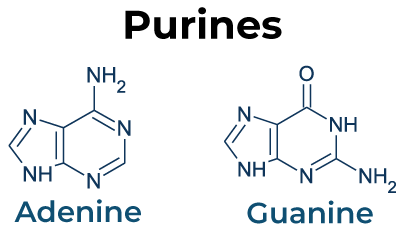
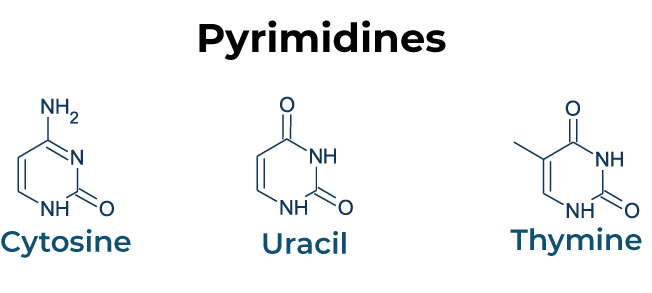
Base substitutions are classified as transitions (purine to purine or pyrimidine to pyrimidine) or transversions (purine to pyrimidine or vice versa). Transversions cause more drastic changes in DNA structure and can affect stability and protein coding.
Purines: Adenine (A), Guanine (G)
Pyrimidines: Cytosine (C), Thymine (T), Uracil (U)
Transition: A ↔ G or C ↔ T
Transversion: A ↔ C/T or G ↔ C/T
Frameshift Mutations
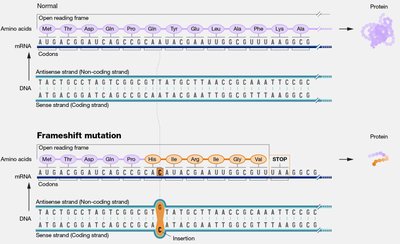
Frameshift mutations result from insertions or deletions of base pairs, causing a shift in the reading frame during translation. This alters the triplet reading and can lead to premature stop codons and nonfunctional proteins.
Frameshift: Alters downstream amino acid sequence.
Consequences: Often severe, leading to loss of protein function.
Mutations Classified by Phenotype
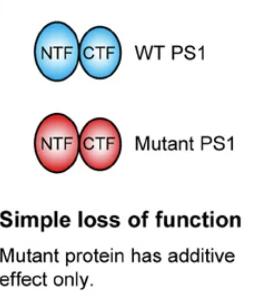
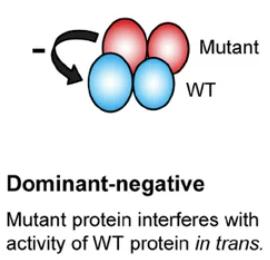
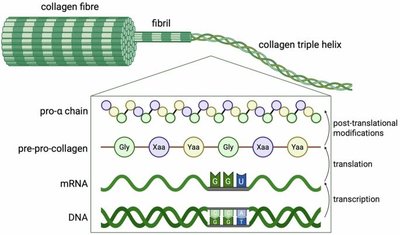
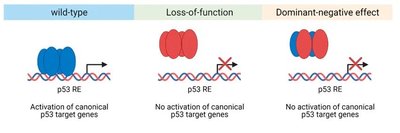
Mutations can be classified by their effects on phenotype, including loss-of-function, null, recessive, dominant, and dominant-negative mutations. Dominant-negative mutations interfere with the function of normal proteins, often in complexes such as p53 or collagen.
Loss-of-function: Reduced or no gene activity.
Null mutation: Complete absence of gene activity.
Recessive mutation: Phenotype appears only in homozygous mutants.
Dominant mutation: Phenotype appears in heterozygotes.
Dominant-negative: Mutant protein interferes with normal protein function.
Haploinsufficiency: One functional allele is insufficient for normal function (e.g., Marfan syndrome).
Summary of DNA Mutation Types
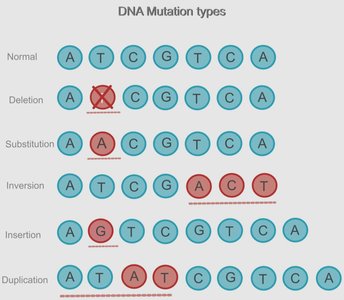
DNA mutations include deletions, substitutions, inversions, insertions, and duplications. Silent mutations can affect codon usage bias, tRNA abundance, GC content, promoter affinity, and translation efficiency.
Deletion: Removal of nucleotides.
Substitution: Replacement of one nucleotide.
Inversion: Reversal of a DNA segment.
Insertion: Addition of nucleotides.
Duplication: Repetition of a DNA segment.
Molecular Causes of Mutations
Mutations arise spontaneously or are induced by external agents. Spontaneous mutations result from replication errors, tautomeric shifts, depurination, and deamination. Induced mutations are caused by mutagens such as UV, X-rays, chemicals, and viruses.
Spontaneous Mutation: Natural changes in nucleotide sequence.
Induced Mutation: Caused by mutagens (physical, chemical, biological agents).
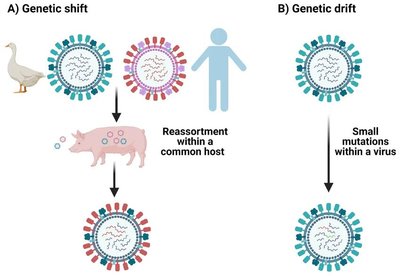
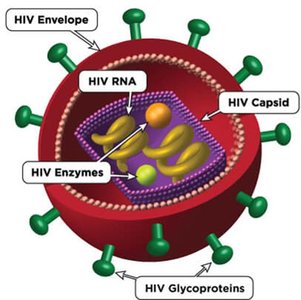
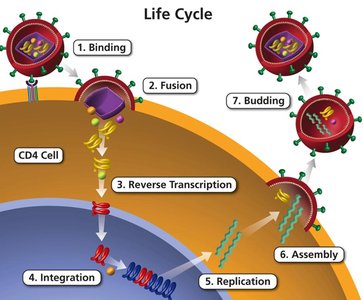
Mutation Rates: DNA polymerase has high fidelity due to proofreading; RNA polymerase is error-prone, leading to rapid evolution in RNA viruses.
DNA Replication Errors and Proofreading
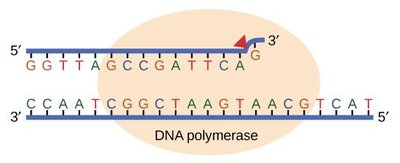
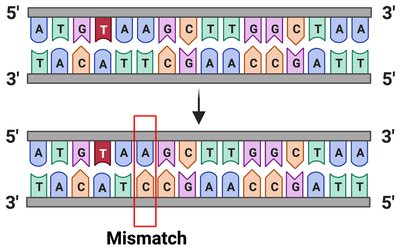
DNA polymerase has a built-in proofreading function (3′ → 5′ exonuclease activity) that detects and removes mismatches during replication, greatly reducing mutation rates. Mismatch repair systems further decrease errors.
Proofreading: DNA polymerase removes incorrect bases.
Mismatch Repair: Targets daughter strand to eliminate mispairs.
Error Rates: With proofreading and mismatch repair, error rates are extremely low.

Tautomeric Shifts and Mutagens
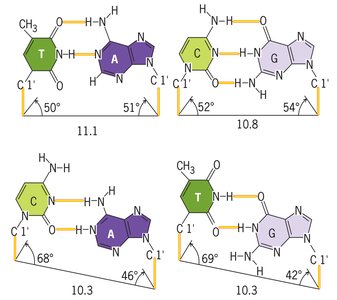
Tautomeric shifts are temporary changes in base structure that allow non-complementary pairing, leading to mutations if not corrected. Mutagens increase mutation frequency by damaging DNA, interfering with replication, or altering base pairing.
Tautomeric Shift: Isomerization of bases increases mispairing.
Mutagens: UV, X-rays, chemicals, oxidative radicals, intercalating agents.
Deamination: Removes amino group, changing base identity (e.g., cytosine to uracil).
Ionizing Radiation: Causes strand breaks and thymine dimers.
Distribution of Fitness Effects (DFE) of Mutations
The DFE describes how new mutations affect an organism's fitness, influencing evolution, disease development, and population viability.
Fitness Effects: Mutations can be beneficial, neutral, or deleterious.
Evolutionary Impact: DFE is essential for understanding selection, variation, and heritability.
Summary Table: Types of Point Mutations
Mutation Type | DNA Sequence | Protein Effect |
|---|---|---|
No Mutation | TTC / AAG | Lysine |
Silent | TTT / AAA | Lysine |
Nonsense | ATC / UAG | Stop codon |
Conservative Missense | TCC / AGG | Arginine |
Non-conservative Missense | TGC / ACG | Threonine |
Additional info:
Some context and explanations were expanded for clarity and completeness.
Tables and diagrams were recreated and described for academic study purposes.
