 Back
BackMutations and Mutation Repair: Types, Mechanisms, and Biological Consequences
Study Guide - Smart Notes
 Tailored notes based on your materials, expanded with key definitions, examples, and context.
Mutations: Definitions and Biological Significance
Introduction to Mutations
Mutations are heritable changes in the DNA sequence that can affect gene function and phenotype. They are central to the processes of heredity, variation, and evolution, providing the raw material for natural selection and adaptation.
Mutation: Any change in the DNA sequence, ranging from a single base pair to large chromosomal alterations.
Mutations can be neutral, deleterious, or beneficial depending on their effect on the organism's fitness.
Heritable mutations are the basis for evolutionary change.
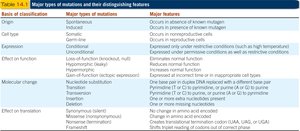
Classification of Mutations
By Cell Type
Germline mutations: Occur in gametes (sperm or egg); heritable and present in all cells of offspring.
Somatic mutations: Occur in body cells; not passed to offspring but can cause diseases like cancer.
By Manner of Expression
Unconditional mutations: Expressed under all conditions.
Conditional mutations: Expressed only under certain environmental or physiological conditions (e.g., temperature-sensitive mutations).
By Effect on Gene Function
Loss-of-function mutations: Result in reduced or abolished gene function; often recessive.
Reduction-of-function mutations: Decrease gene activity but do not eliminate it.
Gain-of-function mutations: Confer new or enhanced activity on a protein; often dominant.
By Molecular Change
Base substitutions (point mutations): One base is replaced by another.
Insertions: Addition of one or more bases.
Deletions: Loss of one or more bases.
Indels: Insertions or deletions that may cause frameshifts.
Trinucleotide repeat expansions: Increase in the number of repeated three-base sequences.
By Effect on Protein
Silent (synonymous) mutations: Change a codon but not the encoded amino acid; usually no effect on phenotype.
Missense mutations: Change one amino acid in the protein; may affect protein function.
Nonsense mutations: Convert an amino acid codon to a stop codon, resulting in premature termination of translation.
Frameshift mutations: Insertions or deletions that alter the reading frame, usually resulting in nonfunctional proteins.
Examples of Mutation Effects
Coat Color in Rabbits: Multiple Alleles and Conditional Mutations
Rabbit coat color is determined by multiple alleles of a single gene, with different alleles producing enzymes of varying activity or temperature sensitivity.
C (full color): Functional enzyme for pigment production.
cch (chinchilla): Partially defective enzyme; less pigment.
ch (Himalayan): Temperature-sensitive enzyme; pigment only in cooler body parts.
c (albino): Inactive enzyme; no pigment.




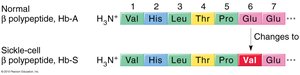
Missense Mutation: Sickle Cell Disease
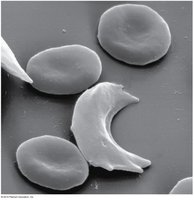
Sickle cell disease is caused by a single base substitution in the beta-globin gene, resulting in a missense mutation (Glu6Val). This alters hemoglobin structure, causing red blood cells to sickle and aggregate.
Frameshift Mutations
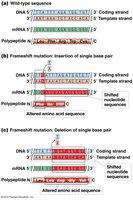
Insertions or deletions that are not multiples of three nucleotides shift the reading frame, altering all downstream amino acids and usually resulting in a nonfunctional protein.
Duchenne Muscular Dystrophy (DMD)
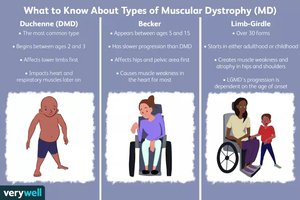
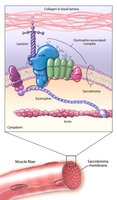
DMD is an X-linked recessive disorder caused by mutations (often deletions or point mutations) in the DMD gene, leading to loss of dystrophin protein and progressive muscle degeneration.
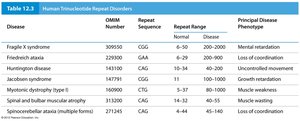
Trinucleotide Repeat Expansion: Huntington's Disease
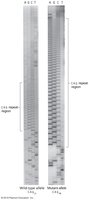
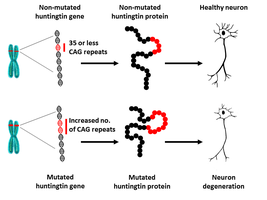
Huntington's disease is caused by expansion of CAG repeats in the HD gene. The number of repeats correlates with disease onset and severity. Expanded repeats cause protein aggregation and neuronal death.
Mechanisms of Mutation Formation
Spontaneous Mutations
Arise from natural processes such as DNA replication errors, tautomeric shifts, deamination, and depurination.
DNA polymerase error rate: per base pair per replication.
Proofreading and mismatch repair further reduce mutation rates.
Induced Mutations
Caused by external agents (mutagens) such as chemicals or radiation.
Base analogs: Chemicals resembling DNA bases, incorporated during replication (e.g., 5-bromouracil).
Base modifying agents: Chemically alter bases, changing their pairing properties.
Intercalating agents: Insert between DNA bases, causing insertions or deletions (frameshifts).
Radiation: UV light causes thymine dimers; ionizing radiation causes double-strand breaks.
Detection of Mutagens: The Ames Test
The Ames test uses bacteria to detect mutagenic chemicals by measuring the reversion of mutations that restore the ability to grow without histidine. Some chemicals require metabolic activation (rat liver extract) to become mutagenic.
DNA Repair Mechanisms
Overview of DNA Repair
Cells possess multiple DNA repair systems to correct mutations and maintain genome integrity. If errors are repaired before replication, mutations are prevented.
Base excision repair: Removes damaged bases (e.g., uracil from deamination of cytosine).
Nucleotide excision repair: Removes bulky lesions (e.g., thymine dimers).
Mismatch repair: Corrects replication errors not fixed by proofreading.
Photoreactivation: Direct reversal of thymine dimers by photolyase (in bacteria).
Nonhomologous end joining (NHEJ): Repairs double-strand breaks.
Consequences of Defective DNA Repair
Mutations in DNA repair genes can lead to increased mutation rates and predisposition to cancer. For example, xeroderma pigmentosum (XP) results from defective nucleotide excision repair, causing extreme sensitivity to UV light and high cancer risk.
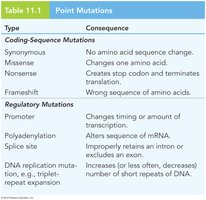
Summary Table: Types and Effects of Point Mutations
Type | Consequence |
|---|---|
Synonymous (silent) | No amino acid sequence change |
Missense | Changes one amino acid |
Nonsense | Creates stop codon, terminates translation |
Frameshift | Wrong sequence of amino acids |
Promoter | Changes timing or amount of transcription |
Polyadenylation | Alters sequence of mRNA |
Splice site | Improperly retains intron or excludes exon |
Triplet-repeat expansion | Increases (or decreases) number of short repeats of DNA |
Conclusion
Mutations are fundamental to genetics, evolution, and disease. Understanding their types, mechanisms, and repair systems is essential for interpreting genetic variation and the molecular basis of inherited disorders.
