 Back
BackNon-Mendelian Inheritance: Maternal Effect, Extranuclear, and Epigenetic Inheritance
Study Guide - Smart Notes
 Tailored notes based on your materials, expanded with key definitions, examples, and context.
Non-Mendelian Inheritance Patterns
Introduction to Non-Mendelian Inheritance
While Mendelian inheritance describes the transmission of traits according to Mendel's laws, several important genetic phenomena do not follow these patterns. These include maternal effect, extranuclear inheritance, and epigenetic inheritance. Understanding these mechanisms is crucial for interpreting complex inheritance patterns in eukaryotes.
Mendelian inheritance: Genes directly influence traits and follow predictable ratios.
Non-Mendelian inheritance: Includes maternal effect, extranuclear inheritance, and epigenetic inheritance, which do not follow Mendel's predictions.
Maternal effect: Nuclear genes in the mother determine the offspring's phenotype, regardless of the offspring's own genotype.
Extranuclear inheritance: Genes located outside the nucleus (e.g., mitochondria, chloroplasts) are inherited, often maternally.
Epigenetic inheritance: Phenotypic changes occur without alterations in the DNA sequence, often through modifications such as DNA methylation or histone modification.
Maternal Effect
Definition and Mechanism
The maternal effect refers to a phenomenon where the genotype of the mother directly determines the phenotype of her offspring, often through substances deposited in the egg during oogenesis. The father's genotype and the offspring's own genotype do not influence the trait in question.
Maternal effect genes are expressed in the mother's reproductive organs.
The phenotype of the progeny is determined by the mother's genotype.
Commonly observed in early developmental processes, such as axis formation and shell coiling in snails.
Example: Shell Coiling in Water Snails (Limnaea peregra)
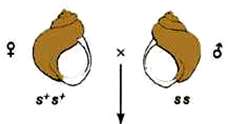
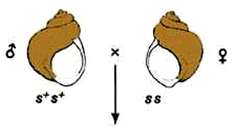
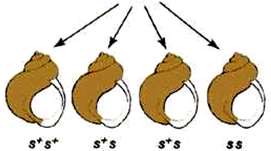
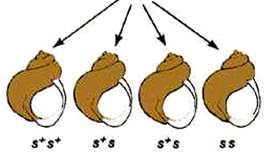
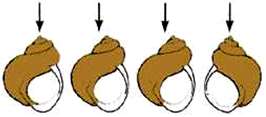
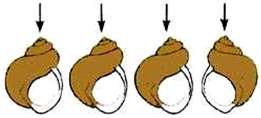
Shell coiling direction (dextral or sinistral) in water snails is determined by the genotype of the mother, not the offspring.
Dextral (right-handed) coiling: Produced by mothers with at least one dominant allele (s+).
Sinistral (left-handed) coiling: Produced by mothers homozygous for the recessive allele (ss).
The father's genotype does not affect the offspring's phenotype.
Mammalian Oocyte Structure and Early Development
Maternal effect genes play a critical role in early mammalian development, influencing processes such as cleavage and axis formation.




Maternal Effect in Drosophila
In Drosophila, dominant maternal effect alleles can control early developmental events such as cleavage patterns. Homozygous recessive conditions are often lethal.

Dosage Compensation and X Inactivation
Purpose and Mechanisms
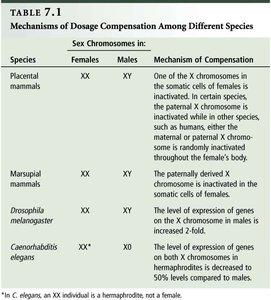
Dosage compensation ensures equal expression of X-linked genes between males (XY) and females (XX). In mammals, this is achieved by inactivating one X chromosome in females, forming a Barr body.
Barr body: Inactive X chromosome visible as a dense structure in the nucleus.
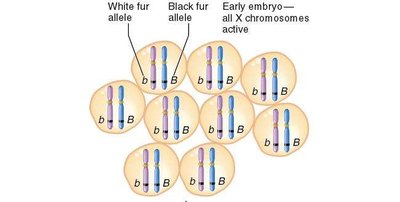
Lyon hypothesis: X inactivation is random and occurs early in embryonic development.
Other species use different mechanisms for dosage compensation.

Species | Sex Chromosomes in Females | Sex Chromosomes in Males | Mechanism of Compensation |
|---|---|---|---|
Placental mammals | XX | XY | One X inactivated in females |
Marsupial mammals | XX | XY | Paternally derived X inactivated in females |
Drosophila melanogaster | XX | XY | X gene expression doubled in males |
Caenorhabditis elegans | XX | X0 | X gene expression halved in hermaphrodites |
X Inactivation and Barr Bodies
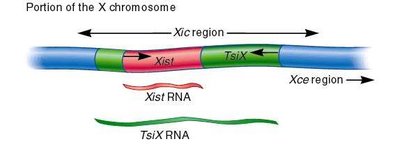
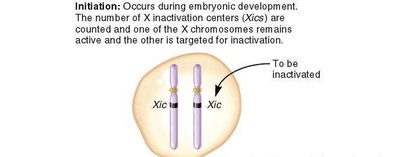
The process of X inactivation involves the X-inactivation center (Xic), which contains the Xist and TsiX genes. Xist RNA coats the inactive X, leading to compaction into a Barr body. The number of Barr bodies is always one less than the number of X chromosomes.
Xist: Expressed only on the inactive X, produces RNA that coats and inactivates the chromosome.
TsiX: Expressed during early development, inhibits Xist and prevents inactivation.
Xce: Regulates the choice of which X chromosome is inactivated.
Examples: Calico Cats and Variegated Mice
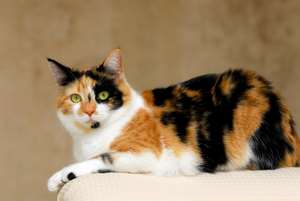
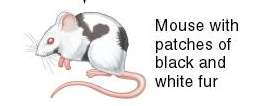
Random X inactivation leads to mosaic phenotypes, such as the patchwork coloration in calico cats and variegated mice.
Extranuclear (Cytoplasmic) Inheritance
Definition and Mechanisms
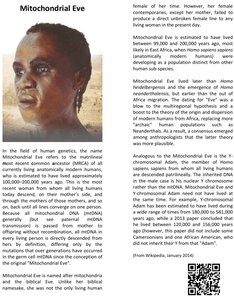
Extranuclear inheritance refers to the transmission of genetic material located outside the nucleus, primarily in mitochondria and chloroplasts. This type of inheritance is often maternal, as the egg contributes most of the cytoplasm to the zygote.
Organelle heredity: Inheritance of traits determined by organelle DNA (mitochondria, chloroplasts).
Infectious heredity: Traits influenced by symbiotic or parasitic microorganisms present in the cytoplasm.
Horizontal gene transfer: Movement of genes between species, common in bacteria (conjugation, transformation, transduction).
Endosymbiosis Theory
The endosymbiosis theory proposes that mitochondria and chloroplasts originated from free-living bacteria engulfed by ancestral eukaryotic cells, leading to a symbiotic relationship.

Mitochondria and Chloroplasts
Mitochondria and chloroplasts contain their own DNA and ribosomes, which differ from those in the nuclear genome. Most proteins required for their function are encoded by nuclear genes.
Mitochondrial DNA: Double-stranded, circular; ribosomes vary from 55S to 80S.
Chloroplast DNA: Encodes products for photosynthesis and translation; ribosomes are 16S and 23S.


Patterns of Organelle Inheritance
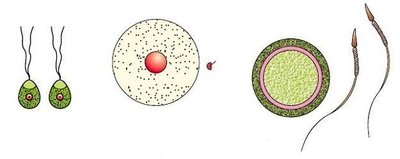
The inheritance of organelles can be maternal, paternal, or biparental, depending on the species and gamete types.
Homogamous species: Gametes of equal size; both contribute cytoplasm.
Heterogamous species: Female gamete is larger and provides most cytoplasm; inheritance is typically maternal.

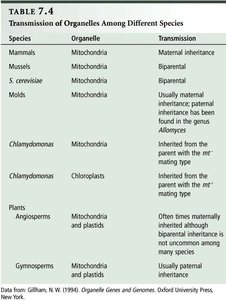
Species | Organelle | Transmission |
|---|---|---|
Mammals | Mitochondria | Maternal inheritance |
Mussels | Mitochondria | Biparental |
S. cerevisiae | Mitochondria | Biparental |
Molds | Mitochondria | Usually maternal |
Chlamydomonas | Mitochondria | Inherited from mt+ parent |
Chlamydomonas | Chloroplasts | Inherited from mt+ parent |
Plants (Angiosperms) | Mitochondria and plastids | Often maternal |
Plants (Gymnosperms) | Mitochondria and plastids | Usually paternal |
Organelle Heredity in Model Organisms
Chlamydomonas: mt+ mating type contributes most chloroplasts; streptomycin resistance is linked to chloroplast inheritance.
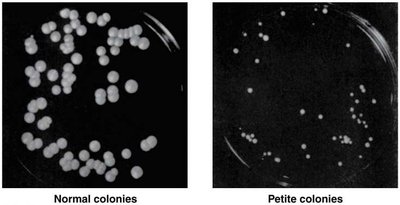
Saccharomyces cerevisiae (yeast): Petite mutants show different inheritance patterns (segregational, neutral, suppressive) depending on whether mutations are nuclear or mitochondrial.


Extranuclear Inheritance in Plants
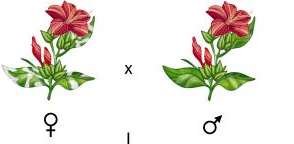
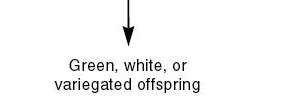
In the four-o'clock plant (Mirabilis jalapa), chloroplast inheritance is strictly maternal, as demonstrated by reciprocal crosses.
Heteroplasmy and Homoplasmy
Heteroplasmy refers to the presence of more than one type of organelle genome within a cell, while homoplasmy means all organelles have identical genomes. The proportion of mutant mitochondria can influence disease severity.
Random partitioning of organelles during cell division can lead to variable phenotypes among offspring.
Human Mitochondrial Diseases
Human mitochondrial DNA is typically inherited maternally. Mutations in mitochondrial DNA can cause chronic degenerative diseases, often affecting tissues with high energy demands.
Leber’s hereditary optic neuropathy (LHON): Progressive vision loss due to optic nerve degeneration.
Myoclonic epilepsy and ragged red fiber disease (MERRF): Affects muscles and nervous system.
Kearns–Sayre syndrome (KSS): Progressive deterioration of eye muscles.
Occasionally, paternal leakage can occur, where a small number of paternal mitochondria are inherited.
Epigenetic Inheritance
Definition and Mechanisms
Epigenetic inheritance involves heritable changes in gene expression that do not involve changes to the DNA sequence. These modifications can be established during gametogenesis or early embryonic development and are often reversible.
DNA methylation: Addition of methyl groups to DNA, often silencing gene expression.
Histone modification: Addition or removal of acetyl or methyl groups to histone proteins, affecting chromatin structure and gene accessibility.
Genomic Imprinting
Genomic imprinting is an epigenetic phenomenon where certain genes are expressed in a parent-of-origin-specific manner. Imprinting is established during gametogenesis and can lead to disorders if the imprinted gene is deleted or mutated.
If the paternal allele is imprinted (silenced), only the maternal allele is expressed, and vice versa.
Imprinting can be reset during gametogenesis in each generation.
Examples: Prader-Willi and Angelman Syndromes
Angelman syndrome: Caused by deletion of the maternal chromosome 15 with a paternally imprinted (silenced) allele.
Prader-Willi syndrome: Caused by deletion of the paternal chromosome 15 with a maternally imprinted (silenced) allele.
Summary Table: Maternal Effect vs. Maternal Inheritance
Maternal Effect | Maternal Inheritance |
|---|---|
Phenotype determined by mother's nuclear genotype | Phenotype determined by cytoplasmic (organelle) genes inherited from mother |
Effect is direct and immediate in offspring | Effect is due to organelle DNA passed through egg cytoplasm |
