 Back
BackOrganellar Genetics: Inheritance and Function of Chloroplasts and Mitochondria
Study Guide - Smart Notes
 Tailored notes based on your materials, expanded with key definitions, examples, and context.
Organellar Genetics
Maternal Inheritance and Variegation
Organellar genetics focuses on the inheritance and function of genes located in organelles such as chloroplasts and mitochondria. In many plants, traits controlled by plastid genes are inherited solely from the maternal parent, leading to unique inheritance patterns such as variegation.
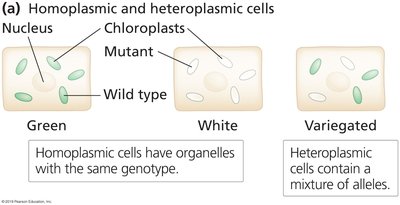
Variegation: The presence of multiple phenotypes (green, white, variegated) within the same individual, often due to differing chloroplast genotypes.
Maternal inheritance: The phenotype of progeny depends only on the genotype of the maternal parent, as pollen does not contribute plastids.
Random inheritance: Variegated mothers can produce offspring of all three phenotypes due to random segregation of plastids.
Homoplasmy: All organelles in a cell have the same genotype.
Heteroplasmy: A mixture of different genotypes within the organelles of a cell.
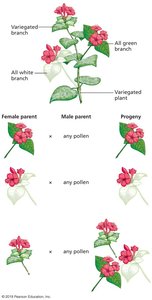
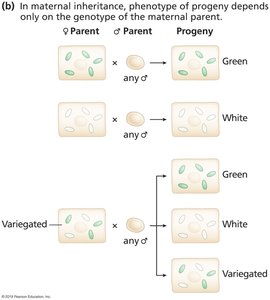
Example: In plants such as Mirabilis jalapa (four o'clock), the phenotype of the offspring is determined by the maternal parent, regardless of the pollen source.
Structure and Types of Plastids
Plastids are organelles found in plant cells that can differentiate into various specialized forms, all sharing the same plastid genome. Chloroplasts are the most well-known type, responsible for photosynthesis.
Plastid types: Proplastid, leucoplast, etioplast, amyloplast, chromoplast, elaioplast, proteinoplast, chloroplast.
Multiple plastids per cell: Plant cells can contain from a few to thousands of plastids, each with multiple copies of the plastid genome.
Multiple nucleoids: Each plastid contains several nucleoids, each with multiple genome copies.
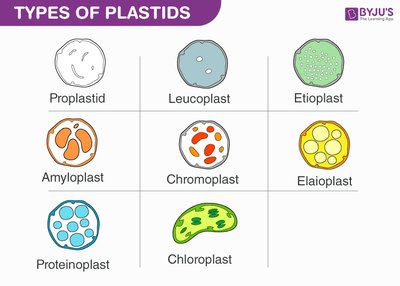
Example: Chloroplasts are specialized for photosynthesis, while amyloplasts store starch.
Replicative Segregation and Random Inheritance
Replicative segregation refers to the random distribution of organelle genomes during cell division, which can result in homoplasmic or heteroplasmic daughter cells. This process applies to both plastids and mitochondria.
Random inheritance: Heteroplasmic cells can produce homoplasmic offspring through random segregation.
Implications: This explains the variability in phenotypes and disease severity in organellar genetic disorders.
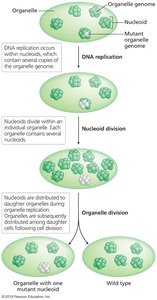
Example: In humans, random segregation of mitochondrial DNA can lead to varying proportions of mutant and wild-type mitochondria in offspring.
Patterns of Organellar Inheritance
Organellar inheritance is not always maternal. While flowering plant plastids and mammalian mitochondria are typically maternally inherited, other patterns exist.
Maternal inheritance: Most plants and mammals.
Paternal inheritance: Gymnosperm plastids.
Selective degradation: In organisms like Chlamydomonas, organelles from one parent are selectively destroyed after fertilization.
Example: In gymnosperms, plastid inheritance can be paternal, while mitochondrial inheritance is variable.
Human Mitochondrial DNA and Ancestry
Human mitochondrial DNA (mtDNA) is always inherited from the mother and does not undergo recombination. Certain regions of mtDNA evolve rapidly, making it ideal for tracing ancestry and migration patterns.
Mitochondrial "Eve": The most recent common matrilineal ancestor of all living humans, estimated to have lived 100,000–230,000 years ago.
Lineage extinction: As mtDNA lineages go extinct, the identity of "Eve" changes over time.
Migration studies: mtDNA analysis informs on human migration and population history.
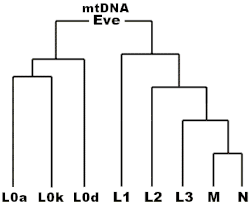
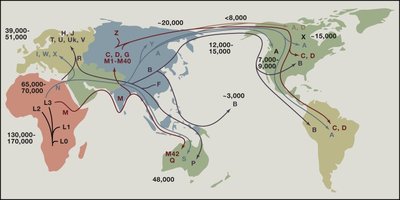
Example: mtDNA studies have mapped the migration routes of early humans out of Africa.
Human Mitochondrial Genetic Diseases
Mitochondrial genetic diseases are typically maternally transmitted and can affect both males and females. Most are caused by partial loss-of-function alleles or heteroplasmy, and often exhibit incomplete penetrance.
Dominant transmission: All affected individuals have an affected mother.
Not sex-linked: Both sexes are equally affected.
Incomplete penetrance: Disease severity varies due to heteroplasmy ratios.
Null alleles: Usually lethal; most diseases are due to partial loss of function.
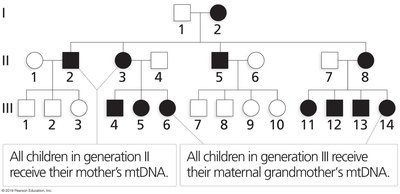
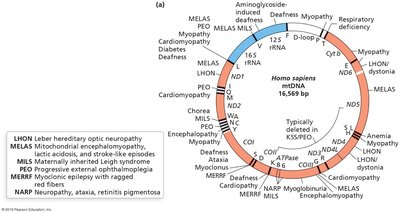
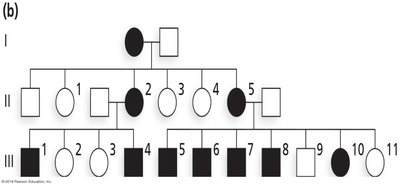
Example: Leber hereditary optic neuropathy (LHON) is caused by a mitochondrial DNA mutation and shows incomplete penetrance.
Mechanisms of Incomplete Penetrance
Incomplete penetrance in mitochondrial diseases is often explained by variable heteroplasmy ratios and random segregation of mitochondria during cell division.
Heteroplasmy: Presence of both mutant and wild-type mitochondria in a cell.
Bottleneck effect: Restriction in mitochondrial number during oocyte development leads to variable mutant proportions in offspring.
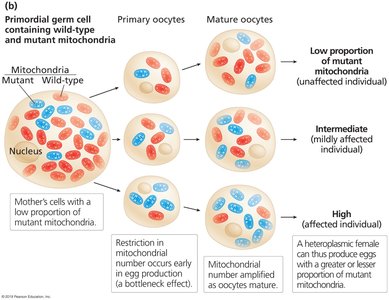
Example: A heteroplasmic female can produce eggs with varying proportions of mutant mitochondria, resulting in offspring with different disease severities.
Mitochondrial DNA Content and Function
Mitochondrial DNA content varies among organisms, encoding proteins for oxidative phosphorylation and bacterial-like ribosomes. The number of mitochondrial genes and their functions differ across species.
Gene functions: Respiration, ribosomal RNAs, transfer RNAs, transcription, protein import, and maturation.
Variation: Some organisms have more mitochondrial genes than others.
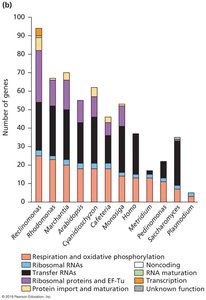
Example: Human mitochondrial DNA encodes 37 genes, primarily involved in energy production.
Cytoplasmic Male Sterility in Plant Breeding
Cytoplasmic male sterility (CMS) is a mitochondrial mutation that renders pollen non-viable, facilitating hybrid seed production in crops. The restorer of fertility gene (Rf) is a nuclear gene that can complement CMS.
Hybrid vigor: Hybrids of inbred lines often perform better than parents.
CMS: Maternally inherited mitochondrial mutation causes male sterility.
Rf gene: Nuclear gene restores fertility in CMS plants.
Labor reduction: CMS allows for easier hybrid seed production without manual de-tassling.
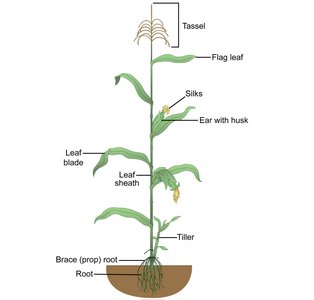
Example: In corn breeding, CMS lines are used to produce hybrid seeds efficiently, with the Rf gene controlling pollen production.
Inheritance Pattern | Organism/Organelle | Notes |
|---|---|---|
Maternal | Flowering plant plastids, mammalian mitochondria | Most common; pollen does not contribute organelles |
Paternal | Gymnosperm plastids | Variable mitochondrial inheritance |
Selective degradation | Chlamydomonas | Organelles from one parent destroyed after fertilization |
Additional info: Organellar genetics is crucial for understanding non-Mendelian inheritance, plant breeding, and human disease. The random segregation of organelle genomes explains phenotypic variability and incomplete penetrance in genetic disorders.
