 Back
BackPopulation Genetics: Factors Affecting Hardy–Weinberg Equilibrium and Evolutionary Change
Study Guide - Smart Notes
 Tailored notes based on your materials, expanded with key definitions, examples, and context.
Factors Affecting Hardy–Weinberg Equilibrium
Introduction to Hardy–Weinberg Equilibrium
The Hardy–Weinberg equilibrium (HWE) describes a theoretical state in which allele and genotype frequencies in a population remain constant from generation to generation, provided that certain assumptions are met. This model is foundational for understanding how evolutionary forces alter genetic variation in populations.
Key Assumptions: Random mating, no selection, no migration, infinite population size, and no mutation.
Equation for genotype frequencies:
Equation for allele frequencies:
Genetic variation can persist in populations, even if it does not confer a selective advantage or disadvantage.
The Gene Pool and Genotype Frequencies
The gene pool encompasses all alleles present in a population. Genotype frequencies are determined by the proportion of each genotype among individuals, which in turn depends on allele frequencies.
Example: In a population with genotypes AA, Aa, and aa, the number of each genotype and allele can be counted to calculate frequencies.
Mechanisms That Violate Hardy–Weinberg Equilibrium
Evolution is defined as a change in allele frequencies within a population over time. Several mechanisms can disrupt HWE and drive evolutionary change:
Nonrandom mating – Mates are chosen based on phenotype or relatedness, altering genotype frequencies.
Natural selection – Differential survival and reproduction change allele frequencies.
Mutation – Introduces new alleles into the population.
Migration (gene flow) – Movement of alleles between populations.
Genetic drift – Random changes in allele frequencies, especially in small populations.
Nonrandom Mating and Inbreeding
Types of Nonrandom Mating
Nonrandom mating alters genotype frequencies but does not necessarily change allele frequencies. Types include:
Positive assortative mating: Preference for phenotypically similar mates.
Negative assortative mating: Preference for phenotypically different mates.
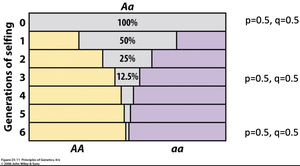
Inbreeding: Mating between relatives, increasing homozygosity.
Effects of Inbreeding
Inbreeding increases the proportion of homozygotes in a population, which can lead to an increase in homozygous recessive traits and a reduction in genetic diversity (inbreeding depression). However, allele frequencies remain unchanged.
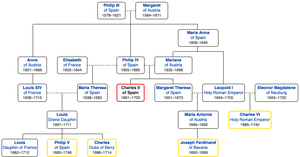
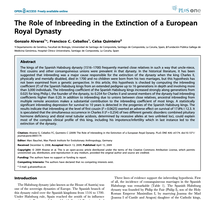
Example: The Spanish House of Habsburg experienced severe inbreeding, resulting in physical and reproductive problems.
Natural Selection and Fitness
Principles of Natural Selection
Natural selection is a mechanism of evolution that acts on heritable variation, leading to changes in allele frequencies across generations. It requires:
Variation in traits among individuals
Heritability of those traits
Differential reproductive success based on those traits
Relative Fitness and Selection Coefficient
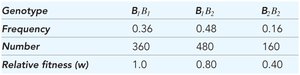
Relative fitness (w) measures the reproductive success of a genotype compared to the most successful genotype. The selection coefficient (s) quantifies the reduction in fitness of a genotype relative to the maximum.
Equation:
Example: If genotype Z reproduces at 60% the rate of genotype X, , .
Types of Natural Selection
Directional selection: Favors one extreme phenotype, shifting allele frequencies toward that phenotype.
Stabilizing selection: Favors intermediate phenotypes, reducing variation.
Disruptive selection: Favors both extremes, increasing variation.
Modeling Selection in Populations
Selection alters genotype and allele frequencies. The intensity of selection determines how quickly allele frequencies change.
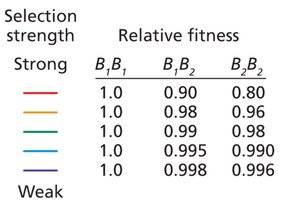
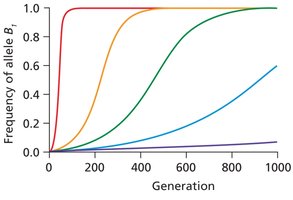
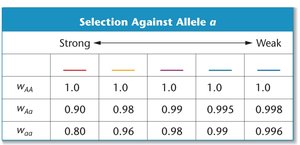
Selection Against Recessive Lethal Alleles
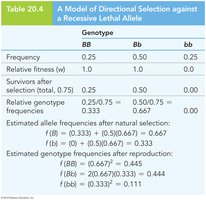
Directional selection against a recessive lethal allele increases the frequency of the dominant allele and reduces the recessive allele. Elimination of the recessive allele can be slow as its frequency decreases.
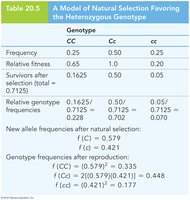
Selection Favoring Heterozygotes (Overdominance)
Stabilizing selection can favor heterozygotes, maintaining genetic diversity in the population. The recessive allele decreases but is not eliminated.
Gene Flow (Migration)
Gene Flow and Its Effects
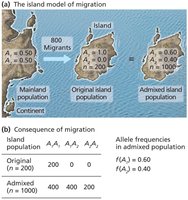
Gene flow is the movement of alleles between populations, introducing new alleles or changing their frequencies. This process can reduce genetic differences among populations and lead to admixture.
Island Model of Migration: Describes one-way gene flow from a large (mainland) to a small (island) population, causing immediate changes in allele frequencies.
Genetic Drift
Genetic Drift in Small Populations
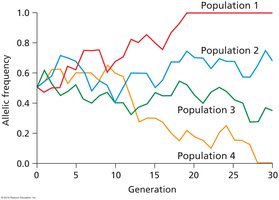
Genetic drift refers to random fluctuations in allele frequencies due to chance events, especially pronounced in small populations. This can lead to the loss or fixation of alleles over time.
Founder Effect
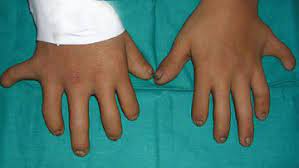
The founder effect occurs when a new population is established by a small number of individuals, resulting in a gene pool that may not represent the original population. This can lead to higher frequencies of certain genetic disorders.
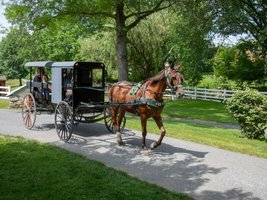
Example: The Old Order Amish population in Pennsylvania, which has a higher frequency of Ellis-van Creveld disease due to a small founding population.
Bottleneck Effect
A genetic bottleneck occurs when a large population undergoes a drastic, temporary reduction in size. The surviving population may have reduced genetic diversity, and allele frequencies can change dramatically.
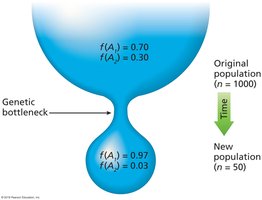
Difference from founder effect: The bottleneck effect involves a reduction in the original population, while the founder effect involves the establishment of a new population from a small group.
Summary: Interactions of Evolutionary Mechanisms
Selection, gene flow, mutation, and genetic drift interact to shape genetic diversity and set the stage for speciation. Understanding these mechanisms is essential for predicting evolutionary outcomes and managing genetic variation in populations.
