 Back
Posttranscriptional Regulation in Eukaryotes: Mechanisms and Implications
Study Guide - Smart Notes
 Tailored notes based on your materials, expanded with key definitions, examples, and context.
Posttranscriptional Regulation in Eukaryotes
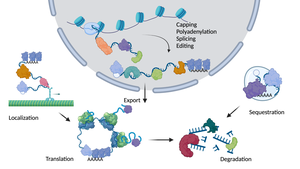
Overview of Posttranscriptional Regulation
Posttranscriptional regulation refers to the control of gene expression after transcription, encompassing mechanisms that affect RNA processing, stability, localization, translation, and protein modification. In eukaryotes, these processes are crucial for generating protein diversity and fine-tuning cellular responses.
Key Mechanisms: Alternative splicing, mRNA stability, mRNA localization, translation regulation, RNA silencing, and posttranslational modifications.
Significance: Enables a single gene to produce multiple protein isoforms and allows rapid adaptation to cellular needs.
Alternative Splicing
Types and Impact of Alternative Splicing
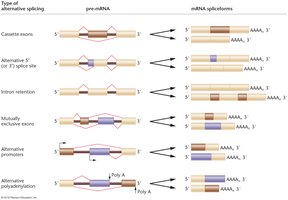
Alternative splicing is a process by which different combinations of exons are joined together from a single pre-mRNA, resulting in multiple mRNA spliceforms and protein isoforms. This mechanism greatly expands the proteome beyond the number of protein-coding genes.
Cassette Exons: Exons may be included or skipped, leading to different mRNA variants.
Alternative Splice Sites: Use of different splice sites within an exon alters the mRNA sequence.
Intron Retention: Introns may be retained in the mature mRNA, sometimes translated into novel protein domains.
Mutually Exclusive Exons: Only one exon from a cluster is included, allowing domain swapping.
Alternative Promoters: Multiple transcription start sites produce mRNAs with different 5' exons.
Alternative Polyadenylation: Different polyadenylation signals result in mRNAs with distinct 3' ends.
Regulation and Examples of Alternative Splicing
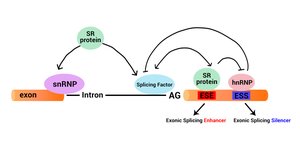
Alternative splicing is regulated by cis-acting sequences and trans-acting factors. Splicing enhancers and silencers recruit proteins such as SR proteins (activators) and hnRNPs (inhibitors) to modulate splice site selection.
Splicing Enhancers: Promote inclusion of exons.
Splicing Silencers: Promote exclusion of exons.
Functional Example: Calcitonin/CGRP Gene
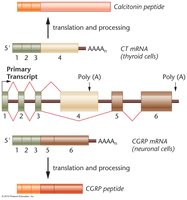
The calcitonin/CGRP gene undergoes tissue-specific alternative splicing, producing calcitonin in thyroid cells and CGRP in neurons, each with distinct physiological roles.
Calcitonin: Regulates calcium levels.
CGRP: Stimulates blood vessel dilation.
Spliceopathies: Diseases Caused by Splicing Defects
Mutations affecting splicing regulation can lead to genetic disorders such as myotonic dystrophy and spinal muscular atrophy (SMA), characterized by widespread splicing defects and abnormal protein function.
Myotonic Dystrophy: CTG repeat expansion causes splicing regulator sequestration.
SMA: Loss of SMN protein disrupts spliceosome assembly.
Sex Determination in Drosophila: Splicing Regulation
SXL Protein and Dosage Compensation
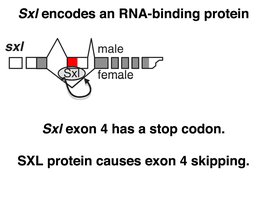
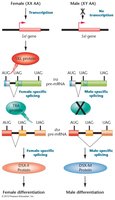
Sex determination in Drosophila is governed by alternative splicing regulated by the SXL protein. SXL ensures female-specific splicing patterns by skipping toxic exons and promoting the production of functional TRA protein, which further regulates DSX splicing.
XX Embryos: SXL protein produced, female-specific splicing occurs.
XY Embryos: No SXL protein, default male splicing pattern.
Control of mRNA Stability
mRNA Degradation Pathways
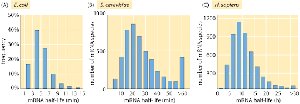
mRNA stability is a major determinant of gene expression levels. Eukaryotic mRNAs have varying half-lives, influenced by degradation pathways such as deadenylation-dependent decay, decapping, and endonucleolytic cleavage.
Deadenylation: Shortening of the poly-A tail by exoribonucleases destabilizes mRNA.
Decapping: Removal of the 5' cap renders mRNA susceptible to degradation.
Nonsense-Mediated Decay: Surveillance mechanism eliminates mRNAs with premature stop codons.
Cytoplasmic Polyadenylation
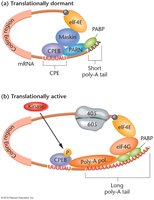
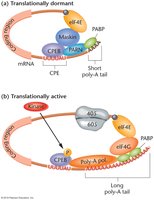
Cytoplasmic polyadenylation regulates translation by modifying the poly-A tail length. CPEB protein binds to cytoplasmic polyadenylation elements, recruiting enzymes that shorten or elongate the poly-A tail, thereby controlling translation initiation.
Translational Dormancy: Short poly-A tail prevents translation.
Translational Activation: Kinase-mediated phosphorylation of CPEB leads to poly-A tail elongation and translation initiation.
Noncoding RNAs in Posttranscriptional Regulation
RNA Interference (RNAi): siRNA and miRNA
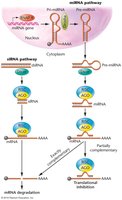
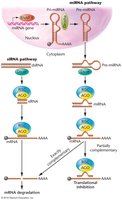
RNA interference is a sequence-specific mechanism for posttranscriptional gene silencing. Small noncoding RNAs (siRNA and miRNA) guide the RNA-induced silencing complex (RISC) to target mRNAs for degradation or translational inhibition.
siRNA: Derived from exogenous or aberrant RNA, triggers degradation of source RNA.
miRNA: Encoded in the genome, regulates expression of different genes.
Dicer: Enzyme that processes precursor RNAs into mature siRNA/miRNA.
RISC: Complex that mediates mRNA cleavage or inhibition.
Long Noncoding RNAs (lncRNAs)
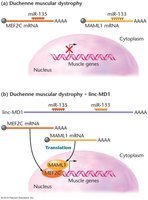
lncRNAs are longer RNA molecules that regulate gene expression by acting as competing endogenous RNAs (ceRNAs), sequestering miRNAs and derepressing target mRNAs. They play roles in development and disease, such as Duchenne muscular dystrophy.
ceRNAs: Contain miRNA response elements, compete for miRNA binding.
linc-MD1: lncRNA involved in muscle cell differentiation.
mRNA Localization
Mechanisms and Biological Importance
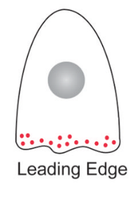
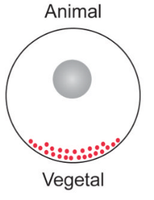
mRNA localization ensures that translation occurs at specific cellular sites, critical for processes such as embryogenesis, cell movement, and neuron function. Mechanisms include direct transport via cytoskeletal networks, localized protection from degradation, and diffusion with anchoring.
Direct Transport: Motor proteins move mRNA along cytoskeletal tracks.
Localized Translation: Enables spatial regulation of protein synthesis.
Posttranslational Regulation
Protein Modification and Degradation
Posttranslational modifications regulate protein activity, stability, and localization. Phosphorylation by kinases and dephosphorylation by phosphatases alter protein conformation and function. Ubiquitin-mediated degradation targets proteins for destruction by the proteasome.
Phosphorylation: Addition of phosphate groups to serine, threonine, or tyrosine residues.
Ubiquitination: Covalent attachment of ubiquitin to lysine residues marks proteins for degradation.
Proteasome: Multi-subunit complex that degrades ubiquitinated proteins into peptides.
Summary Table: Types of Alternative Splicing
Type of Alternative Splicing | pre-mRNA | mRNA Spliceforms |
|---|---|---|
Cassette exons | Exon may be included or skipped | Two possible mRNAs: with or without the exon |
Alternative splice site | Different 5' or 3' splice sites used | mRNAs with slightly different exon boundaries |
Intron retention | Intron may be retained | mRNA with or without the intron |
Mutually exclusive exons | Only one exon from a cluster included | mRNA with one of several possible exons |
Alternative promoters | Multiple transcription start sites | mRNAs with different 5' exons |
Alternative polyadenylation | Different polyadenylation signals used | mRNAs with distinct 3' ends |
Key Equations
Number of possible protein isoforms from alternative splicing:
Where are the number of alternatives for each exon.
Example: For exons with 12, 48, 33, and 2 alternatives:
Summary
Alternative splicing determines which RNA spliceforms are translated.
Gene expression is regulated by mRNA stability and degradation.
Noncoding RNAs play diverse roles in posttranscriptional regulation.
mRNA localization and translation initiation are highly regulated.
Posttranslational modifications regulate protein activity.
