 Back
BackProbability Rules in Mendelian Genetics: Study Notes
Study Guide - Smart Notes
 Tailored notes based on your materials, expanded with key definitions, examples, and context.
Probability and Genetics
Introduction to Probability in Genetics
Probability is a fundamental concept in genetics, used to predict the outcomes of genetic crosses and the likelihood of inheriting specific traits. Understanding and applying probability rules allows geneticists to solve problems related to gamete formation, genotype, and phenotype ratios in offspring.
Rules of Probability in Genetics
Additive Rule of Probability
The additive rule states that if two events, A and B, are mutually exclusive, the probability that either one occurs is the sum of their individual probabilities.
Formula:
Example: When tossing a die, the probability of getting an even number (2, 4, or 6) is .
Genetics Example: In a cross between two heterozygous tall plants (Tt x Tt), the probability that a random plant is tall (TT or Tt) is .
Conditional Probability
Conditional probability is the probability that an event (A) will occur given that another event (B) is known to occur. This is useful in genetics when considering subsets of offspring with a particular phenotype or genotype.
Formula:
Example: If we select a tall plant from the Tt x Tt cross, what is the probability that it is heterozygous (Tt)?
Multiplicative Rule of Probability
The multiplicative rule states that if two events, A and B, are independent, the probability that both occur is the product of their individual probabilities.
Formula:
Example: The probability of flipping three heads in a row with a fair coin is .
Genetics Example: In a cross between two F1 heterozygotes (Gg x Gg), the probability of producing an F2 plant with the recessive phenotype (gg) is .
Application of Probability in Genetic Crosses
Dihybrid and Trihybrid Crosses
Probability rules are essential for predicting the outcomes of crosses involving two or more genes. In a dihybrid cross, the independent assortment of alleles leads to predictable genotype and phenotype ratios.
Dihybrid Test Cross: Crossing an individual heterozygous for two genes (RrGg) with a double recessive (rrgg) produces four phenotypes in a 1:1:1:1 ratio.
Phenotype | Genotype | Probability |
|---|---|---|
Dominant for both traits | R– G– | 1/4 |
Dominant for first, recessive for second | R– gg | 1/4 |
Recessive for first, dominant for second | rr G– | 1/4 |
Recessive for both | rr gg | 1/4 |
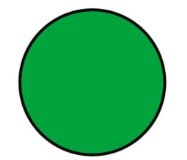



Example: In a cross RrGg x rrgg, the probability of producing an offspring with genotype RrGg is .
Using Punnett Squares and Probability
Punnett squares are visual tools that help organize and predict the outcomes of genetic crosses. Probability calculations can be used alongside Punnett squares to determine the likelihood of specific genotypes and phenotypes.
Example: What is the probability that parents TTRrGg x TtRrGg will produce an offspring with genotype TTrrGG? (calculated using the multiplicative rule)
Summary Table: Probability Rules in Genetics
Rule | Formula | Application |
|---|---|---|
Additive | Mutually exclusive events (e.g., probability of TT or Tt) | |
Multiplicative | Independent events (e.g., probability of gg from Gg x Gg) | |
Conditional | Probability of A given B (e.g., probability of Tt given tall) |
Key Terms
Genotype: The genetic constitution of an organism (e.g., TT, Tt, tt).
Phenotype: The observable traits of an organism (e.g., tall, short).
Gamete: A reproductive cell carrying one allele for each gene.
Independent Assortment: The principle that genes for different traits segregate independently during gamete formation.
Practice Problem
Given parents TTRrGg x TtRrGg, what is the probability of producing an offspring with genotype TTrrGG?
Calculate each probability separately using Punnett squares or probability rules, then multiply the results.
