 Back
BackRecombinant DNA Technology and Applications: GMOs, Tools, and Methods
Study Guide - Smart Notes
 Tailored notes based on your materials, expanded with key definitions, examples, and context.
Recombinant DNA Technology and Genetically Modified Organisms (GMOs)
Introduction to GMOs and Recombinant DNA
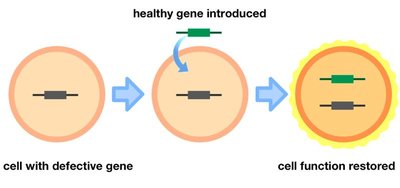
Recombinant DNA (rDNA) technology is a cornerstone of modern genetics, enabling the modification of organisms to express new traits or produce valuable products. Genetically Modified Organisms (GMOs) are organisms whose genetic material has been altered using genetic engineering techniques, often involving the insertion of foreign DNA.
Genetically Modified Organisms (GMOs): Organisms with artificially altered genomes, often to introduce beneficial traits such as disease resistance or enhanced growth.
Recombinant DNA: DNA molecules formed by laboratory methods of genetic recombination to bring together genetic material from multiple sources.
Applications: Agriculture (insect-resistant crops), medicine (insulin production), research (fluorescent markers).

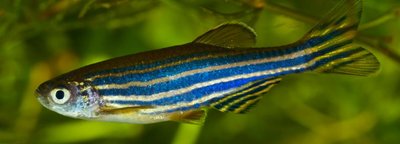
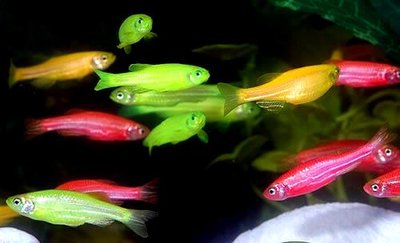
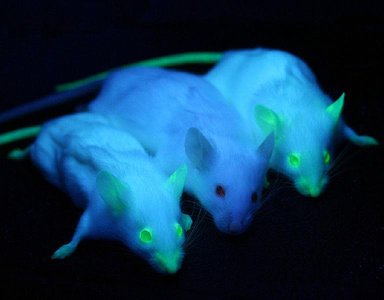
Examples of GMOs
Fluorescent Organisms: Genes encoding fluorescent proteins (e.g., GFP from jellyfish) are inserted into animals like zebrafish and mice for research purposes.
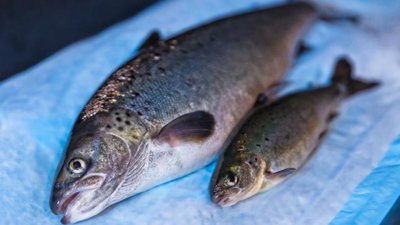
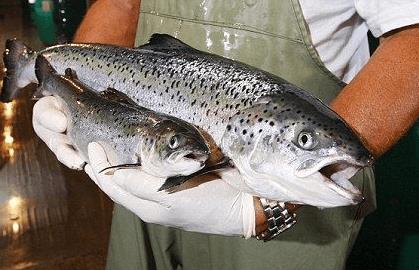
Super Salmon: Salmon genetically engineered with a growth hormone gene to grow year-round, approved by the FDA in 2015.
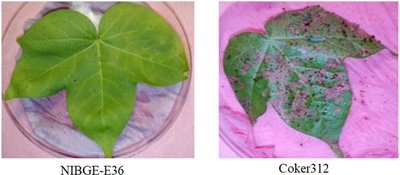
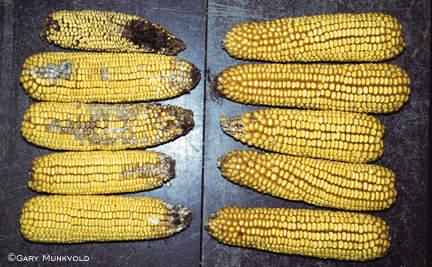
Insect-Resistant Crops: Cotton and corn engineered to resist insect pests, reducing the need for chemical pesticides.
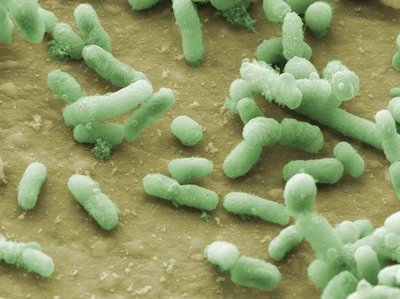
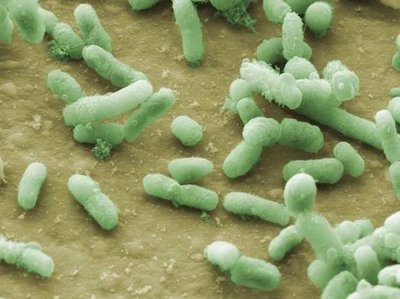
Human Insulin Production: E. coli bacteria modified to produce human insulin, revolutionizing diabetes treatment.
Traditional Breeding vs. Genetic Engineering
Comparison of Methods
Traditional breeding and genetic engineering are two approaches to modifying organisms, each with distinct mechanisms and outcomes.
Traditional Breeding: Crosses individuals within the same species to combine desirable traits. Limited to naturally compatible species.
Genetic Engineering: Direct manipulation of an organism's genome, often allowing gene transfer across species boundaries (transgenics).
Genome Editing: Precise modification of DNA at specific locations using engineered nucleases (e.g., CRISPR/Cas9).
Aspect | Traditional Breeding | Genetic Engineering |
|---|---|---|
Species Barrier | Within species | Across species |
Precision | Low | High |
Speed | Slow | Fast |
Examples | Hybrid crops | Bt corn, transgenic salmon |
Biotechnology Toolbox: Tools for Genetic Engineering
Key Molecular Tools
Genetic engineering relies on a set of molecular tools to cut, join, and propagate DNA.
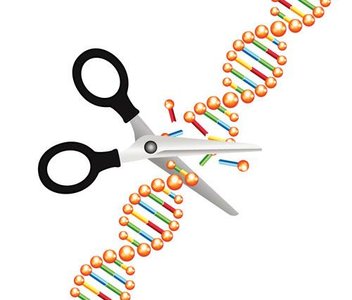
Restriction Enzymes (DNA scissors): Enzymes that cut DNA at specific sequences, generating sticky or blunt ends.
DNA Ligase (DNA glue): Enzyme that joins DNA fragments by forming phosphodiester bonds.
Vectors: DNA molecules (often plasmids) used to carry foreign genes into host cells.
Cloning: The process of making multiple identical copies of a DNA fragment.


Basic Steps in Genetic Engineering
Recombinant DNA Workflow
The creation of recombinant DNA and GMOs involves several key steps:
Isolation of Gene of Interest: The target gene is identified and extracted from the source organism.
Recombination with Vector: The gene is inserted into a vector (e.g., plasmid) using restriction enzymes and DNA ligase.
Transformation: The recombinant vector is introduced into host cells (bacteria, plants, or animals).
Screening: Host cells are screened for successful gene insertion and expression.
Production: The modified organism is used for research, agriculture, or pharmaceutical production.
Genome Editing Technologies
Engineered Nucleases
Genome editing technologies allow precise modification of DNA at specific sites. Major tools include:
Zinc-Finger Nucleases (ZFNs): Engineered proteins that bind specific DNA sequences and induce double-strand breaks.
Transcription Activator-Like Effector Nucleases (TALENs): Proteins that recognize single base pairs and cut DNA at targeted sites.
CRISPR/Cas9: A bacterial immune system adapted for genome editing, using a guide RNA to direct the Cas9 nuclease to a specific DNA sequence for cutting.
CRISPR/Cas9 Mechanism:
Guide RNA (sgRNA) binds to target DNA sequence.
Cas9 nuclease creates a double-strand break 3 bp upstream of the PAM (NGG) sequence.
Cellular repair mechanisms (NHEJ or HDR) repair the break, allowing for gene disruption or precise editing.
Applications: Gene knockout, gene insertion, single base editing, epigenetic modifications.
DNA Repair Mechanisms in Genome Editing
Repair Pathways
Non-Homologous End Joining (NHEJ): Efficient but error-prone repair, often resulting in insertions or deletions (indels).
Homology-Directed Repair (HDR): Precise repair using a homologous DNA template, allowing for accurate gene insertion or correction.
Repair Mechanism | Precision | Efficiency | Common Use |
|---|---|---|---|
NHEJ | Low | High | Gene knockout |
HDR | High | Low | Gene correction/insertion |
Applications of Recombinant DNA Technology
Medicine, Agriculture, and Research
Medicine: Production of human insulin, gene therapy for genetic diseases.
Agriculture: Development of insect-resistant and disease-resistant crops, enhanced nutritional content.
Research: Use of fluorescent proteins to study gene expression and protein localization.
Summary Table: Key Tools and Concepts in Recombinant DNA Technology
Tool/Concept | Function | Example |
|---|---|---|
Restriction Enzyme | Cut DNA at specific sites | EcoRI, BamHI |
DNA Ligase | Join DNA fragments | Sticky-end ligation |
Vector | Carry foreign DNA | Plasmid |
CRISPR/Cas9 | Genome editing | Gene knockout |
NHEJ | Imprecise DNA repair | Gene disruption |
HDR | Precise DNA repair | Gene correction |
Additional info: The notes above expand on the provided outline with academic context, definitions, and examples to ensure completeness and clarity for genetics students.
