 Back
BackRecombinant DNA Technology and Applications: Study Notes
Study Guide - Smart Notes
 Tailored notes based on your materials, expanded with key definitions, examples, and context.
Recombinant DNA Technology and Applications
Introduction to Recombinant DNA and GMOs
Recombinant DNA (rDNA) technology enables the manipulation and combination of DNA from different sources to create genetically modified organisms (GMOs). This technology has revolutionized genetics, agriculture, medicine, and biotechnology by allowing precise genetic modifications for desired traits.
Genetically Modified Organisms (GMOs): Organisms whose genomes have been altered using genetic engineering techniques to express new traits or functions.
Recombinant DNA: DNA molecules formed by laboratory methods of genetic recombination, such as molecular cloning, to bring together genetic material from multiple sources.
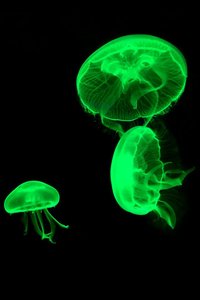
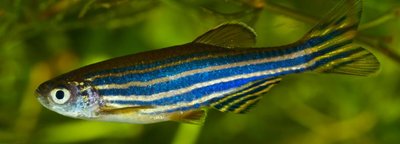
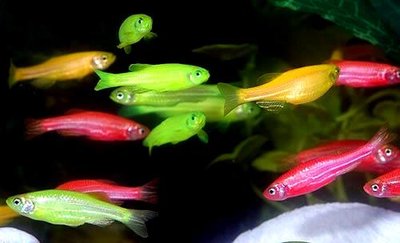
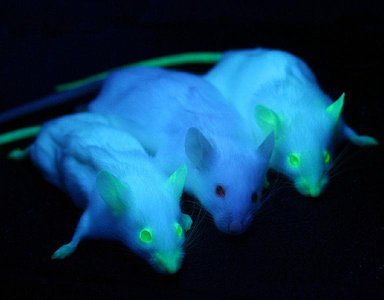
Applications: Agriculture (insect resistance, improved yield), medicine (insulin production, gene therapy), research (fluorescent markers).
Generation of GMOs and Recombinant DNA
GMOs are generated by introducing foreign DNA into an organism's genome. This process involves several key steps, including DNA isolation, cutting and joining DNA fragments, and introducing recombinant DNA into host cells.
DNA Isolation: Extraction of the gene of interest from the donor organism.
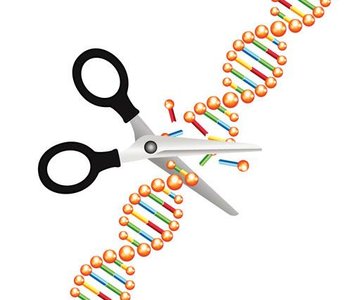
Restriction Enzymes: "DNA scissors" that cut DNA at specific sequences, producing sticky or blunt ends.
DNA Ligase: "DNA glue" that joins DNA fragments by forming phosphodiester bonds.
Vectors: DNA molecules (often plasmids) used to carry foreign DNA into host cells.
Transformation: Introduction of recombinant DNA into host cells (e.g., bacteria, plants, animals).

Polymerase Chain Reaction (PCR): DNA Amplification
The Polymerase Chain Reaction (PCR) is a technique used to amplify specific DNA segments, making millions of copies from a small initial sample. PCR is essential for genetic analysis, cloning, and diagnostics.
Key Steps: Denaturation, annealing, and extension.
Applications: Cloning, genotyping, pathogen detection, forensic analysis.
Equation: Number of DNA copies after n cycles: $2^n$
Visualization and Analysis of DNA/RNA: Gel Electrophoresis
Gel electrophoresis separates DNA, RNA, or proteins based on size and charge, allowing visualization and analysis of genetic material.
Principle: Molecules migrate through a gel matrix under an electric field; smaller fragments move faster.
Applications: DNA fingerprinting, checking PCR products, restriction mapping.
DNA Sequencing: Determining DNA Sequence
DNA sequencing reveals the precise order of nucleotides in a DNA molecule. Three generations of sequencing technologies are commonly used:
First Generation (Sanger Sequencing): Chain-termination method using dideoxynucleotides (ddNTPs).
Second Generation (Illumina): Massively parallel sequencing by synthesis, suitable for high-throughput applications.
Third Generation (Single Molecule, e.g., PacBio, Nanopore): Long-read sequencing, real-time analysis.
Applications of Recombinant DNA Technology
Agricultural Applications
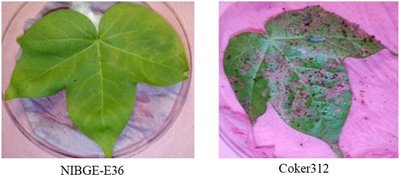
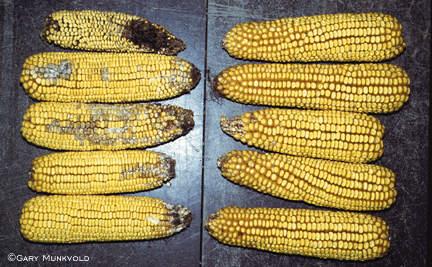
Genetic engineering has produced crops with improved traits such as insect resistance, herbicide tolerance, and enhanced nutrition.
Insect-Resistant Crops: Introduction of genes (e.g., Bt toxin) to protect against pests.
Herbicide Tolerance: Crops engineered to survive specific herbicides, allowing better weed control.
Improved Yield and Quality: Genetic modifications for higher productivity and nutritional value.
Medical Applications
Recombinant DNA technology is widely used in medicine for the production of therapeutic proteins, vaccines, and gene therapy.
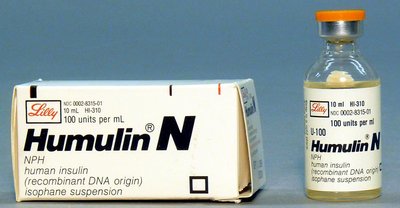
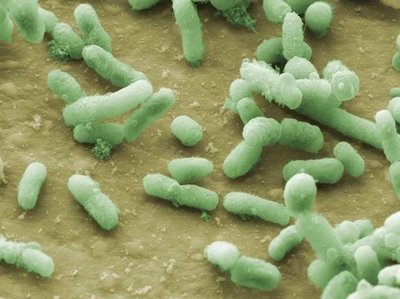
Human Insulin Production: Recombinant E. coli produce human insulin, replacing animal-derived insulin.
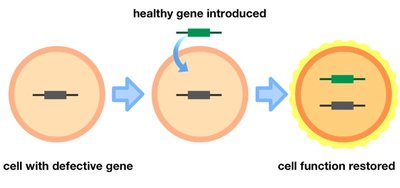
Gene Therapy: Introduction of functional genes to treat genetic disorders.
Research Applications
Genetically modified organisms expressing reporter genes (e.g., GFP) are invaluable tools for studying gene expression, protein localization, and cellular processes.
Reporter Genes: Genes encoding easily detectable proteins (e.g., GFP) are fused to genes of interest.
Transgenic Animals: Used to model human diseases and study gene function.
Traditional Breeding vs. Genetic Engineering
Comparison of Methods
Traditional breeding and genetic engineering are both used to improve organisms, but they differ in precision, scope, and speed.
Traditional Breeding | Genetic Engineering |
|---|---|
Within species | Across species |
Random mixing of genes | Precise gene insertion/editing |
Time-consuming | Faster trait introduction |
Limited to natural variation | Can introduce novel traits |

Genome Editing Technologies
Restriction Enzymes
Restriction enzymes are naturally occurring bacterial proteins that cut DNA at specific sequences, generating sticky or blunt ends for cloning.
Recognition Sites: Usually palindromic sequences 4-8 bp long.
Sticky Ends: Overhanging single-stranded DNA that facilitates ligation.
Blunt Ends: Double-stranded ends without overhangs.
DNA Ligase
DNA ligase is an enzyme that joins DNA fragments by forming phosphodiester bonds, essential for creating recombinant DNA molecules.
Sticky-End Ligation: More efficient due to complementary base pairing.
Blunt-End Ligation: Less efficient, requires more enzyme and higher DNA concentration.
Genome Editing Tools: ZFN, TALEN, and CRISPR/Cas9
Modern genome editing technologies allow precise modifications at specific genomic locations.
Zinc-Finger Nucleases (ZFNs): Engineered proteins that recognize specific DNA sequences and induce double-strand breaks.
Transcription Activator-Like Effector Nucleases (TALENs): Proteins that bind specific DNA sequences and induce targeted breaks.
CRISPR/Cas9: RNA-guided endonuclease system derived from bacterial immunity, enabling highly specific and efficient genome editing.
CRISPR/Cas9 Mechanism:
Guide RNA (sgRNA) directs Cas9 to the target DNA sequence.
Cas9 induces a double-strand break 3 bp upstream of the PAM sequence (NGG).
Repair by Non-Homologous End Joining (NHEJ) or Homology Directed Repair (HDR).
Vectors and Cloning
Bacterial Plasmid Vectors
Plasmids are circular, double-stranded DNA molecules used as vectors to carry foreign DNA into host cells for cloning and expression.
Features of an Ideal Cloning Vector: Origin of replication, selectable markers (e.g., AmpR), multiple cloning sites, easy release from host.
Expression Vectors: Contain regulatory elements for protein expression.
Other Vectors: Phage vectors, BACs, YACs for larger DNA fragments.
Transformation and Selection
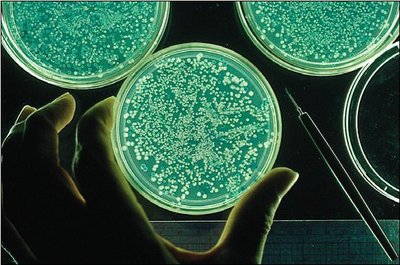
Transformation introduces recombinant plasmids into host cells. Selection markers (e.g., antibiotic resistance, blue-white screening) identify successful transformants.
Selection Markers: AmpR for antibiotic resistance, LacZ for blue-white screening.
Screening: Only cells with recombinant plasmids survive and/or show color change.
DNA Analysis Techniques
Blotting Techniques
Southern Blot: DNA detection using labeled probes.
Northern Blot: RNA detection using labeled probes.
Western Blot: Protein detection using antibodies.
Real-Time Quantitative PCR (RT-qPCR)
RT-qPCR quantifies DNA or RNA in real time, widely used in diagnostics (e.g., COVID-19 testing).
Threshold Cycle (CT): The PCR cycle at which fluorescence exceeds background, inversely proportional to the amount of target nucleic acid.
Ethical and Societal Considerations
Controversies and Regulation
Genome editing, especially in humans, raises ethical, legal, and social concerns. Regulatory agencies oversee the approval and use of GMOs and gene therapies.
Human Genome Editing: Ethical debates on germline editing and designer babies.
GMO Regulation: FDA and other agencies evaluate safety and efficacy.
Summary Table: Key Tools in Recombinant DNA Technology
Tool | Function | Example |
|---|---|---|
Restriction Enzyme | Cut DNA at specific sites | EcoRI, BamHI |
DNA Ligase | Join DNA fragments | Sticky/blunt end ligation |
Vector | Carry foreign DNA | Plasmid, BAC, YAC |
Polymerase | Amplify DNA | PCR |
Selectable Marker | Identify transformants | AmpR, LacZ |
Additional info: These notes integrate foundational concepts from Chapters 20 and 22 of a typical genetics curriculum, covering recombinant DNA technology, GMOs, genome editing, and their applications in research, agriculture, and medicine.
