 Back
BackRecombinant DNA Technology and Its Applications: Study Notes
Study Guide - Smart Notes
 Tailored notes based on your materials, expanded with key definitions, examples, and context.
Recombinant DNA Technology and Its Applications
Introduction to Recombinant DNA Technology
Recombinant DNA technology encompasses a suite of molecular techniques that allow scientists to amplify, maintain, and manipulate DNA sequences both in vitro (outside living organisms) and in vivo (within living organisms). This technology is foundational for modern genetics, enabling the identification, isolation, and modification of specific DNA sequences, and providing a molecular view of genes and genomes.
Definition: Recombinant DNA refers to DNA molecules formed by laboratory methods of genetic recombination to bring together genetic material from multiple sources.
Major Challenge: The primary challenge is to identify and manipulate specific DNA sequences among the vast complexity of genomes.
Applications: Dividing genomes into manageable segments for analysis, gene mapping, and genetic engineering.
Uses of Recombinant DNA Technology
Recombinant DNA technology is used for a variety of purposes in genetics and biotechnology:
Fragmenting DNA into manageable pieces and purifying them
Amplifying DNA fragments to create many identical copies
Combining DNA fragments to construct recombinant DNA molecules
Determining the exact sequence of DNA molecules
Identifying DNA fragments with complementary sequences
Introducing specific DNA molecules into living organisms
Assaying the phenotypic effects of introduced DNA
Restriction Enzymes and DNA Manipulation
Restriction Enzymes: Function and Features
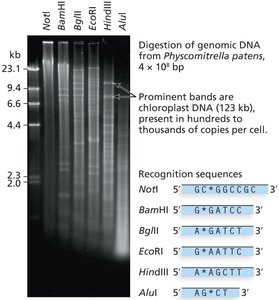
Restriction enzymes are proteins that recognize specific DNA sequences and cut both strands of the DNA at or near these sites. They are essential tools for DNA manipulation in recombinant DNA technology.
Origin: First identified in bacteria, where they serve as a defense mechanism against viral infection.
Restriction-Modification Systems: Bacteria protect their own DNA from cleavage by methylating recognition sequences.
Naming: Restriction enzymes are named after the bacterial species from which they were isolated (e.g., EcoRI from Escherichia coli).
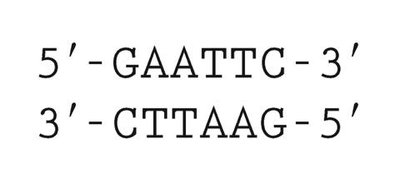
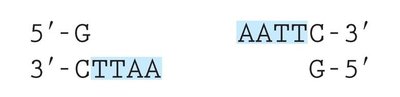
Sticky Ends: Some enzymes produce single-stranded overhangs (sticky ends) that can base-pair with complementary sequences, facilitating the joining of DNA fragments.
Blunt Ends: Other enzymes produce blunt ends with no overhangs.
Recognition Sequences: Typically 4–8 base pairs in length, often palindromic.
Restriction Mapping
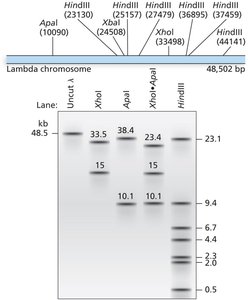
Restriction mapping involves using restriction enzymes to cut DNA at specific sites, generating fragments of defined sizes. These data are used to create maps of DNA sequences, which are essential for further genetic analysis and subcloning.
Double Digests: Using two enzymes simultaneously provides more detailed mapping information.
Example: Lambda Phage Genome Mapping
Cutting with ApaI yields two fragments: 10.1 kb and 38.4 kb.
Cutting with XhoI yields two possible fragment sets: 33.5 kb & 15 kb, or 15 kb & 33.5 kb (depending on orientation).
Double digestion with ApaI and XhoI yields three fragments: 10.1 kb, 23.4 kb, and 15 kb, or 10.1 kb, 4.9 kb, and 33.5 kb.





Molecular Cloning
Principles and Steps of Molecular Cloning
Molecular cloning is the process of making multiple identical copies of a particular DNA sequence. This is achieved by inserting DNA fragments into vectors and propagating them in host cells.
Combine the cloning vector and donor DNA fragment to produce a recombinant DNA clone.
Select organisms containing the cloned DNA segment.
Amplify the recombinant clone in a biological system.
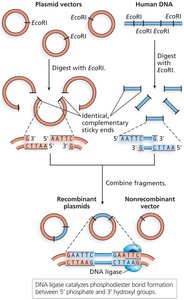
Creating Recombinant DNA Molecules
Donor and vector DNA are often digested with the same restriction enzyme to produce compatible sticky ends.
Sticky ends can anneal, and DNA ligase seals the nicks to form recombinant molecules.
Directional cloning uses two different enzymes to ensure the insert is cloned in a specific orientation.
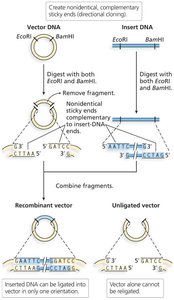
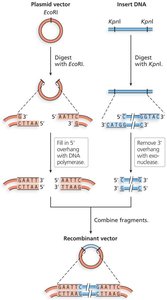
Blunt and Sticky End Cloning
Sticky ends can be converted to blunt ends using DNA polymerase or exonuclease.
Blunt ends can be converted to sticky ends by ligating short oligonucleotide linkers containing restriction sites.
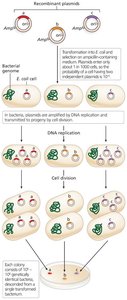
Amplification and Selection of Recombinant DNA
Recombinant DNA is introduced into E. coli by transformation, facilitated by divalent cations or electroporation.
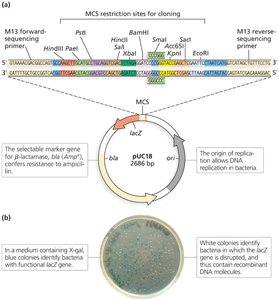
Selection is performed using antibiotic resistance markers present on the plasmid vector.
Plasmids and Other Cloning Vectors
Plasmids: Small, circular DNA molecules that replicate independently of the bacterial chromosome. They contain an origin of replication and selectable marker genes (e.g., antibiotic resistance).
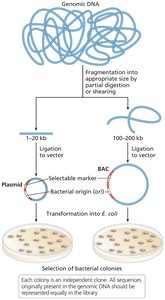
Size Limit: Plasmids are typically limited to inserts of about 20 kb.
Bacterial Artificial Chromosomes (BACs): Allow cloning of larger DNA fragments (100–200 kb) and are maintained at low copy number.
DNA Libraries
Types and Construction of DNA Libraries
DNA libraries are collections of cloned DNA fragments from a single source. They are essential for gene discovery, sequencing, and functional studies.
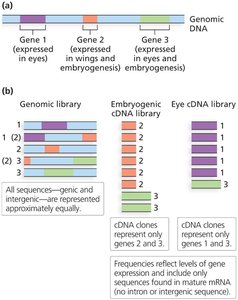
Genomic Libraries: Contain all sequences from the genome, including coding and non-coding regions.
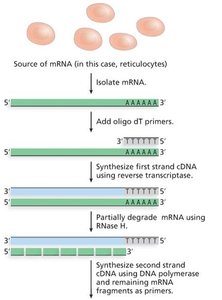
cDNA Libraries: Constructed from mRNA and represent only the expressed genes of a particular tissue or cell type.
Construction of cDNA Libraries
mRNA is reverse transcribed into cDNA using reverse transcriptase and oligo(dT) primers.
The RNA strand is removed, and the second DNA strand is synthesized by DNA polymerase.
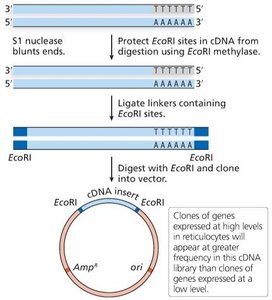
cDNA is then ligated into a vector for cloning.
Composition and Uses of DNA Libraries
Highly expressed genes are overrepresented in cDNA libraries.
cDNA clones lack introns and regulatory sequences.
Expression libraries can be used to express genes in heterologous systems.
Transgenic Organisms
Introduction of Foreign Genes
Transgenic organisms are created by introducing foreign genes (transgenes) into their genomes. The transgene must integrate into the host genome and contain appropriate regulatory sequences for expression.
Design of transgenes often requires combining coding sequences with host regulatory elements.
CRISPR-Cas9 edited organisms are not considered transgenic if no exogenous DNA is used.
Expression of Heterologous Genes
Bacterial transformation with recombinant plasmids is the primary method for generating transgenic bacteria.
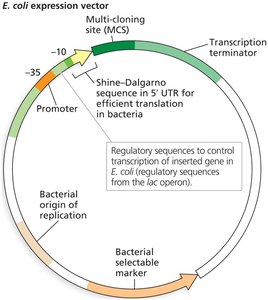
Expression vectors contain promoters, ribosome binding sites (e.g., Shine–Dalgarno sequence), and selectable markers.
Transgene expression can be constitutive or inducible (e.g., using the lac operon system).
Production of Human Insulin in E. coli
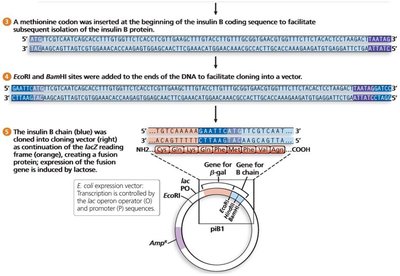
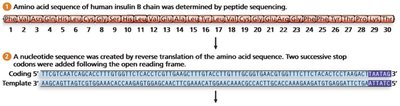
Human insulin was one of the first human proteins produced in bacteria.
DNA encoding the A and B chains of insulin was chemically synthesized and expressed in E. coli.
Transgenic Fungi and Yeast Plasmids
Fungi and yeast can be genetically engineered to produce proteins such as chymosin for cheese production.
Yeast shuttle vectors can replicate in both bacteria and yeast, facilitating gene transfer and expression.
Transformation of Plant Genomes by Agrobacterium
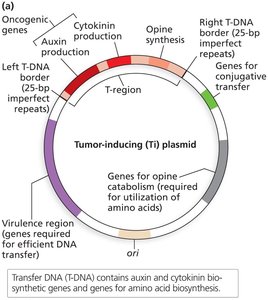
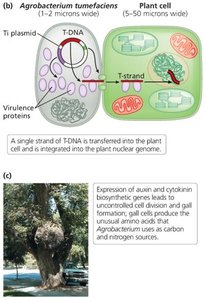
Agrobacterium tumefaciens uses the Ti plasmid to transfer T-DNA into plant genomes, causing crown gall disease.
T-DNA integrates randomly and contains genes for uncontrolled cell division and opine synthesis.
Production and Applications of Transgenic Plants
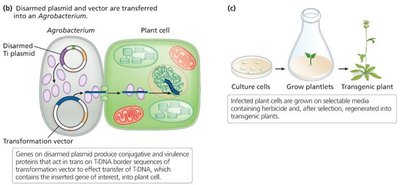
Transgenic plants are regenerated from single transformed cells due to plant cell totipotency.
Common traits engineered include herbicide and insect resistance (e.g., Bt toxin genes).
Golden Rice is engineered to produce provitamin A in the endosperm.
Transgenic Animals
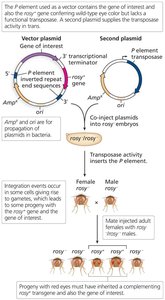
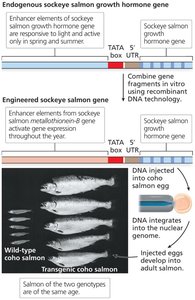
Transgenes are introduced into animal genomes by microinjection into eggs, embryos, or gamete precursor cells.
In Drosophila, P element transposons are used for gene transfer.
In vertebrates, DNA is injected into fertilized eggs, integrating randomly into the genome.
Transgenic Mice and Homologous Recombination
Transgenic mice are used to study gene function and model human diseases.
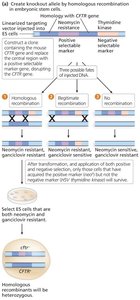
Homologous recombination allows targeted insertion of transgenes, using positive (e.g., neomycin resistance) and negative (e.g., thymidine kinase) selectable markers.
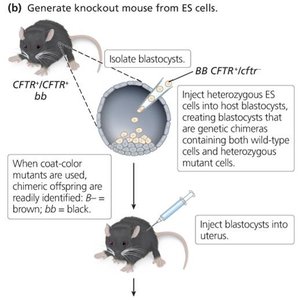
Embryonic stem (ES) cells are transformed, selected, and injected into blastocysts to generate chimeric mice.
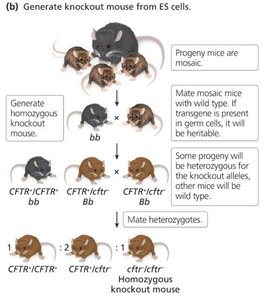
Breeding chimeric mice can produce offspring heterozygous or homozygous for the transgene.
Additional info: Recombinant DNA technology is foundational for genetic engineering, gene therapy, and biotechnology. It enables the study of gene function, the production of pharmaceuticals, and the development of genetically modified organisms for agriculture and research.
