 Back
BackRecombinant DNA Technology: Principles and Applications
Study Guide - Smart Notes
 Tailored notes based on your materials, expanded with key definitions, examples, and context.
Recombinant DNA Technology
Introduction to Recombinant DNA
Recombinant DNA technology involves the artificial joining of DNA molecules from different biological sources, creating combinations not found in nature. This technology is foundational for genetic engineering, allowing scientists to manipulate genes for research, medicine, and biotechnology.
Recombinant DNA: DNA molecules formed by laboratory methods of genetic recombination.
Applications: Gene cloning, genetic modification, production of pharmaceuticals, and gene therapy.
Basic Steps in Recombinant DNA Technology
Overview of the Process
The creation of recombinant DNA involves several key steps, each essential for successful gene cloning and expression.
DNA Extraction: Isolate genomic DNA from the organism of interest.
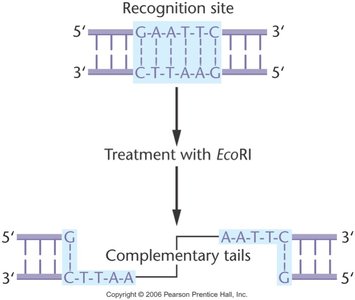
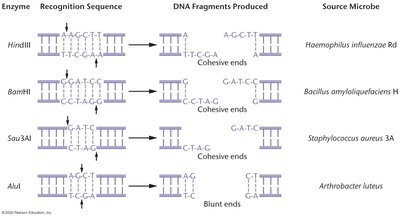
Restriction Digestion: Use restriction enzymes to cut DNA at specific sequences, generating fragments with sticky or blunt ends.
Vector Preparation: Cut plasmid or other vectors with the same restriction enzyme to ensure compatible ends.
Ligation: Join DNA fragments and vectors using DNA ligase to form recombinant DNA molecules.
Transformation: Introduce recombinant DNA into host cells (often bacteria).
Selection and Screening: Identify cells that have taken up recombinant DNA and distinguish between recombinant and non-recombinant clones.
Analysis and Utilization: Recover and analyze recombinant DNA or its products.
Restriction Enzymes
Function and Types
Restriction enzymes, also known as restriction endonucleases, are proteins that recognize specific DNA sequences (often palindromic) and cleave the DNA at or near these sites. They are essential tools for cutting DNA in a controlled manner.
Recognition Sites: Typically 4, 6, or 8 base pairs long and palindromic.
Types of Cuts: Sticky ends (overhangs) or blunt ends (straight cuts).
Examples: EcoRI, HindIII, BamHI, AluI.
DNA Ligation
Joining DNA Fragments
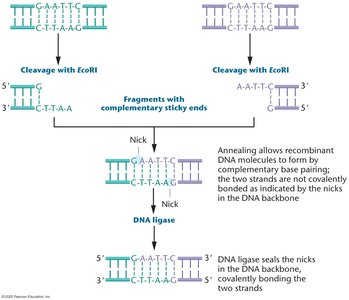
After restriction digestion, DNA fragments with compatible ends are joined together using DNA ligase. This enzyme forms covalent bonds between the sugar-phosphate backbones of DNA, sealing nicks and creating stable recombinant molecules.
Sticky Ends: Overhanging single-stranded DNA that can base pair with complementary sequences.
Blunt Ends: Straight cuts with no overhangs; can also be ligated but less efficiently.
DNA Ligase: Enzyme that catalyzes the formation of phosphodiester bonds.
Cloning Vectors
Plasmids and Their Features
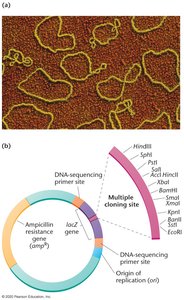
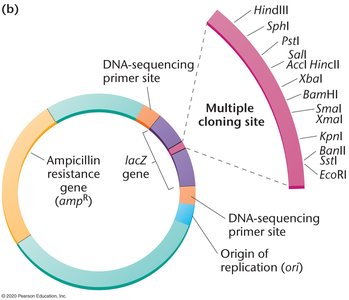
Cloning vectors are DNA molecules used to carry foreign DNA into host cells. Plasmids are the most common vectors in bacterial cloning due to their ability to replicate independently and carry selectable markers.
Plasmids: Small, circular, double-stranded DNA molecules found in bacteria.
Key Features: Origin of replication (ori), selectable marker (e.g., antibiotic resistance), multiple cloning site (MCS), and screening genes (e.g., lacZ).
Transformation and Selection
Introduction of Recombinant DNA into Host Cells
Transformation is the process of introducing recombinant DNA into bacterial cells. Selection and screening are used to identify cells that have successfully taken up the recombinant plasmid.
Selection: Use of antibiotic resistance genes to select for transformed cells.
Screening: Blue/white screening using the lacZ gene and X-gal substrate to distinguish recombinant from non-recombinant clones.

Vectors for Eukaryotic Cells
Yeast and Plant Vectors
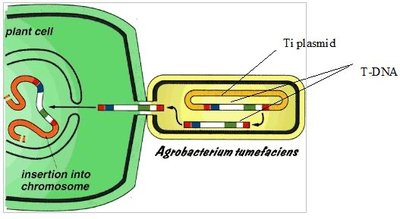
Specialized vectors are used for cloning in eukaryotic cells, such as yeast artificial chromosomes (YACs) and Ti plasmids for plants.
Yeast Artificial Chromosomes (YACs): Allow cloning of large DNA fragments in yeast cells.
Ti Plasmid: Used by Agrobacterium tumefaciens to transfer T-DNA into plant genomes for genetic engineering.
Genomic and cDNA Libraries
Genomic Libraries
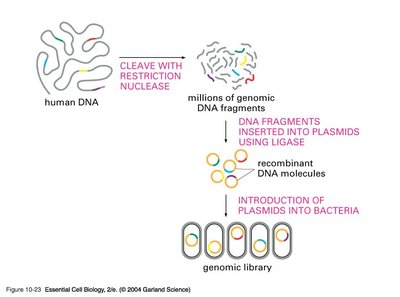
A genomic library is a collection of DNA fragments that represent the entire genome of an organism, stored in vectors and propagated in host cells.
Construction: Genomic DNA is fragmented, inserted into vectors, and introduced into bacteria.
Purpose: To provide access to all genetic information of an organism for research and cloning.
cDNA Libraries
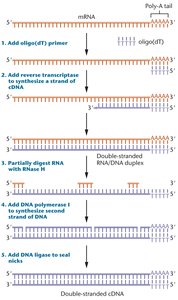
cDNA libraries are collections of complementary DNA (cDNA) synthesized from mature mRNA templates. They represent only the expressed genes of a cell or tissue.
Reverse Transcription: mRNA is reverse transcribed into cDNA using reverse transcriptase.
Applications: Study of gene expression, cloning of eukaryotic genes without introns.
Polymerase Chain Reaction (PCR)
Principle and Steps
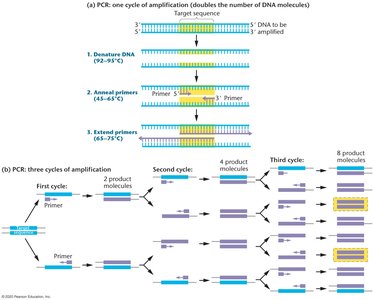
PCR is a technique used to amplify specific DNA sequences exponentially using cycles of denaturation, annealing, and extension.
Ingredients: DNA template, primers, dNTPs, Taq polymerase, buffer, MgCl2.
Steps: Denaturation (94–95°C), annealing (45–65°C), extension (65–72°C).
Applications: Gene cloning, sequencing, diagnostics, forensics.
Limitations: Requires sequence knowledge for primer design, limited fragment size, contamination risk.
Nucleic Acid Blotting Techniques
Southern, Northern, and Western Blotting
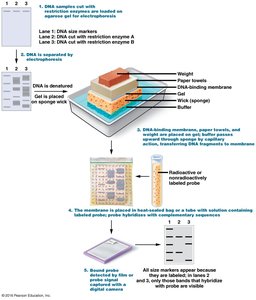
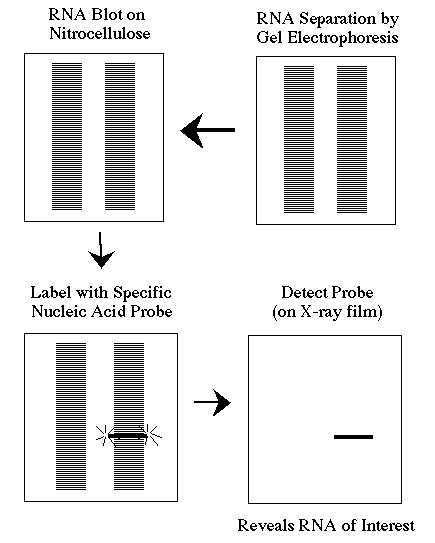
Blotting techniques are used to detect specific DNA, RNA, or proteins separated by gel electrophoresis and transferred to membranes.
Southern Blot: Detects specific DNA sequences using DNA probes.
Northern Blot: Detects specific RNA sequences using DNA or RNA probes.
Western Blot: Detects specific proteins using antibodies.
Sanger Sequencing
DNA Sequencing by Chain Termination
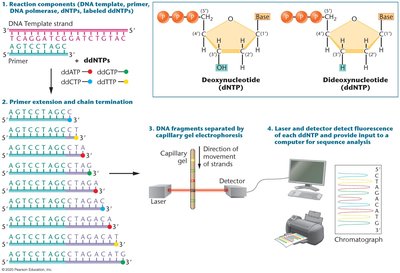
Sanger sequencing uses dideoxynucleotides (ddNTPs) to terminate DNA synthesis at specific bases, allowing the determination of DNA sequence by fragment analysis.
Components: DNA template, primer, DNA polymerase, dNTPs, ddNTPs.
Detection: Fragments are separated by capillary electrophoresis and detected by fluorescence.
Genome Editing with CRISPR-Cas
Principle and Mechanism
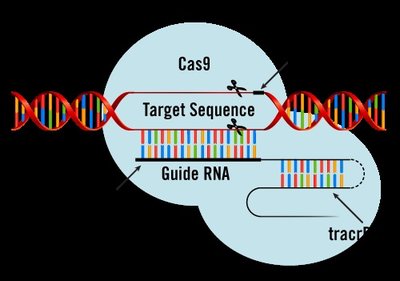
CRISPR-Cas is a revolutionary genome editing tool that allows precise modification of DNA in living cells. It uses a guide RNA (sgRNA) to direct the Cas9 nuclease to a specific DNA sequence, where it introduces a double-stranded break.
Repair Pathways: Non-homologous end joining (NHEJ) introduces indels; homology-directed repair (HDR) enables precise edits using a donor template.
Applications: Gene knockout, gene correction, functional genomics, biotechnology.
Limitations and Improvements
CRISPR-Cas9 can have off-target effects, where the nuclease cuts unintended sites. Improving specificity involves engineering Cas9 variants, optimizing sgRNA design, and exploring alternative enzymes.
Off-target Effects: Unintended DNA cleavage at similar sequences.
Solutions: Enhanced Cas9 specificity, improved sgRNA algorithms, alternative nucleases.
