 Back
BackCh 15 Regulation of Gene Expression in Bacteria: The lac Operon, trp Operon, and CRISPR-Cas Systems
Study Guide - Smart Notes
 Tailored notes based on your materials, expanded with key definitions, examples, and context.
Ch 15 Regulation of Gene Expression in Bacteria
Introduction to Gene Regulation
Gene expression in bacteria is tightly regulated to ensure that proteins are produced only when needed, conserving energy and resources. Bacteria must adapt to changing environmental conditions and defend against threats such as bacteriophages. Regulatory mechanisms control the timing, location, and amount of gene expression.
Inducible enzymes: Produced only in the presence of specific substrates (e.g., enzymes for lactose metabolism).
Constitutive enzymes: Continuously produced regardless of environmental conditions.
Repressible systems: Gene expression is inhibited by the presence of a specific molecule, often the end product of a biosynthetic pathway (e.g., tryptophan synthesis).
Mechanisms of Gene Regulation
Positive and Negative Control
Gene regulation can occur through positive or negative control mechanisms:
Negative control: Gene expression occurs unless it is shut off by a regulatory molecule (repressor).
Positive control: Transcription occurs only when a regulatory molecule (activator) stimulates RNA production.
The Operon Model
Structure and Function of Operons
In bacteria, genes with related functions are often organized into operons—clusters of genes transcribed as a single mRNA from a common regulatory region. The regulatory region includes promoters and operators, which are cis-acting elements, while regulatory proteins are trans-acting elements.
Cis-acting sites: DNA sequences that regulate the expression of nearby genes.
Trans-acting elements: Proteins or RNAs that bind to cis-acting sites to regulate gene expression.

Structural Genes of the lac Operon
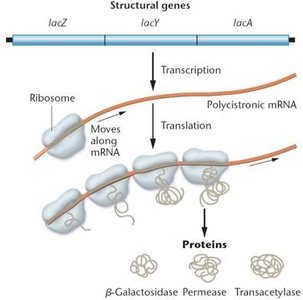
The lac operon in E. coli is a classic example of gene regulation. It contains three structural genes:
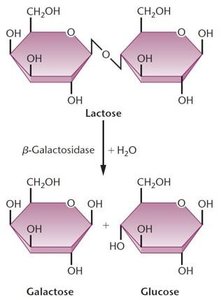
lacZ: Encodes β-galactosidase, which converts lactose into glucose and galactose.
lacY: Encodes permease, which facilitates lactose entry into the cell.
lacA: Encodes transacetylase, which may help remove toxic by-products of lactose metabolism.
Polycistronic mRNA and Translation
All three structural genes of the lac operon are transcribed as a single polycistronic mRNA, which is then translated into three separate proteins.
Polycistronic mRNA: A single mRNA molecule that encodes multiple proteins.
Cistron: A section of DNA or RNA that codes for a single polypeptide.
Regulation of the lac Operon
Induction and Repression
The lac operon is regulated by the presence or absence of lactose:
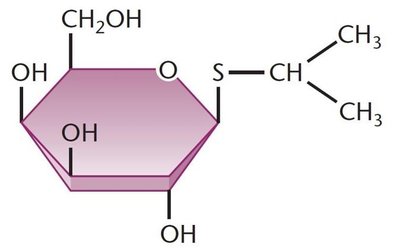
Inducer: Lactose (or analogs like IPTG) binds to the repressor, inactivating it and allowing transcription.
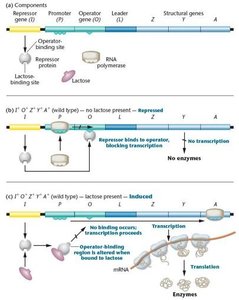
Repressor: Encoded by the lacI gene, binds to the operator to block transcription in the absence of lactose.
Negative Control of the lac Operon
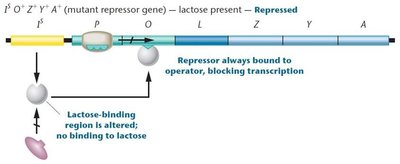
In the absence of lactose, the repressor binds to the operator, preventing RNA polymerase from transcribing the structural genes. When lactose is present, it binds to the repressor, causing it to release from the operator and allowing transcription.
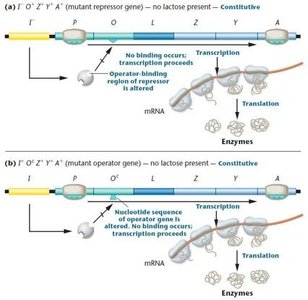
Constitutive Mutations
Mutations in the operator or repressor gene can lead to constitutive expression, where the operon is always active regardless of lactose presence.
Summary Table: Gene Activity in Various Genotypes
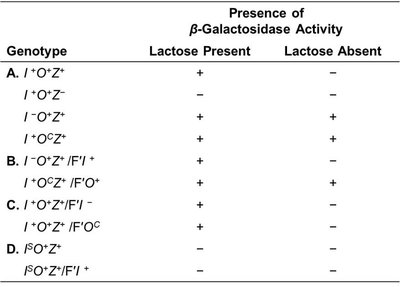
The following table compares β-galactosidase activity in different E. coli genotypes in the presence or absence of lactose:
Genotype | Lactose Present | Lactose Absent |
|---|---|---|
I+ O+ Z+ | + | − |
I+ O+ Z− | − | − |
I+ OC Z+ | + | + |
I− O+ Z+ | + | + |
I+ O+ Z+ / F' I+ O+ Z+ | + | − |
I+ OC Z+ / F' O+ Z+ | + | + |
I+ O+ Z+ / F' O− | − | − |
I+ O+ Z+ / F' OC | + | + |
IS O+ Z+ | − | − |
IS O+ Z+ / F' I+ O+ Z+ | − | − |
Catabolite Repression and Positive Control
Catabolite-Activating Protein (CAP)
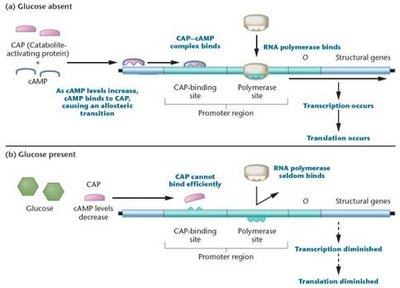
When glucose is present, the lac operon is repressed even if lactose is available. This is known as catabolite repression. The catabolite-activating protein (CAP) exerts positive control over the operon in the absence of glucose by binding to the promoter and facilitating RNA polymerase binding, but only when cAMP levels are high (i.e., when glucose is low).
The trp Operon: A Repressible System
Regulation of Tryptophan Synthesis
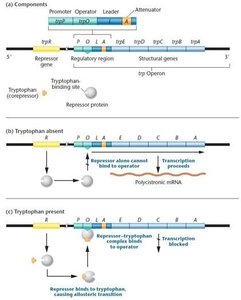
The trp operon encodes enzymes for tryptophan biosynthesis. When tryptophan is abundant, it acts as a corepressor, binding to the repressor protein and enabling it to bind the operator, thus blocking transcription. When tryptophan is scarce, the repressor cannot bind the operator, and the operon is transcribed.
CRISPR-Cas System: Adaptive Immunity in Bacteria
Overview and Discovery
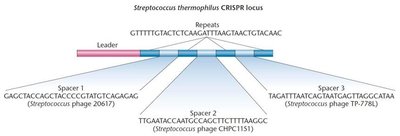
CRISPR (Clustered Regularly Interspaced Short Palindromic Repeats) and associated (cas) genes provide bacteria with adaptive immunity against bacteriophages. The CRISPR locus contains repeated DNA sequences interspersed with spacers derived from phage genomes. Upon reinfection, these sequences guide the destruction of invading DNA.
Mechanism of CRISPR-Cas Immunity
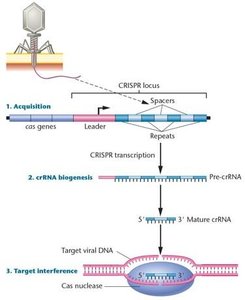
Spacer acquisition: Invading phage DNA is cleaved and inserted as new spacers in the CRISPR locus, mediated by Cas1 and Cas2 proteins.
crRNA biogenesis: The CRISPR locus is transcribed and processed into small CRISPR RNAs (crRNAs), each containing a single spacer and repeat.
Target interference: crRNAs guide Cas nucleases to complementary sequences in invading phage DNA, leading to its cleavage and neutralization.
Additional info: The CRISPR-Cas system is now widely used as a genome editing tool in biotechnology and research due to its specificity and adaptability.
