 Back
BackRegulation of Gene Expression in Eukaryotes
Study Guide - Smart Notes
 Tailored notes based on your materials, expanded with key definitions, examples, and context.
Regulation of Gene Expression in Eukaryotes
Overview of Eukaryotic Gene Expression Control
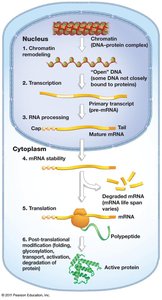
Gene expression in eukaryotes is a highly regulated process that ensures genes are expressed at the right time, place, and amount. This regulation is essential for cell specialization, development, and response to environmental changes. Errors in gene expression can lead to diseases, including cancer.
Gene expression can be regulated at multiple stages: chromatin structure, transcription, RNA processing, mRNA stability, translation, and post-translational modifications.
Most cells in a multicellular organism are genetically identical; differences in cell types arise from differential gene expression.
Regulation of Chromatin Structure
Chromatin Remodeling
Chromatin structure plays a critical role in gene expression. Genes located in tightly packed heterochromatin are usually not expressed, while those in loosely packed euchromatin are accessible for transcription. Chromatin remodeling involves changes to nucleosome positioning and composition, often mediated by ATP-dependent protein complexes.
Remodeling can reposition, remove, or alter nucleosomes, creating open or closed chromatin conformations.
Open chromatin allows transcription factors and RNA polymerase to access DNA, promoting gene expression.
Closed chromatin restricts access, repressing gene expression.
Histone Modifications
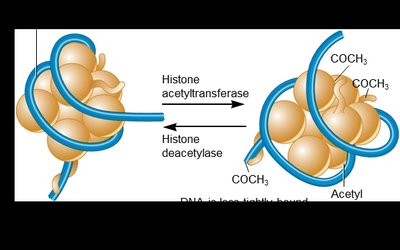
Histone proteins can be covalently modified, affecting chromatin structure and gene expression. The most common modifications include acetylation, methylation, and phosphorylation.
Histone acetylation (by histone acetyltransferases) reduces the positive charge on histones, loosening DNA binding and promoting transcription.
Histone deacetylation (by histone deacetylases) restores tight DNA-histone interactions, repressing transcription.
DNA Methylation
DNA methylation involves the addition of methyl groups to cytosine bases, typically at CpG islands near gene promoters. This modification is associated with transcriptional repression and can be heritable through cell division.
Methylation can block activator binding or recruit proteins that induce a closed chromatin state.
Genomic imprinting is a process where methylation patterns are inherited from one parent, leading to parent-specific gene expression.

Regulation of Transcription Initiation
Transcription Factors
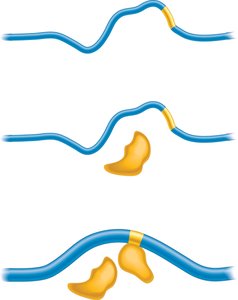
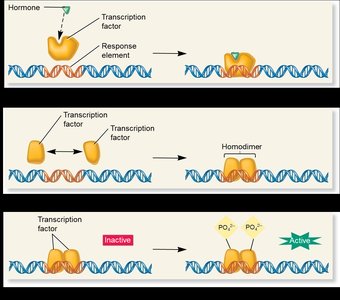
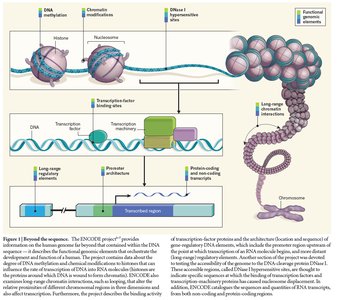
Transcription initiation in eukaryotes requires the coordinated action of general and regulatory transcription factors. These proteins bind to specific DNA sequences called response elements, enhancers, or silencers, influencing the rate of transcription.
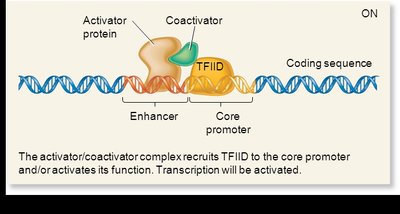
Activators bind enhancers to increase transcription (up-regulation).
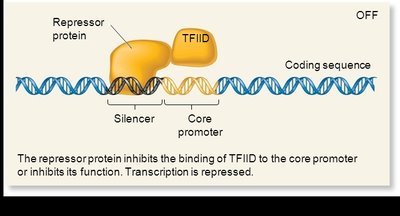
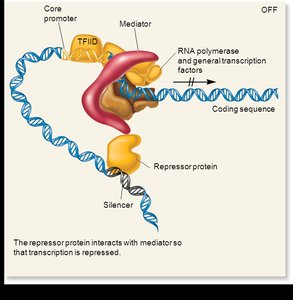
Repressors bind silencers to decrease transcription (down-regulation).
Transcription factors can be regulated by hormones, dimerization, or post-translational modifications.
Enhancers and Silencers
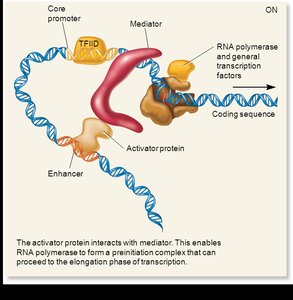
Enhancers and silencers are DNA elements that can be located near or far from the core promoter. They interact with transcription factors to modulate gene expression.
Enhancers increase transcription by facilitating the assembly of the transcriptional machinery.
Silencers decrease transcription by inhibiting the assembly or function of the transcriptional machinery.
Post-Transcriptional Regulation
RNA Processing and Alternative Splicing
After transcription, pre-mRNA undergoes processing, including capping, polyadenylation, and splicing. Alternative splicing allows a single gene to produce multiple mRNA variants, increasing protein diversity.
Alternative splicing is common in higher eukaryotes and can generate dozens of mRNA isoforms from a single gene.
mRNA Stability and Degradation
The stability of mRNA molecules in the cytoplasm affects protein synthesis. mRNA half-life is regulated by sequences in the untranslated regions (UTRs) and the length of the polyA tail.
Short polyA tails and AU-rich elements (AREs) in the 3' UTR can target mRNAs for rapid degradation.
PolyA-binding proteins stabilize mRNA; loss of binding leads to degradation.

Translational and Post-Translational Regulation
Initiation of Translation
Translation can be regulated by proteins that bind to mRNA, often at the 5' UTR, blocking ribosome assembly and translation initiation.
Protein Processing and Degradation
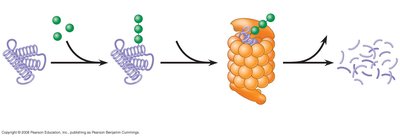
After translation, proteins may undergo modifications such as cleavage, phosphorylation, or ubiquitination. Proteins marked with ubiquitin are targeted for degradation by the proteasome, regulating protein levels in the cell.
Regulation by Noncoding RNAs
MicroRNAs (miRNAs) and RNA Interference (RNAi)
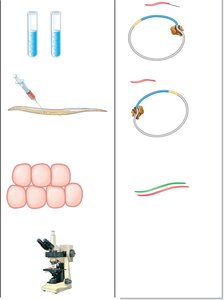
Noncoding RNAs, such as microRNAs (miRNAs) and small interfering RNAs (siRNAs), play crucial roles in gene regulation. They can bind to mRNAs, leading to degradation or inhibition of translation, a process known as RNA interference (RNAi).
miRNAs are processed from longer transcripts and incorporated into the RNA-induced silencing complex (RISC).
siRNAs are often derived from exogenous or repetitive sequences and can induce heterochromatin formation.
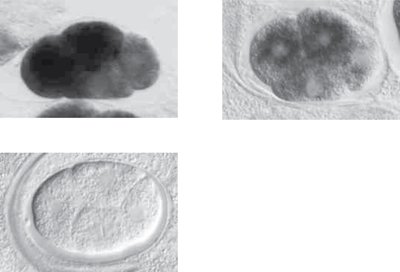
RNAi is used experimentally to silence gene expression and study gene function.
Summary Table: Mechanisms of Eukaryotic Gene Expression Control
Level of Regulation | Mechanism | Effect |
|---|---|---|
Chromatin Structure | Remodeling, histone modification, DNA methylation | Open/closed chromatin, gene silencing/activation |
Transcription Initiation | Transcription factors, enhancers, silencers | Up- or down-regulation of transcription |
RNA Processing | Alternative splicing, capping, polyadenylation | mRNA diversity, stability |
mRNA Stability | PolyA tail length, AU-rich elements | mRNA degradation or persistence |
Translation | Regulatory proteins, miRNAs | Translational repression or activation |
Post-Translational | Protein modification, ubiquitination | Protein activation, degradation |
Key Equations and Concepts
DNA methylation reaction:
RNA interference (RNAi): Double-stranded RNA is processed by Dicer into small RNAs, which are loaded into RISC to target complementary mRNAs for degradation or translational repression.
Additional info: The mechanisms described here are foundational for understanding how eukaryotic cells control gene expression, which is essential for development, differentiation, and adaptation. Modern research continues to uncover new regulatory RNAs and chromatin modifications that further expand our understanding of gene regulation.
