 Back
Regulation of Gene Expression: Prokaryotic and Eukaryotic Strategies
Study Guide - Smart Notes
 Tailored notes based on your materials, expanded with key definitions, examples, and context.
Regulation of Gene Expression
Overview of Gene Regulation
Gene regulation is the process by which cells control the expression and timing of their genes, allowing adaptation to environmental changes and cellular differentiation. In prokaryotes, regulation often occurs at the transcriptional level, while eukaryotes utilize multiple regulatory steps from DNA accessibility to protein degradation.
Prokaryotic regulation: Operon systems, negative and positive transcription regulation.
Eukaryotic regulation: Chromatin structure, transcription, post-transcriptional modifications, translation, protein degradation, and small RNAs.
Bacterial Gene Regulation
Operons: The Basic Concept
An operon is a cluster of genes under the control of a single promoter and operator, allowing coordinated expression. Operons are fundamental to prokaryotic gene regulation.
Operator: DNA segment where regulatory proteins bind.
Promoter: DNA sequence where RNA polymerase initiates transcription.
Structural genes: Genes encoding proteins with related functions.
Repressible and Inducible Operons
Negative gene regulation involves repressors that inhibit transcription. There are two main types:
Repressible operon: Usually active; repressor binding turns it off (e.g., trp operon).
Inducible operon: Usually inactive; inducer binding inactivates the repressor, turning it on (e.g., lac operon).
The trp Operon in E. coli
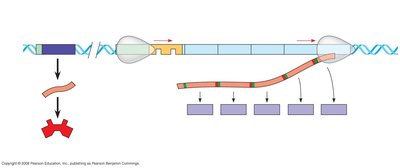
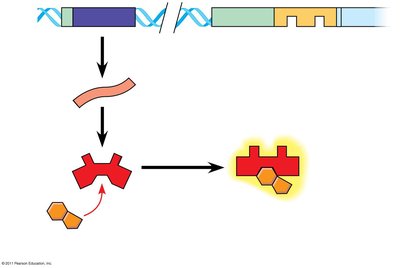
The trp operon is a repressible operon responsible for tryptophan synthesis. When tryptophan is absent, the operon is active; when tryptophan is present, it acts as a corepressor, activating the repressor and shutting off transcription.
Key genes: trpE, trpD, trpC, trpB, trpA
Regulatory gene: trpR (encodes the repressor)
The lac Operon in E. coli
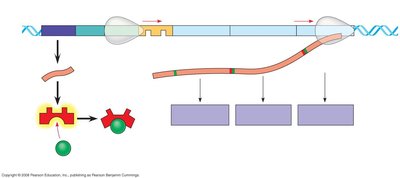
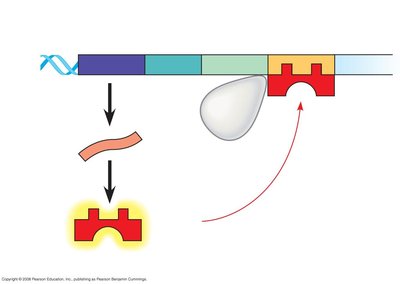
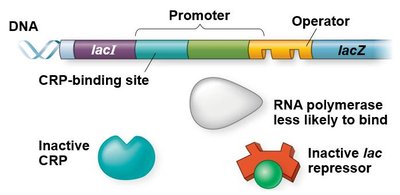
The lac operon is an inducible operon responsible for lactose metabolism. When lactose is absent, the repressor is active and transcription is blocked. When lactose (allolactose) is present, it inactivates the repressor, allowing transcription.
Key genes: lacZ, lacY, lacA
Regulatory gene: lacI (encodes the repressor)
Positive Gene Regulation
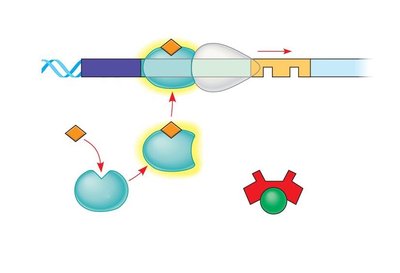
Some operons are subject to positive control by stimulatory proteins. The lac operon is activated by the CAP protein when glucose is scarce. cAMP binds CAP, which then increases RNA polymerase affinity for the promoter, accelerating transcription.
CAP: Catabolite Activator Protein
cAMP: Cyclic AMP, accumulates when glucose is low
Eukaryotic Gene Regulation
Multiple Levels of Regulation
Eukaryotic gene expression is regulated at several steps, including chromatin structure, transcription, RNA processing, translation, and protein degradation. This allows for complex control and cell-specific gene expression.
Chromatin modification
Transcription initiation
RNA processing
Translation regulation
Protein processing and degradation
Regulation of Chromatin Structure
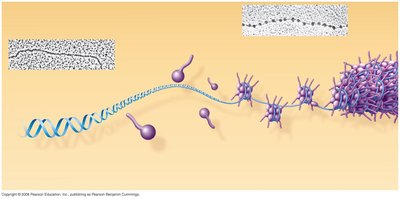
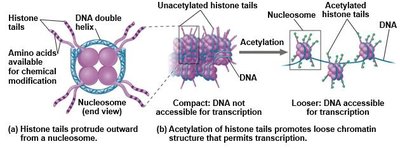
Chromatin structure affects gene accessibility. Euchromatin is loosely packed and accessible, while heterochromatin is densely packed and generally not transcribed. Histone modifications alter chromatin structure and gene expression.
Acetylation: Loosens chromatin, enhances transcription
Methylation: Condenses chromatin, reduces transcription
Phosphorylation: Can loosen chromatin when near methylated amino acids
Regulation of Transcription Initiation
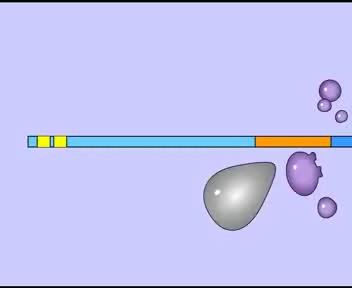
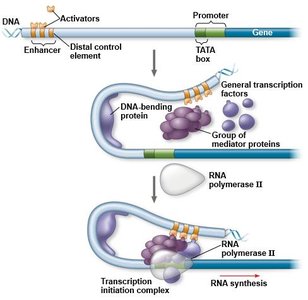
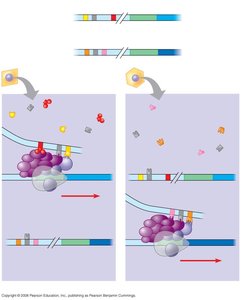
Transcription initiation is controlled by DNA elements and transcription factors. Enhancers are distant regulatory sequences that bind activators or repressors, influencing gene expression. Control elements interact with specific transcription factors to modulate transcription.
Activators: Stimulate transcription
Repressors: Inhibit transcription
Enhancers: Can be thousands of nucleotides from the promoter
Post-Transcriptional Regulation
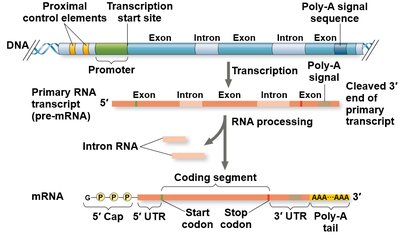
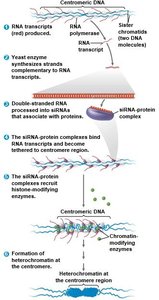
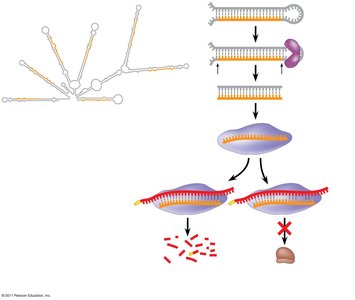
Regulatory mechanisms after transcription allow rapid adjustment of gene expression. These include alternative RNA splicing, mRNA degradation, and regulation by small RNAs such as miRNAs and siRNAs.
Alternative splicing: Produces different mRNAs from the same transcript
siRNAs and miRNAs: Small RNAs that degrade mRNA or block translation
RNA interference (RNAi): Inhibition of gene expression by RNA molecules
mRNA Degradation
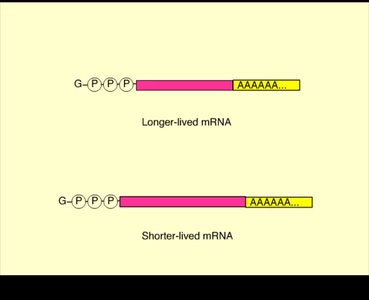
The lifespan of mRNA in the cytoplasm determines how much protein is produced. Removal of the polyA tail signals for mRNA destruction, limiting protein synthesis.
PolyA tail: Protects mRNA from degradation
Shorter polyA tail: Leads to faster mRNA degradation
Initiation of Translation
Translation can be regulated by proteins binding to mRNA, blocking the translation machinery. Global regulation can occur by modifying translation initiation factors, affecting all mRNAs in the cell.
Translation initiation factors: Proteins required to start translation
Example: Activation of translation factors in fertilized eggs
Protein Processing and Degradation
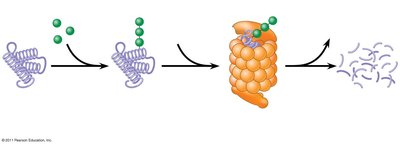
After translation, proteins may undergo modifications such as cleavage, phosphorylation, or glycosylation. Proteins needed only temporarily are tagged with ubiquitin and degraded by proteasomes.
Ubiquitin: Small protein that tags proteins for degradation
Proteasome: Protein complex that degrades tagged proteins
Summary Table: Major Steps in Eukaryotic Gene Regulation
Step | Mechanism | Effect |
|---|---|---|
Chromatin modification | Histone acetylation/methylation | DNA accessibility |
Transcription initiation | Enhancers, transcription factors | Gene expression |
RNA processing | Alternative splicing | mRNA diversity |
Translation | Initiation factors, mRNA binding proteins | Protein synthesis |
mRNA degradation | PolyA tail removal | Protein levels |
Protein processing/degradation | Ubiquitin tagging, proteasome | Protein activity |
Key Takeaways
Operons allow coordinated gene expression in prokaryotes.
Inducible and repressible operons respond to environmental signals.
Eukaryotic gene regulation is multi-layered, enabling cell-specific expression.
Chromatin structure, transcription factors, and post-transcriptional mechanisms are central to regulation.
Protein degradation ensures timely removal of unneeded proteins.
