 Back
BackSex Determination and Dosage Compensation in Genetics
Study Guide - Smart Notes
 Tailored notes based on your materials, expanded with key definitions, examples, and context.
Sex Determination in Genetics
Introduction to Sex Determination
Sex determination refers to the biological system that establishes the development of sexual characteristics in an organism. In humans and many other species, this process is governed by genetic mechanisms involving sex chromosomes, but alternative systems exist in nature. Understanding these mechanisms is crucial for comprehending inheritance patterns, genetic variation, and evolutionary biology.
Genetic Sex Determination in Humans (XX/XY System)
Chromosomes and Sexual Development
Sex chromosomes are specialized chromosomes (X and Y in humans) that determine an individual's biological sex.
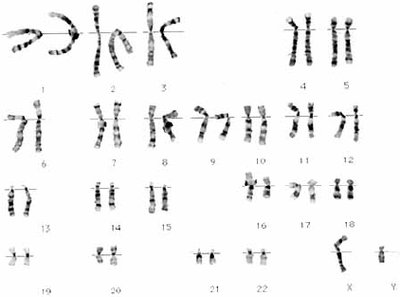
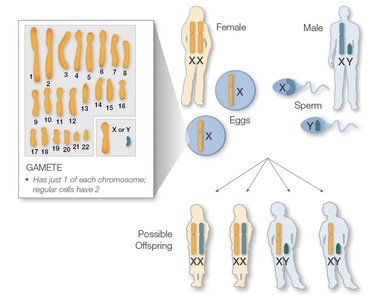
Humans have 22 pairs of autosomes and one pair of sex chromosomes (XX for females, XY for males).
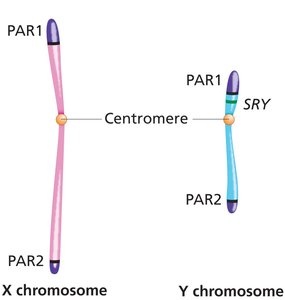
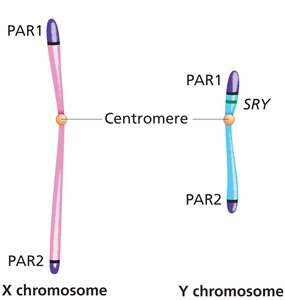
The SRY gene (Sex-determining Region Y) on the Y chromosome is the primary genetic switch for male development.
Primary and Secondary Sexual Characteristics
Primary sexual characteristics include the reproductive organs and gametes (sperm or eggs).
Secondary sexual characteristics are morphological, physiological, or neurological traits that differentiate sexes but are not directly involved in reproduction (e.g., body hair, voice pitch).
Structure of Sex Chromosomes
The X and Y chromosomes differ in size, shape, and genetic content.
Regions of homology called Pseudoautosomal Regions (PARs) allow pairing during meiosis.
Y-linked genes are called holandric genes; they are few and mostly involved in male development.
The Role of SRY and Other Genes
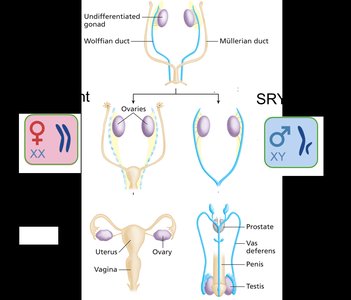
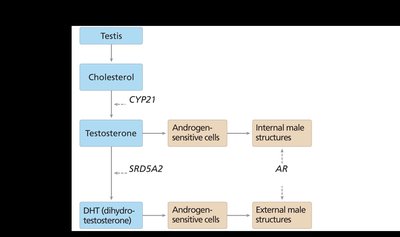
The SRY gene encodes a transcription factor that initiates testis development in embryos with a Y chromosome.
SRY activates SOX9, which further drives testis formation and testosterone production.
Testosterone binds to the Androgen Receptor (AR), influencing the development of male secondary sexual characteristics.
Absence of SRY leads to ovarian development and typically female characteristics, but other genes are also involved.
Genetic Variation and Disorders of Sexual Development
Allelic variation in SRY, SOX9, CYP21, SRD5A2, and AR can lead to differences in sexual development, resulting in intersex phenotypes or disorders of sexual development (DSDs).
Examples include:
CYP21 mutations: Excess androgen production, leading to ambiguous genitalia or premature puberty.
SRD5A2 mutations: Impaired conversion of testosterone to DHT, affecting external male genitalia development.
AR mutations: Androgen insensitivity syndrome, where individuals with XY chromosomes develop female external characteristics.
Dosage Compensation
Need for Dosage Compensation
Because females (XX) have two X chromosomes and males (XY) have only one, there is a potential imbalance in the expression of X-linked genes. Dosage compensation mechanisms equalize gene expression between sexes.
X-Inactivation in Mammals
In placental mammals, one X chromosome in each female cell is randomly inactivated during early development, forming a Barr body.
This process creates a genetic mosaic, as different cells may inactivate either the maternal or paternal X chromosome.
X-inactivation ensures that males and females have similar levels of X-linked gene products.
Example: Tortoiseshell Cats
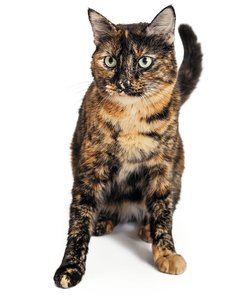
Tortoiseshell coat color in cats is an example of X-inactivation mosaicism, as the gene for fur color is X-linked.
Female cats heterozygous for the color gene display patches of different colors depending on which X chromosome is inactivated in each cell.
Types of Sex Determination Systems
Genetic Sex Determination
XX/XY system: Males are heterogametic (XY), females are homogametic (XX). Found in humans and most mammals.
ZZ/ZW system: Females are heterogametic (ZW), males are homogametic (ZZ). Found in birds, some fish, and butterflies.
XX/X0 system: Females are XX, males are X0 (only one X chromosome, no Y). Found in grasshoppers.
Multiple sex chromosome systems: Some species have more complex arrangements (e.g., platypus, smoky jungle frog).
Haplodiploidy
Sex is determined by ploidy level rather than sex chromosomes.
In bees, ants, and wasps: fertilized (diploid, 2n) eggs become females; unfertilized (haploid, n) eggs become males.
Male bees produce sperm via mitosis, as they are already haploid and cannot undergo meiosis.
Environmental Sex Determination
Sex is determined by environmental factors such as temperature during critical periods of development.
Common in reptiles (e.g., some turtles and alligators).
Developmental and Hermaphroditic Systems
Some organisms (e.g., slugs, snails) are hermaphrodites, producing both eggs and sperm.
Sex determination can also involve complex developmental cues beyond genetics and environment.
Primary Sex Ratio
The primary sex ratio is the ratio of males to females at conception, typically 1:1 in genetic systems like XX/XY and ZZ/ZW.
Other factors can alter the observed sex ratio at birth or in adult populations.
Summary
Human sex determination is categorized as male heterogamety (XX/XY), with SRY as the key gene initiating male development.
Dosage compensation via X-inactivation ensures balanced gene expression between sexes.
Sex determination systems are diverse, including genetic, environmental, and hermaphroditic mechanisms.
Understanding these systems is essential for interpreting inheritance patterns and genetic diversity.
Practice Example: Haplodiploidy in Bees
Female bees are diploid (2n), male bees are haploid (n).
Haploid males produce sperm via mitosis, not meiosis, because they lack homologous chromosome pairs.
Key Concept: In haplodiploid systems, ploidy determines sex, and cell division mechanisms differ from those in diploid organisms.
