 Back
BackSpecial Topics in Molecular Genetics: Gene Therapy, DNA Profiling, and Genetically Modified Organisms
Study Guide - Smart Notes
 Tailored notes based on your materials, expanded with key definitions, examples, and context.
Gene Therapy
Introduction to Gene Therapy
Gene therapy is a molecular genetics technique that involves the modification of cellular DNA to treat or cure diseases. This approach can be used to replace mutated genes with wild-type copies, inactivate disease-causing genes, or introduce new or modified genes to correct genetic disorders.
Replacing Mutated Genes: Introducing functional copies of genes to compensate for defective or missing ones.
Inactivating Disease Genes: Silencing or knocking out genes that cause disease.
Introducing/Modifying Genes: Adding new genes or editing existing ones to restore normal function.
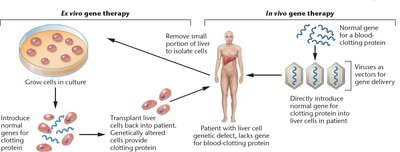
Gene therapy can be performed ex vivo (outside the body, then reintroduced) or in vivo (directly into the patient). Delivery methods include viral vectors, lipid nanoparticles, and other vehicles designed to target specific cells or tissues.
Successes and Failures in Gene Therapy
Gene therapy has achieved notable successes but also faced significant challenges:
Successes:
ADA-SCID: Addition of ADA gene to T-cells ex vivo.
Epidermolysis bullosa: Healthy gene added to skin stem cells ex vivo.
Retinal blindness: In vivo delivery of healthy gene using AAV vector.
Sickle cell anemia: Treated using CRISPR/Cas gene editing.
Failures:
Deaths due to immune reactions or insertional mutagenesis (e.g., from adenovirus vectors).
Challenges in targeting, delivery, and long-term expression.
Key Terms: Ex vivo, in vivo, viral vectors, CRISPR/Cas, insertional mutagenesis
DNA Profiling/Fingerprinting
Principles of DNA Profiling
DNA profiling, also known as DNA fingerprinting, is a method used to identify the source of biological material by comparing DNA profiles. It is widely used in forensics, paternity testing, and identification of disaster victims.
Source Material: Blood, hair, saliva, semen, bone, cells, or tissue.
Application: Matching DNA profiles to databases or other samples to establish identity or relationships.
STR-Based DNA Profiling
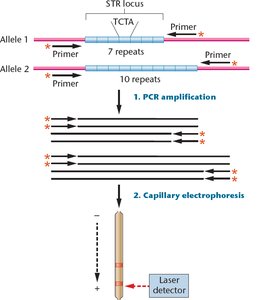
Short Tandem Repeats (STRs) are regions in the genome where short DNA sequences are repeated. The number of repeats varies among individuals, making STRs useful for identification.
PCR Amplification: STR regions are amplified using PCR with primer pairs specific to each locus.
Allelic Variation: Individuals may be homozygous or heterozygous at each STR locus, producing PCR products of different sizes.
Detection: PCR products are separated by gel or capillary electrophoresis, and sizes are determined using fluorescently labeled primers.
Interpreting STR Profiles
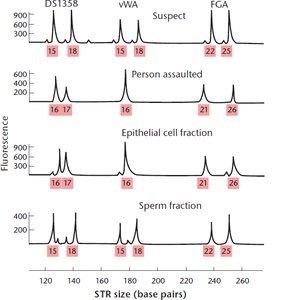
STR profiles are compared across multiple loci to match samples. The probability of two unrelated individuals sharing the same STR profile is extremely low, making this method highly reliable for identification.
Forensic Use: Comparing STR profiles from crime scene evidence to suspects or databases.
Family Relationships: Establishing paternity or kinship by comparing STR patterns.
Genetically Modified Organisms (GMOs)
Overview of GMOs
Genetically Modified Organisms (GMOs) are plants or animals whose DNA has been altered using genetic engineering techniques. GMOs are widely used in agriculture to enhance food production and confer desirable traits.
Common Traits: Resistance to herbicides, insects, and viruses.
Major Producers: The United States is the largest user of GM crops.
Health and Environmental Concerns: No evidence of harm to human health, but concerns exist about environmental impacts such as resistance development and gene transfer to non-GM crops.
Examples of GM Crops
Glyphosate Resistance: The most common GMO trait, conferred by a bacterial gene that allows plants to tolerate the herbicide glyphosate (Roundup).
Insect Resistance: Expression of a gene from Bacillus thuringiensis (Bt) that produces a protein toxic to insects.
Generating Genetically Modified Plants
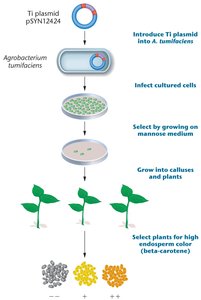
GM plants are typically produced by introducing new genes using vectors such as the Ti plasmid from Agrobacterium tumefaciens. The process involves infecting plant cells, selecting for successful transformants, and regenerating whole plants from modified cells.
Summary Table: Key Concepts in Special Topics of Molecular Genetics
Topic | Key Concept | Example/Application |
|---|---|---|
Gene Therapy | Modification of DNA to treat disease | CRISPR/Cas for sickle cell anemia |
DNA Profiling | STR analysis for identification | Forensic matching of crime scene DNA |
GMOs | Genetic engineering for desirable traits | Bt corn, glyphosate-resistant soybeans |
