 Back
BackThe Biochemistry of RNA Synthesis and RNA Classification
Study Guide - Smart Notes
 Tailored notes based on your materials, expanded with key definitions, examples, and context.
The Biochemistry of RNA Synthesis
Introduction to RNA and Its Discovery
Ribonucleic acid (RNA) is a fundamental molecule in genetics, playing critical roles in gene expression and regulation. The discovery of RNA predates the elucidation of DNA structure, with early studies identifying ribonucleic substances in cells. In the late 19th and early 20th centuries, scientists such as Albrecht Kossel and Phoebus Levene characterized the chemical components of nucleic acids, distinguishing between ribose (in RNA) and deoxyribose (in DNA).
Key Point: RNA contains ribose sugar, while DNA contains deoxyribose.
Key Point: RNA and DNA differ in their nitrogenous bases: RNA contains uracil (U) instead of thymine (T).
Key Point: RNA is typically single-stranded, whereas DNA is double-stranded.
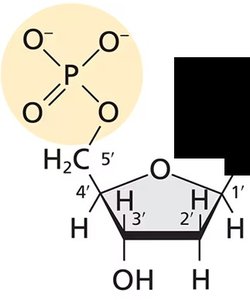
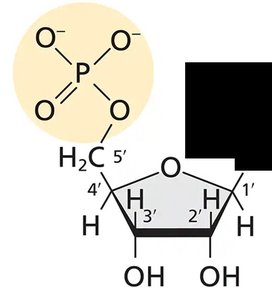
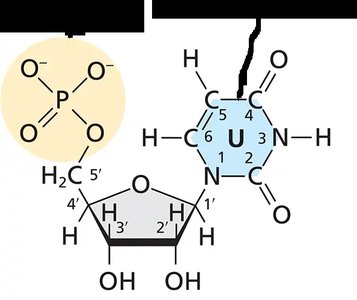
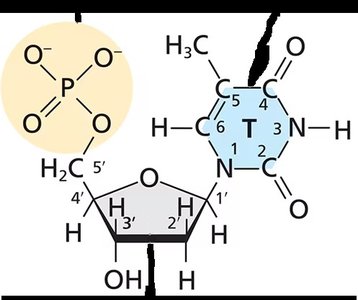
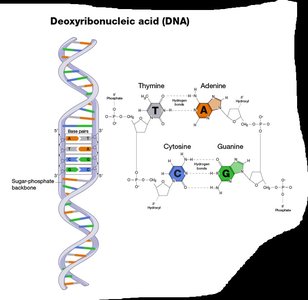
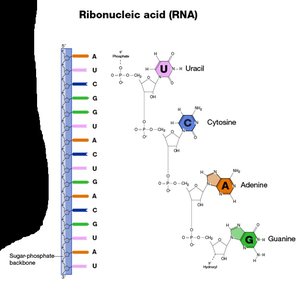
Chemical and Structural Differences Between DNA and RNA
DNA and RNA differ in three main aspects: their sugar component, their nitrogenous bases, and their structure.
Sugar: DNA contains deoxyribose; RNA contains ribose.
Bases: DNA uses adenine (A), guanine (G), cytosine (C), and thymine (T); RNA uses A, G, C, and uracil (U).
Structure: DNA is double-stranded and forms a double helix; RNA is usually single-stranded.
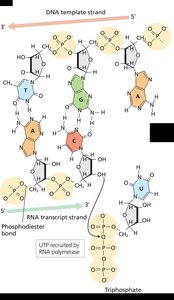
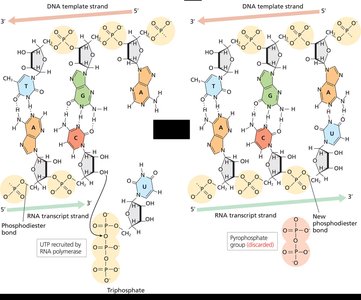
RNA Synthesis (Transcription)
RNA synthesis, or transcription, is the process by which RNA is produced from a DNA template. This process is catalyzed by the enzyme RNA polymerase, which adds ribonucleotides to the growing RNA strand using base-pairing rules (A pairs with U in RNA, and C pairs with G).
Key Point: RNA polymerase catalyzes the formation of phosphodiester bonds between nucleotides, releasing two phosphates from the incoming ribonucleotide triphosphate.
Key Point: The RNA sequence is complementary to the DNA template strand and nearly identical to the coding strand (except U replaces T).
The Central Dogma of Molecular Biology
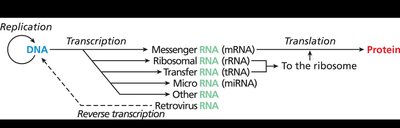
The central dogma, first proposed by Francis Crick, describes the flow of genetic information: DNA is transcribed into RNA, which is then translated into protein. This concept is foundational to understanding gene expression and regulation.
Key Point: Genetic information flows from DNA → RNA → Protein.
Key Point: Only messenger RNA (mRNA) is translated into protein; other RNAs have structural or regulatory roles.
Discovery of Messenger RNA (mRNA)
Pulse-Chase Experiments
Pulse-chase experiments were pivotal in identifying mRNA as a transient intermediary between DNA and protein synthesis. By labeling newly synthesized RNA with radioactive uracil, researchers observed rapid synthesis and degradation of RNA, indicating its role as a messenger.
Key Point: mRNA is synthesized in the nucleus and quickly transported to the cytoplasm for translation.
Key Point: mRNA has a short half-life, reflecting its role in dynamic gene expression.
Experimental Evidence for mRNA
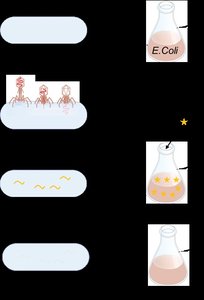
In 1961, Brenner, Jacob, and Meselson demonstrated that after bacteriophage infection, newly synthesized RNA directed protein synthesis using existing ribosomes, confirming the existence of mRNA.
Key Point: mRNA carries genetic information from DNA to ribosomes, where it directs protein synthesis.
Gene Expression: Transcription and Translation
Transcription
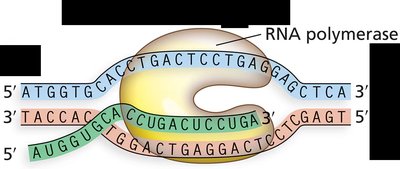
Transcription is the process by which a DNA sequence is copied into an RNA sequence. The RNA product is complementary to the DNA template strand and nearly identical to the coding strand (except for uracil replacing thymine).
Key Point: The coding (non-template) strand of DNA has the same sequence as the RNA transcript (except T is replaced by U).
Key Point: Transcription occurs in the nucleus (eukaryotes) or cytoplasm (prokaryotes).
Classification of RNA
Overview of RNA Types
Cells contain several types of RNA, each with distinct functions. Only mRNA is translated into protein; other RNAs are classified as noncoding RNAs (ncRNAs) and play structural, catalytic, or regulatory roles.
mRNA (messenger RNA): Encodes protein sequences.
rRNA (ribosomal RNA): Forms the core of ribosomes and catalyzes protein synthesis.
tRNA (transfer RNA): Brings amino acids to the ribosome during translation.
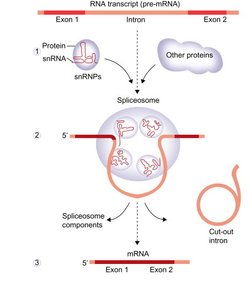
snRNA (small nuclear RNA): Involved in splicing of pre-mRNA.
miRNA (microRNA): Regulates gene expression post-transcriptionally.
siRNA (small interfering RNA): Involved in RNA interference and gene silencing.
piRNA (PIWI-interacting RNA): Maintains genome stability in germ cells.
lncRNA (long noncoding RNA): Regulates gene expression at various levels.
Ribosomal RNA (rRNA)
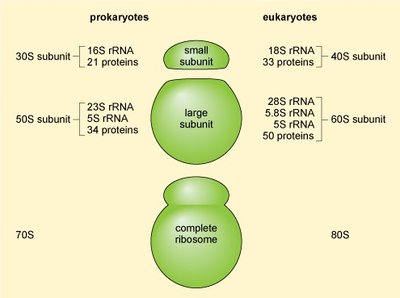
rRNA is a major component of ribosomes, the molecular machines that synthesize proteins. In eukaryotes, the 18S rRNA binds mRNA, and the 28S rRNA binds tRNA during translation.
Transfer RNA (tRNA)
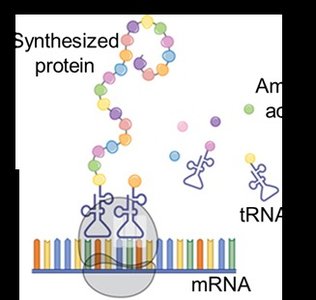
tRNA molecules carry amino acids to the ribosome and match them to the mRNA codons during translation. Each tRNA has a specific anticodon and an amino acid attachment site.
Small Noncoding RNAs
snRNA (small nuclear RNA): Associates with proteins to form snRNPs, essential for splicing pre-mRNA in eukaryotes.
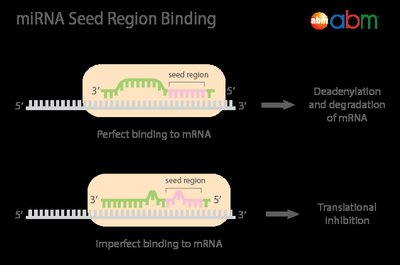
miRNA (microRNA): Short RNAs (22–25 nt) that bind to the 3' untranslated region of mRNAs, leading to mRNA degradation or inhibition of translation. They are important regulators of gene expression and can serve as disease biomarkers.
siRNA (small interfering RNA): Similar to miRNA, involved in gene silencing and defense against viruses.
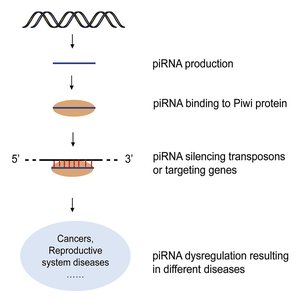
piRNA (PIWI-interacting RNA): Interacts with PIWI proteins to silence transposable elements and maintain genome integrity in germ cells.
Long Noncoding RNAs (lncRNAs)
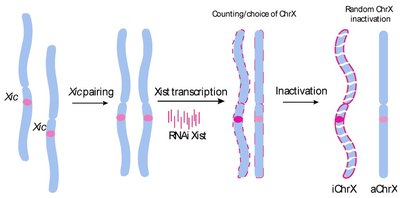
Long noncoding RNAs are transcripts longer than 200 nucleotides that do not code for proteins. They regulate gene expression at multiple levels, including chromatin modification, transcription, and post-transcriptional processing. A key example is XIST, which is involved in X-chromosome inactivation in female mammals.
Summary Table: Major Types of RNA
RNA Type | Main Function | Translated? |
|---|---|---|
mRNA | Encodes protein sequence | Yes |
rRNA | Structural/catalytic component of ribosome | No |
tRNA | Brings amino acids to ribosome | No |
snRNA | RNA splicing | No |
miRNA/siRNA | Gene silencing/regulation | No |
piRNA | Genome stability in germ cells | No |
lncRNA | Gene expression regulation | No |
Key Equations and Concepts
Phosphodiester bond formation:
Central Dogma:
