 Back
BackThe Biochemistry of RNA Synthesis and Transcription in Bacteria: Study Notes
Study Guide - Smart Notes
 Tailored notes based on your materials, expanded with key definitions, examples, and context.
The Biochemistry of RNA Synthesis and Transcription in Bacteria
Introduction to Transcription
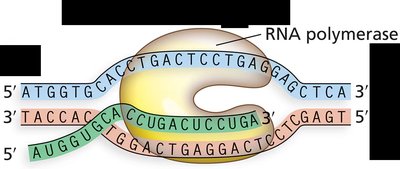
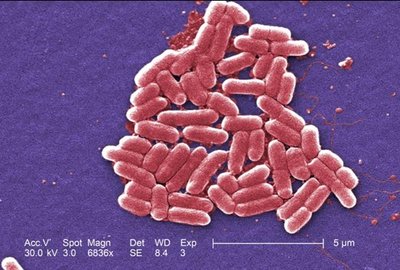
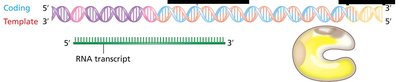
Transcription is a fundamental process in molecular biology where the genetic information encoded in DNA is converted into RNA. In bacteria, this process is carried out by RNA polymerase, using one strand of DNA as a template to synthesize a single-stranded RNA transcript. Escherichia coli is commonly used as a model organism to study bacterial transcription.
Definition: Transcription is the synthesis of RNA from a DNA template.
Key Enzyme: RNA polymerase catalyzes the transcription process.
Directionality: RNA is synthesized in the 5' to 3' direction.
Model Organism: E. coli is widely used for transcription studies.
Bacterial Gene Structure
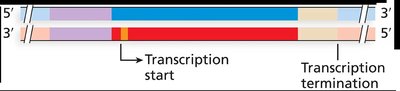
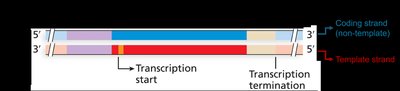
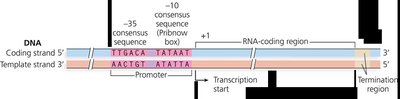
Bacterial genes are organized into distinct regions that facilitate transcription. These include the promoter, coding region, and termination region.
Promoter: Regulatory DNA sequence upstream of the gene; binding site for RNA polymerase to initiate transcription.
Coding Region: DNA segment that encodes the gene product (protein or RNA).
Termination Region: DNA sequence signaling the end of transcription.

Transcription Start Site and Directionality
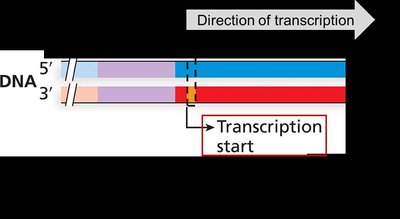
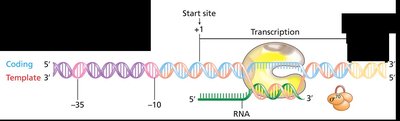
The transcription start site is designated as the +1 nucleotide, marking the beginning of RNA synthesis. The promoter region is located upstream and is not transcribed.
Transcription Start Site: The +1 nucleotide is where RNA synthesis begins.
Directionality: Transcription proceeds downstream from the promoter.
RNA Polymerase in Bacteria
Structure and Function of RNA Polymerase
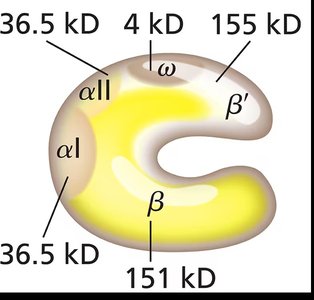
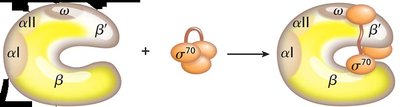
Bacterial RNA polymerase is a pentameric core enzyme composed of five polypeptides. The core enzyme is responsible for RNA synthesis but cannot recognize promoters without the sigma subunit.
Core Enzyme: Consists of αI, αII, β, β', and ω subunits.
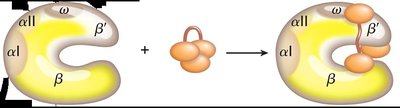
Holoenzyme: Formed when the core enzyme binds to a sigma subunit, enabling promoter recognition and transcription initiation.
Promoter Recognition and Sigma Subunits
Promoters are recognized by RNA polymerase holoenzyme through specific consensus sequences. Bacteria utilize different sigma subunits to recognize diverse promoter sequences, allowing regulation of gene expression.
Consensus Sequence: Most common nucleotide sequence at a specific position in the promoter.
Alternative Sigma Subunits: Different sigma factors recognize distinct promoter consensus sequences, enabling transcription of specific gene sets.
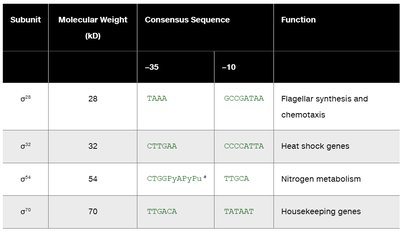
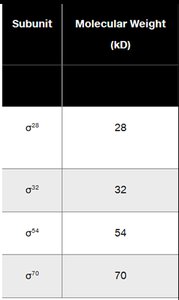
Subunit | Molecular Weight (kD) | Consensus Sequence (-35) | Consensus Sequence (-10) | Function |
|---|---|---|---|---|
σ28 | 28 | TAAA | GCGGATAA | Flagellar synthesis and chemotaxis |
σ32 | 32 | CTTGAA | CCCCTATA | Heat shock genes |
σ54 | 54 | CTGGFYAyPu* | TTGCA | Nitrogen metabolism |
σ70 | 70 | TTGACA | TATAAT | Housekeeping genes |
Promoter Consensus Sequences
The most common bacterial promoter contains two consensus sequence regions: the -10 (Pribnow box) and -35 sequences. These are essential for RNA polymerase binding and transcription initiation.
-10 Sequence (Pribnow box): TATAAT
-35 Sequence: TTGACA
Transcription Process in Bacteria
Stages of Transcription
Bacterial transcription occurs in three main stages: initiation, elongation, and termination.
Initiation: RNA polymerase holoenzyme binds to the promoter, unwinds DNA, and begins RNA synthesis.
Elongation: The core enzyme synthesizes RNA, moving along the DNA template.
Termination: Transcription ends when the core enzyme encounters a termination sequence.
Transcription Initiation
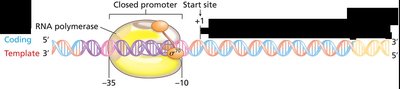
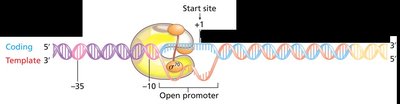
Initiation involves the formation of a closed promoter complex, followed by DNA unwinding to form an open promoter complex. RNA synthesis begins at the +1 site, and the sigma subunit dissociates after the first few nucleotides are added.
Transcription Elongation
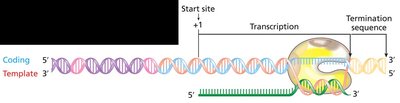
During elongation, the core enzyme synthesizes RNA at a rate of approximately 40 nucleotides per second. DNA unwinding occurs ahead of the enzyme, and the duplex closes after synthesis.
Transcription Termination
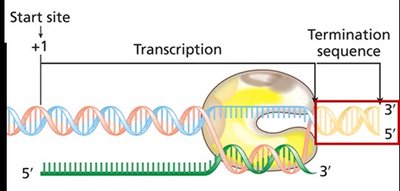
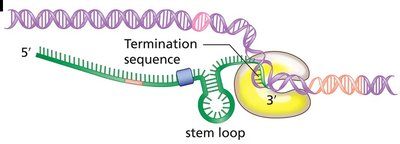
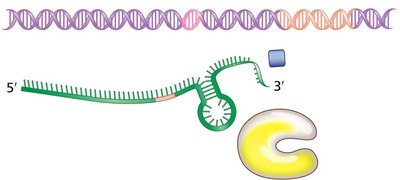
Termination occurs when RNA polymerase encounters a termination sequence downstream of the coding region. Two mechanisms are observed in bacteria: intrinsic termination and rho-dependent termination.
Intrinsic Termination
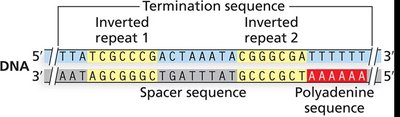
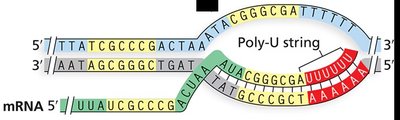
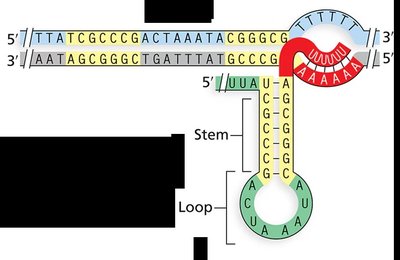
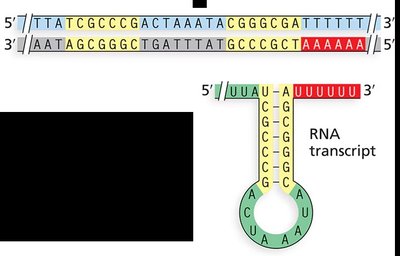
Intrinsic termination relies on specialized repeat sequences (inverted repeats) in DNA that induce the formation of a stem-loop (hairpin) structure in the RNA, followed by a poly-U sequence. This structure destabilizes the RNA polymerase, causing it to release the transcript.
Inverted Repeats: DNA sequences that are reverse complements on the same strand.
Polyadenine Sequence: String of adenines on the template strand, resulting in a poly-U sequence in RNA.
Stem-Loop Structure: Double-stranded stem with a single-stranded loop in RNA.
Rho-Dependent Termination
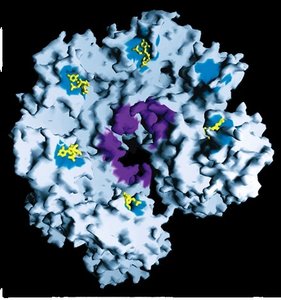
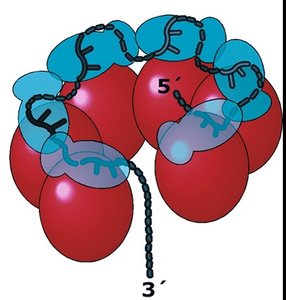
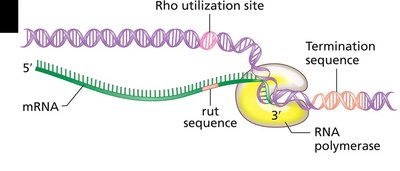
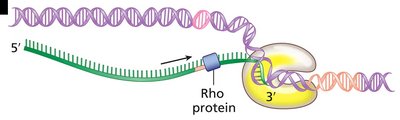
Rho-dependent termination requires the action of the rho protein, which binds to the rut sequence on the nascent mRNA. Rho moves toward RNA polymerase, and when a stem-loop forms in the mRNA, the polymerase pauses, allowing rho to catalyze the release of the transcript.
Rho Utilization Site (rut): Sequence on RNA recognized by rho protein.
Rho Protein: Catalyzes separation of mRNA from RNA polymerase.
Stem-Loop Formation: Causes RNA polymerase to pause, facilitating rho action.
No Poly-U Sequence Required: Unlike intrinsic termination, poly-U is not necessary.
RNA Polymerase Inhibitor: Rifampicin
Mechanism and Resistance
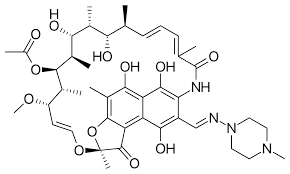
Rifampicin is an antibiotic used to treat tuberculosis. It inhibits RNA synthesis by preventing RNA polymerase from catalyzing the formation of the first phosphodiester bond in the RNA chain. Resistance can arise from a single mutation in RNA polymerase.
Mode of Action: Blocks RNA polymerase activity at initiation.
Resistance: Mutation in RNA polymerase confers resistance.
Summary Table: Sigma Subunits and Promoter Recognition
Subunit | Molecular Weight (kD) |
|---|---|
σ28 | 28 |
σ32 | 32 |
σ54 | 54 |
σ70 | 70 |
Key Equations and Concepts
Transcription Reaction:
Consensus Sequence Identification:
Conclusion
Bacterial transcription is a highly regulated, multi-stage process involving specific DNA sequences, specialized protein subunits, and distinct termination mechanisms. Understanding these processes is fundamental to molecular genetics and biotechnology.
