 Back
BackThe Evolution of Evolutionary Thought: Early Theories, Fossil Evidence, and Geological Perspectives
Study Guide - Smart Notes
 Tailored notes based on your materials, expanded with key definitions, examples, and context.
The Evolution of an Idea
Immutable vs. Mutable Species
Early philosophers and religious authorities believed that all species were immutable, meaning they could not change and were created in their present form. The concept of mutable species, or the ability of species to change over time, was not widely accepted until scientific inquiry began to challenge these views.
Immutable: Unable to change; fixed in form.
Mutable: Capable of change; adaptable over time.
The Seeds of an Evolutionary Idea
French scientist Georges-Louis Leclerc de Buffon examined animal body structures and questioned the purpose of vestigial organs—body parts that seemed to serve little or no function. He proposed that species were originally created in a more perfect form but had changed over time.
Vestigial structures: Anatomical features that are reduced and functionless, or serve a marginal function, compared to similar structures in ancestral species.
Buffon's observations laid the groundwork for later evolutionary theories.
Early Proponents of Evolutionary Change
Carl Linnaeus and Erasmus Darwin (grandfather of Charles Darwin) both suggested that life changes over time. Erasmus Darwin even speculated that all life might have evolved from a single original source, though neither provided a mechanism for how this change occurred.
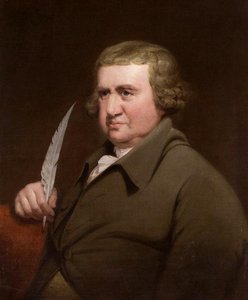
Carl Linnaeus: Known as the "father of taxonomy," he classified organisms and recognized patterns of similarity and difference.
Erasmus Darwin: Proposed that all living things could have descended from a common ancestor.
Adaptation and Heredity
Lamarck's Mechanism for Evolution
Jean-Baptiste Lamarck was the first scientist to propose a mechanism for evolutionary change. He suggested that species evolve through two main principles:
Use and Disuse: Structures used frequently become larger and stronger, while those not used deteriorate.
Inheritance of Acquired Characters: Traits acquired during an organism's lifetime can be passed on to offspring (e.g., a giraffe stretching its neck would produce offspring with longer necks).
Flaws in Lamarck's Principles
While Lamarck's ideas were influential, they were later shown to be incorrect. Most acquired traits are not heritable, and changes in use do not alter genetic material. For example, exercising muscles does not change the DNA passed to offspring.
Features that change due to use are not typically inherited.
Genetic information is not altered by acquired characteristics.
Significance: Lamarck's work was foundational in proposing that species change over time and adapt to their environments, even though his mechanism was flawed.
Patterns of Change: Fossil Evidence
Fossils and Their Formation
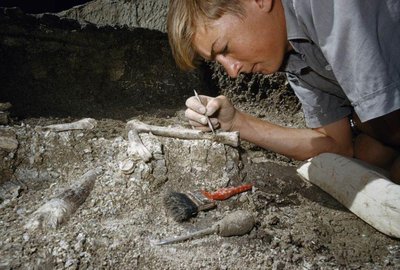
Fossils are the preserved remains or impressions of ancient organisms, typically found in sedimentary rock. Fossilization occurs when an organism is rapidly buried by sediments, preventing decomposition, and is gradually replaced by minerals over time.
Conditions for Fossil Formation:
Low oxygen (slows decomposition)
Hard body parts (bones, shells, teeth) are more likely to fossilize
Rapid burial in aquatic environments
Other preservation methods: amber, volcanic ash, ice
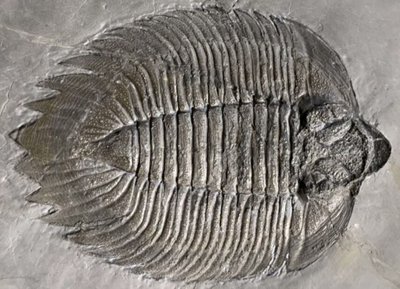
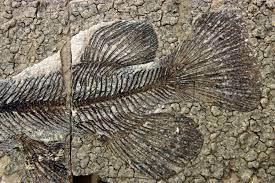
Reading the Fossil Record
The fossil record reveals that:
Many fossils are of unknown or extinct organisms.
Most living species are not represented in the fossil record.
Fossils are often found deep underground or in unexpected locations (e.g., marine fossils in mountains).
Paleontology is the scientific study of prehistoric life through fossils, providing evidence for the history and evolution of life on Earth.
Theories of Geological and Biological Change
Catastrophism (Cuvier)
Georges Cuvier studied fossils and observed that:
Simple organisms are found in all rock layers, while complex organisms are found only in younger, upper layers.
Each rock layer contains unique species, many of which do not appear in layers above or below.
Cuvier proposed catastrophism: species do not change, but global catastrophes (e.g., floods) cause mass extinctions, after which new species appear. This explained the presence of different species in different rock layers but did not account for increasing complexity over time.
Uniformitarianism (Lyell)
Sir Charles Lyell argued that geological processes observed today (e.g., erosion, sedimentation) have occurred uniformly over Earth's history. This principle, known as uniformitarianism, suggests that Earth is extremely old, allowing ample time for gradual evolutionary change.
Geological change is slow and continuous, not just the result of sudden catastrophes.
Millions of years are required for rock layers to form and erode.
Main Ideas Summary
Lamarck's ideas and their limitations
Patterns of change observed in the fossil record
How fossils are formed and what they reveal about past life
Contrasting theories: Catastrophism vs. Uniformitarianism
