 Back
BackTranscription and the Genetic Code: Mechanisms and Regulation in Prokaryotes
Study Guide - Smart Notes
 Tailored notes based on your materials, expanded with key definitions, examples, and context.
Transcription & Genetic Code
Introduction to Transcription
Transcription is the process by which RNA is synthesized from a DNA template. This process is fundamental to gene expression and is the first step in the flow of genetic information from DNA to protein, as described by the central dogma of molecular biology. The genetic code, which is transcribed into RNA, ultimately determines the sequence of amino acids in proteins.
The Central Dogma of Molecular Biology
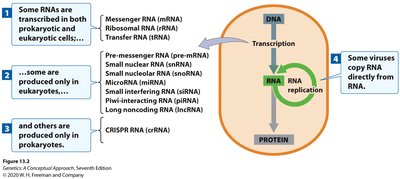
The central dogma describes the directional flow of genetic information: DNA is transcribed into RNA, which is then translated into protein. However, there are exceptions, such as RNA viruses that replicate their RNA directly and retroviruses that reverse transcribe RNA into DNA.
DNA → RNA → Protein
Exceptions: RNA replication (RNA viruses), reverse transcription (retroviruses)

Types and Functions of RNA
There are three main classes of cellular RNA, each with distinct roles in gene expression:
Messenger RNA (mRNA): Serves as the template for protein synthesis, carrying genetic information from DNA to ribosomes.
Ribosomal RNA (rRNA): Structural and functional component of ribosomes, essential for protein synthesis.
Transfer RNA (tRNA): Delivers amino acids to the ribosome during translation.
Other important RNAs include microRNA (miRNA), small interfering RNA (siRNA), and noncoding RNAs (ncRNAs), which regulate gene expression post-transcriptionally.
RNA Structure
RNA is chemically similar to DNA but is usually single-stranded, allowing it to fold into complex secondary structures. This flexibility enables RNA to perform diverse roles, including catalysis (ribozymes) and regulation.
Stages of Transcription
Transcription occurs in three main stages:
Initiation: RNA polymerase binds to the promoter region of DNA, unwinds the DNA, and begins RNA synthesis.
Elongation: RNA polymerase moves along the template strand, synthesizing RNA in the 5' to 3' direction.
Termination: Transcription ends when RNA polymerase encounters a terminator sequence, releasing the RNA transcript.
Template and Coding Strands
Only one DNA strand serves as the template for RNA synthesis in a given gene. The template strand is read in the 3' to 5' direction, while the RNA is synthesized in the 5' to 3' direction. The non-template (coding) strand has the same sequence as the RNA (except T is replaced by U).
RNA Polymerase in Prokaryotes
Bacterial RNA polymerase consists of a core enzyme and a sigma (σ) factor. The sigma factor is essential for promoter recognition and initiation of transcription. Once elongation begins, the sigma factor dissociates, and the core enzyme continues RNA synthesis.
Core enzyme: α2ββ'ω
Holoenzyme: Core enzyme + σ factor
Promoters and Consensus Sequences
Promoters are DNA sequences upstream of the transcription start site (+1) that signal RNA polymerase where to begin transcription. In E. coli, two consensus sequences are commonly found at -35 and -10 (Pribnow box) positions relative to the start site. Mutations in these regions can affect transcription efficiency.
Pribnow box (-10 region): TATAAT
-35 region: TTGACA (consensus sequence)
Chain Elongation
During elongation, RNA polymerase synthesizes RNA by adding ribonucleoside triphosphates (rNTPs) to the 3' end of the growing RNA chain. The enzyme temporarily unwinds the DNA and forms a short RNA-DNA hybrid. No primer is required for RNA synthesis.
The reaction catalyzed by RNA polymerase:
Pyrophosphatase further hydrolyzes pyrophosphate () to two inorganic phosphates (), making the reaction essentially irreversible.
Proofreading and Fidelity
RNA polymerase has limited proofreading ability compared to DNA polymerase. While it can remove incorrect nucleotides, its 3'→5' exonuclease activity is less efficient, resulting in a higher error rate. However, this is tolerated because RNA is a temporary copy, not a permanent genetic store.
Termination of Transcription in Bacteria
Termination occurs by two main mechanisms:
Intrinsic (Rho-independent) termination: A GC-rich sequence followed by a string of uracils forms a hairpin loop in the RNA, destabilizing the RNA-DNA hybrid and releasing the transcript.
Rho-dependent termination: The rho (ρ) factor binds to the RNA at the rut site, moves along the RNA, and helps dissociate the RNA from the DNA template.
Classes and Functions of RNA Molecules
Different classes of RNA have specialized functions in both prokaryotic and eukaryotic cells. The table below summarizes their locations and roles:
Class of RNA | Cell Type | Location of Function | Function |
|---|---|---|---|
Ribosomal RNA (rRNA) | Prokaryotic & Eukaryotic | Cytoplasm | Structural and functional components of ribosomes |
Messenger RNA (mRNA) | Prokaryotic & Eukaryotic | Nucleus and cytoplasm | Carries genetic code for proteins |
Transfer RNA (tRNA) | Prokaryotic & Eukaryotic | Cytoplasm | Helps incorporate amino acids into polypeptide chain |
Small nuclear RNA (snRNA) | Eukaryotic | Nucleus | Processing of pre-mRNA |
MicroRNA (miRNA) | Eukaryotic | Nucleus and cytoplasm | Inhibits translation of mRNA |
Small interfering RNA (siRNA) | Eukaryotic | Nucleus and cytoplasm | Triggers degradation of other RNA molecules |
CRISPR RNA (crRNA) | Prokaryotic | --- | Assists destruction of foreign DNA |
Gene Regulation by Small RNAs
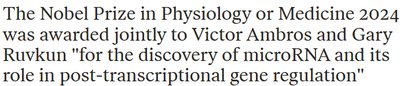
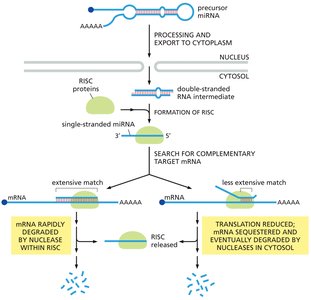
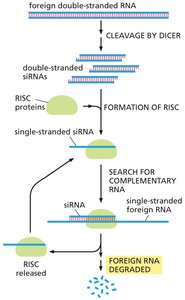
Small RNAs such as miRNA and siRNA regulate gene expression by binding to complementary mRNA sequences, leading to mRNA degradation or inhibition of translation. This process is known as gene silencing and is crucial for controlling gene expression post-transcriptionally.
CRISPR-Cas System in Prokaryotes
The CRISPR-Cas system is an adaptive immune mechanism in bacteria that uses RNA-guided nucleases to target and destroy invading DNA, such as that from viruses. CRISPR RNAs (crRNAs) are transcribed from DNA and guide the Cas proteins to complementary sequences in foreign DNA for cleavage.
Summary Table: Key Differences Between Replication and Transcription
Feature | Replication | Transcription |
|---|---|---|
Purpose | Copy entire genome | Copy specific genes |
Accuracy | Very high (permanent storage) | Lower (temporary copy) |
Enzyme | DNA polymerase | RNA polymerase |
Proofreading | Efficient 3'→5' exonuclease | Limited proofreading |
Primer required? | Yes | No |
Conclusion
Transcription is a highly regulated process essential for gene expression. Understanding the mechanisms of transcription, the roles of different RNA molecules, and the regulation by small RNAs provides a foundation for advanced studies in genetics and molecular biology.
