Back
Translation and the Genetic Code: Structure, Function, and Mechanisms
Study Guide - Smart Notes
 Tailored notes based on your materials, expanded with key definitions, examples, and context.
Translation: The Process of Protein Synthesis
Overview of Translation
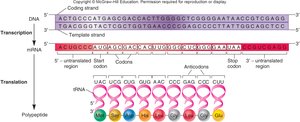
Translation is the cellular process by which the nucleotide sequence of messenger RNA (mRNA) is decoded to synthesize a polypeptide, which then folds into a functional protein. This process is central to gene expression and involves the interpretation of the genetic code.
Key Steps: Initiation, elongation, and termination.
Location: Occurs in ribosomes, which are large macromolecular complexes.
Participants: mRNA, transfer RNA (tRNA), ribosomes, and various protein factors.
The Genetic Code
Structure and Properties of the Genetic Code
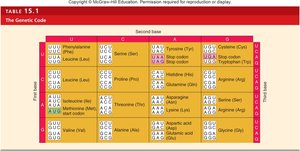
The genetic code is the set of rules by which information encoded in mRNA is translated into amino acids.
Codons: Groups of three nucleotides in mRNA that specify amino acids.
Start Codon: AUG (methionine) sets the reading frame.
Stop Codons: UAA, UAG, UGA signal termination.
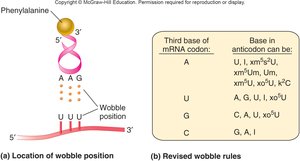
Degeneracy: Multiple codons can specify the same amino acid, often due to variation at the third base (wobble position).
Universality: The code is nearly universal, with rare exceptions.
Exceptions to the Genetic Code
Some organisms and organelles use alternative codons for certain amino acids or stop signals. 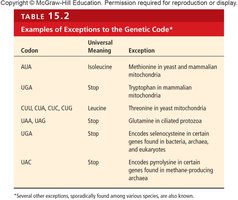
Relationship Between Genes and Proteins
One Gene-One Enzyme Hypothesis
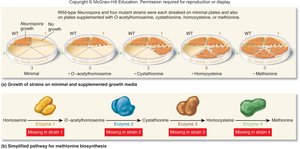
Early experiments by Beadle and Tatum established that each gene encodes a specific enzyme, a concept later expanded to include all proteins.
Prototrophs: Wild-type cells that grow on minimal media.
Auxotrophs: Mutants requiring supplementation with biosynthetic intermediates.
Modern View: Some genes encode non-enzyme proteins or functional RNAs; proteins may consist of multiple polypeptides.
Mechanisms of Translation
tRNA Structure and Function
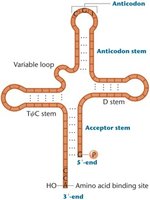
Transfer RNAs (tRNAs) are adaptor molecules that recognize codons in mRNA and carry the corresponding amino acid.
Anticodon: A three-nucleotide sequence in tRNA that pairs with the codon in mRNA.
Structure: Cloverleaf secondary structure with acceptor stem for amino acid attachment.
Modified Nucleotides: tRNAs often contain modified bases to enhance function.
Charging of tRNAs
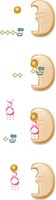
Aminoacyl-tRNA synthetases are enzymes that attach the correct amino acid to its corresponding tRNA, a process known as "charging."
Specificity: 20 synthetases, one for each amino acid.
Reaction: Involves amino acid, tRNA, and ATP; highly accurate (<1 error per 100,000).
The Wobble Hypothesis
The wobble rules allow flexibility in base pairing at the third position of the codon, enabling a single tRNA to recognize multiple codons.
Strict Pairing: First two positions follow AU/GC rules.
Wobble Position: Third position can tolerate mismatches.
Ribosome Structure and Function
Ribosome Composition
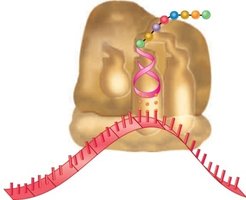
Ribosomes are composed of two subunits (large and small) and contain rRNA and proteins.
Bacterial Ribosomes: 70S (30S + 50S).
Eukaryotic Ribosomes: 80S (40S + 60S).
Functional Sites: Peptidyl (P), Aminoacyl (A), and Exit (E) sites.
Stages of Translation
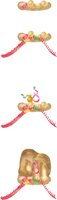
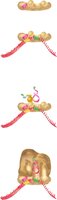
Initiation
Prokaryotes: mRNA binds to 30S subunit via Shine-Dalgarno sequence; requires IF1, IF2, IF3.
Eukaryotes: Initiation factor complex binds to 5' cap; ribosome scans for AUG start codon (Kozak's rules).

Elongation
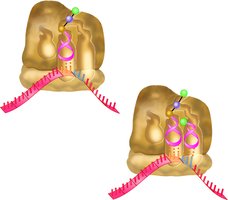
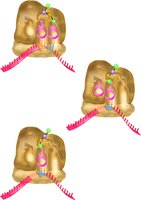
Process: Amino acids are added one at a time; peptidyl transferase catalyzes peptide bond formation.
Ribozyme: 23S rRNA acts as peptidyl transferase.
Translocation: Ribosome moves one codon at a time, facilitated by elongation factors.
Termination
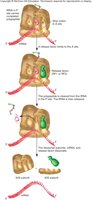
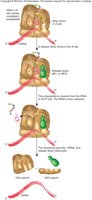
Stop Codons: UAA, UAG, UGA are recognized by release factors, not tRNAs.
Release Factors: Mimic tRNA structure to facilitate polypeptide release.
Protein Structure
Levels of Protein Structure
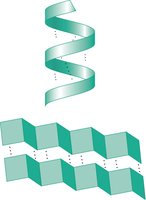
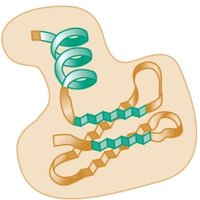
Proteins fold into four levels of structure, each critical for function.
Primary: Linear sequence of amino acids.
Secondary: Local folding into α helices and β sheets.
Tertiary: Three-dimensional conformation.
Quaternary: Association of multiple polypeptides.
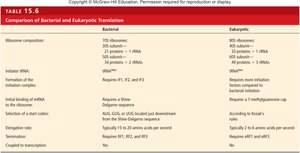
Comparison of Translation in Bacteria and Eukaryotes
Key Differences
Ribosome Composition: 70S in bacteria, 80S in eukaryotes.
Initiation: Shine-Dalgarno sequence in bacteria; 5' cap and Kozak's rules in eukaryotes.
Coupling: Transcription and translation are coupled in bacteria, not in eukaryotes.
Feature | Bacterial | Eukaryotic |
|---|---|---|
Ribosome composition | 70S (30S + 50S) | 80S (40S + 60S) |
Initiator tRNA | tRNAfMet | tRNAMet |
Formation of initiation complex | Requires IF1, IF2, IF3 | Requires more initiation factors |
mRNA binding | Shine-Dalgarno sequence | 5' cap recognition |
Coupling to transcription | Yes | No |
Summary of Key Concepts
Translation is the process of synthesizing proteins from mRNA.
The genetic code is nearly universal and degenerate, allowing flexibility in protein synthesis.
tRNAs are essential adaptors, and their charging is highly accurate.
Ribosomes facilitate translation through distinct functional sites.
Protein structure is determined by the sequence and folding of polypeptides.
Bacterial and eukaryotic translation differ in initiation mechanisms and ribosome structure.