 Back
BackTransmission Genetics: Mendelian Principles and Probability in Genetic Analysis
Study Guide - Smart Notes
 Tailored notes based on your materials, expanded with key definitions, examples, and context.
Transmission Genetics
Introduction to Mendelian Genetics
Transmission genetics is the study of how genetic traits are passed from parents to offspring. Gregor Mendel's experiments with pea plants established the foundational principles of heredity, which are still central to modern genetics.
Mendel’s Experimental Approach
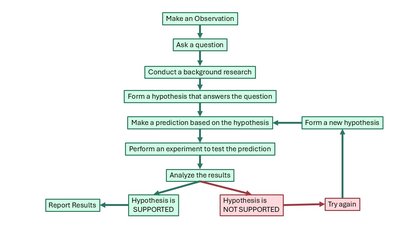
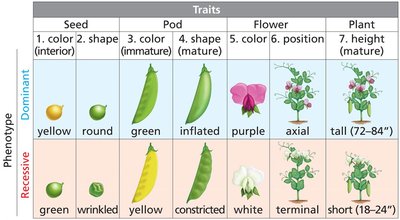
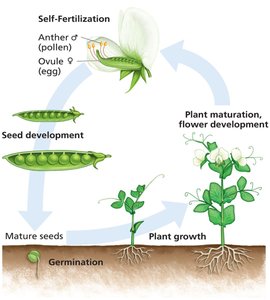
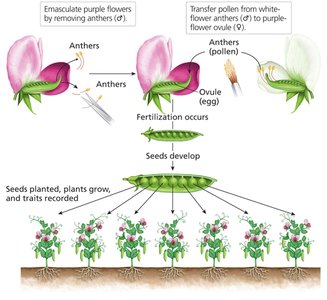
Mendel used the scientific method to investigate inheritance, selecting peas as a model organism due to their ease of cultivation, distinct traits, and ability to self- or cross-fertilize. His approach included controlled crosses, pure-breeding strains, selection of dichotomous traits, quantification of results, and replication of experiments.
Model Organism: Peas were chosen for their clear, observable traits and rapid life cycle.
Controlled Crosses: Mendel mated plants with known phenotypes to study inheritance.
Pure-Breeding Strains: These produce offspring with the same phenotype, ensuring consistency.
Dichotomous Traits: Traits with two distinct forms (e.g., round vs. wrinkled seeds).
Quantification: Mendel counted offspring and analyzed ratios to identify patterns.
Key Genetic Terms
Genotype: The genetic makeup of an organism (e.g., AA, Aa, aa).
Phenotype: The observable traits of an organism (e.g., flower color).
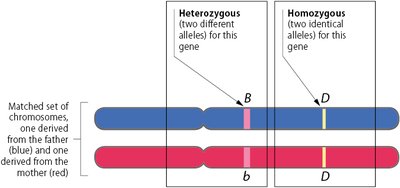
Homozygous: Having two identical alleles for a gene (e.g., AA or aa).
Heterozygous: Having two different alleles for a gene (e.g., Aa).
Dominant: An allele that masks the effect of a recessive allele in heterozygotes.
Recessive: An allele whose effect is masked by a dominant allele.
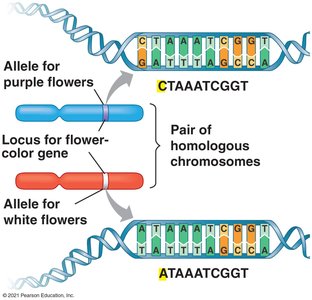
Monohybrid Crosses and the Law of Segregation
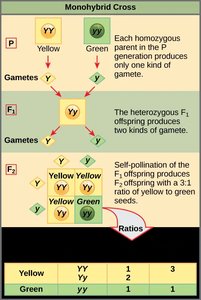
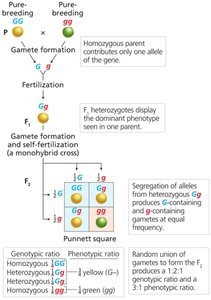
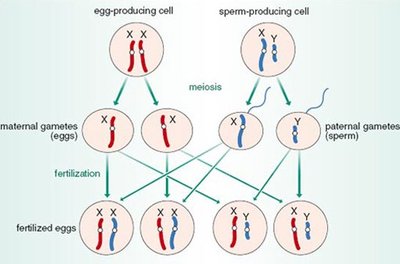
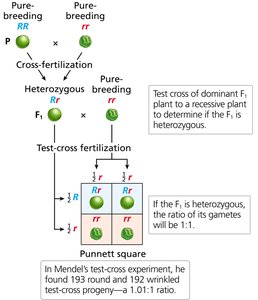
Monohybrid crosses involve a single trait and reveal the segregation of alleles. Mendel’s first law, the Law of Segregation, states that each individual has two alleles for each gene, which segregate during gamete formation so each gamete receives one allele.
Monohybrid Cross: Cross between two individuals differing in one trait.
Law of Segregation:
Genotypic Ratio: 1:2:1 (homozygous dominant : heterozygous : homozygous recessive)
Phenotypic Ratio: 3:1 (dominant : recessive)
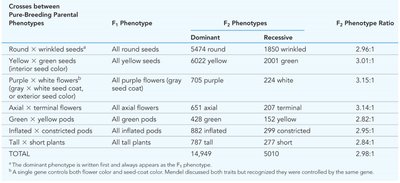
Dihybrid and Trihybrid Crosses: Law of Independent Assortment
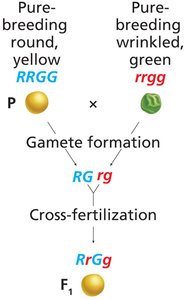
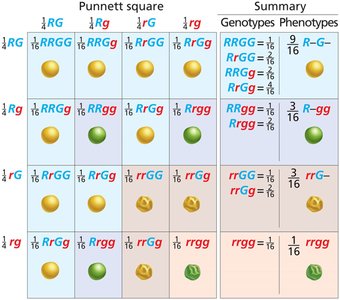
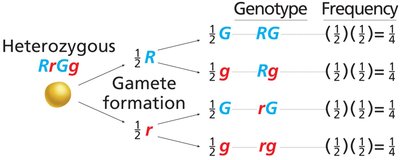
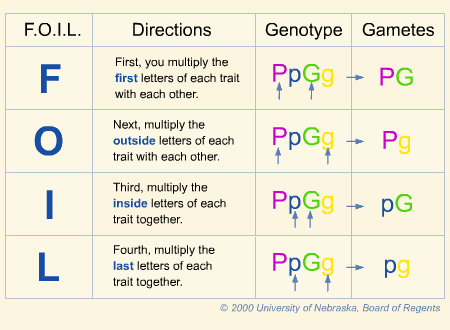
Dihybrid crosses examine two traits simultaneously. Mendel’s second law, the Law of Independent Assortment, states that alleles of different genes assort independently during gamete formation.
Dihybrid Cross: Cross between individuals differing in two traits.
Law of Independent Assortment:
Phenotypic Ratio: 9:3:3:1 in F2 generation for two unlinked genes.
Trihybrid Cross: Cross involving three traits, used to verify independent assortment.
Probability Theory in Genetics
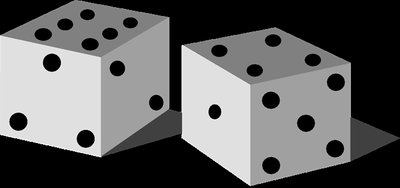
Probability theory is essential for predicting genetic outcomes. Mendel applied four rules: product rule, sum rule, conditional probability, and binomial probability.
Product Rule: Probability of independent events occurring together is the product of their probabilities.
Sum Rule: Probability of mutually exclusive events is the sum of their probabilities.
Conditional Probability: Probability of an event given another event has occurred.
Binomial Probability: Used for events with two possible outcomes.
Chi-Square Analysis
The chi-square () test quantifies how closely observed genetic data match expected ratios. The formula is:
O: Observed values
E: Expected values
This statistical test helps determine if deviations from expected ratios are due to chance.
Autosomal Inheritance and Pedigree Analysis
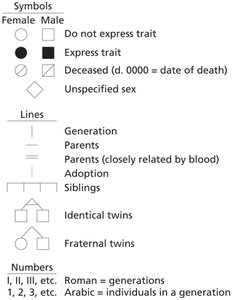
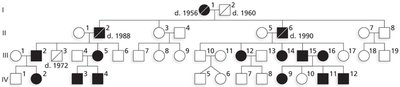
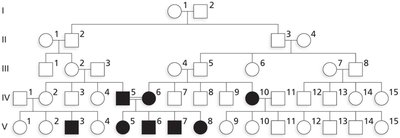
Autosomal inheritance refers to traits determined by genes located on autosomes. Pedigrees are diagrams that trace inheritance patterns in families, using standard symbols to represent individuals and relationships.
Autosomal Dominant: Trait appears in every generation; affected individuals have at least one affected parent.
Autosomal Recessive: Trait often skips generations; affected individuals may have unaffected parents.
Molecular Genetics of Mendel’s Traits
Modern genetics integrates Mendel’s principles with molecular analysis. Transmission of alleles corresponds to transmission of DNA sequences, which produce proteins responsible for phenotypes. Four Mendelian traits have been molecularly characterized:
Trait | Gene/Product | Dominant Allele Function | Mutant Allele Function |
|---|---|---|---|
Seed shape | Sbe1 (starch-branching enzyme) | Converts amylase to amylopectin | Loss of function due to insertion |
Stem length | Le (gibberellin 3β-hydroxylase) | Produces gibberellin for tall plants | Reduced activity, short plants |
Seed color | Sgr (stay-green enzyme) | Breaks down chlorophyll, yellow seeds | No function, green seeds |
Flower color | bHLH (transcription activator) | Activates anthocyanin synthesis, purple flowers | No activation, white flowers |
Mendel’s Four Postulates
Mendel summarized his findings in four postulates:
Unit factors exist in pairs: Genes/alleles are paired in individuals.
Dominance/recessiveness: One allele may mask the effect of another.
Random segregation: Paired alleles segregate randomly during gamete formation.
Independent assortment: Alleles of different genes assort independently.
Practice Questions
If a pea plant of genotype GgRr is test-crossed, what phenotype ratios are expected among the progeny? Answer: 1:1:1:1
If a plant heterozygous for four unlinked genes (AaBbDdEe) is selfed, what proportion of the progeny will be genotypically AaBBddEe? Answer: 1/64
Based on the pedigree below for a single-gene trait, what is the probability that the next child born to these parents will have the trait? Answer: 1/4
Additional info: These notes expand on Mendel’s experiments, probability theory, and molecular genetics to provide a comprehensive overview suitable for exam preparation in a college genetics course.
