 Back
BackTransmission Genetics: Mendelian Principles and Probability in Genetic Analysis
Study Guide - Smart Notes
 Tailored notes based on your materials, expanded with key definitions, examples, and context.
Transmission Genetics: Mendelian Principles and Probability in Genetic Analysis
Introduction to Transmission Genetics
Transmission genetics, also known as classical genetics, focuses on how genetic traits are passed from one generation to the next. The foundational work of Gregor Mendel established the basic principles of heredity, which remain central to modern genetics. This chapter explores Mendel's experiments, the laws of segregation and independent assortment, and the application of probability theory to genetic crosses.
Gregor Mendel and the Foundations of Genetics
Mendel’s Experimental Approach
Gregor Mendel used the garden pea (Pisum sativum) as a model organism to study inheritance. His methodical approach and choice of easily distinguishable traits allowed him to uncover the fundamental laws of heredity.
Model Organism: Peas are easy to grow, have a short generation time, and exhibit clear, dichotomous traits.
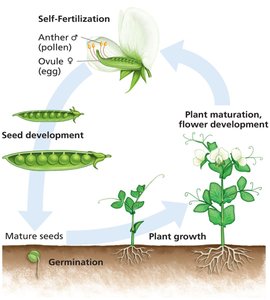
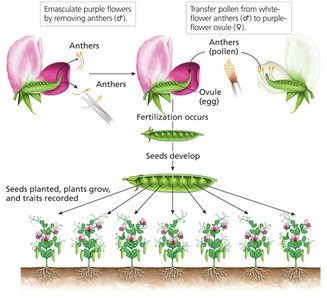
Controlled Crosses: Mendel performed both self-fertilization and cross-fertilization to control the parentage of each generation.
Pure-Breeding Strains: He began with plants that consistently produced the same phenotype, ensuring genetic consistency.
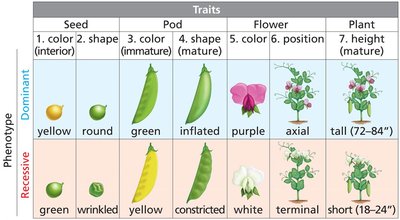
Selection of Dichotomous Traits: Traits with two distinct forms (e.g., tall vs. short, yellow vs. green seeds) were chosen for clarity.
Quantification of Results: Mendel counted large numbers of offspring and analyzed the ratios of observed phenotypes.
Key Terminology in Transmission Genetics
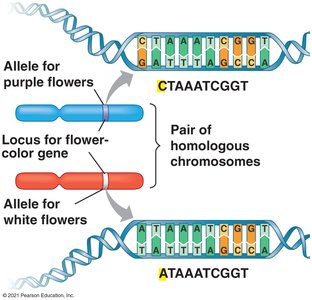
Genotype: The genetic constitution of an organism (e.g., YY, Yy, or yy).
Phenotype: The observable traits of an organism (e.g., yellow or green seeds).
Homozygous: Having two identical alleles for a gene (e.g., YY or yy).
Heterozygous: Having two different alleles for a gene (e.g., Yy).
Dominant: The allele that masks the effect of the recessive allele in heterozygotes.
Recessive: The allele whose effect is masked in the presence of a dominant allele.
Mendel’s Laws of Heredity
Monohybrid Crosses and the Law of Segregation
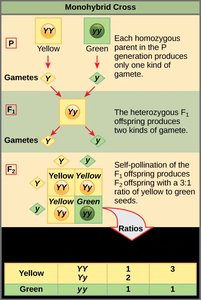
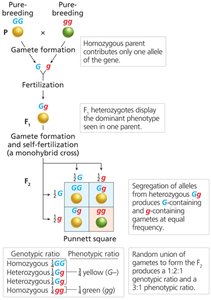
A monohybrid cross examines the inheritance of a single trait. Mendel’s experiments with monohybrid crosses led to the formulation of the Law of Segregation.
Law of Segregation (First Law): During gamete formation, the two alleles for a gene separate so that each gamete receives only one allele.
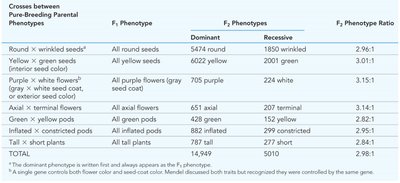
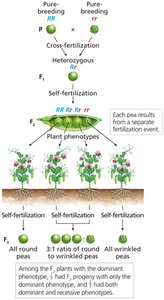
Results: Crossing two pure-breeding plants (e.g., YY × yy) produces F1 offspring that are all heterozygous (Yy) and display the dominant phenotype. Self-fertilization of F1 plants yields a 3:1 phenotypic ratio in the F2 generation.
Test Crosses
A test cross is used to determine the genotype of an individual with a dominant phenotype by crossing it with a homozygous recessive individual.
If all offspring display the dominant phenotype, the tested individual is homozygous dominant.
If offspring show a 1:1 ratio of dominant to recessive phenotypes, the tested individual is heterozygous.
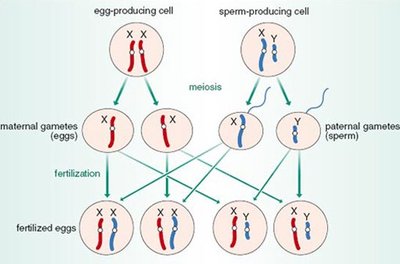
Dihybrid and Trihybrid Crosses: Law of Independent Assortment
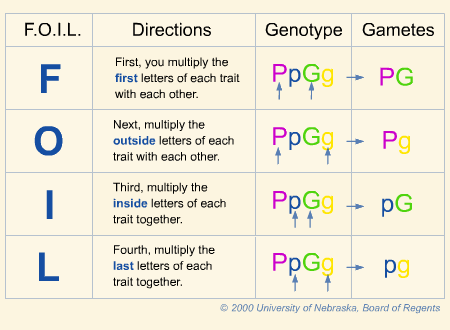
Dihybrid crosses examine the inheritance of two traits simultaneously. Mendel’s Law of Independent Assortment states that alleles of different genes assort independently during gamete formation.
Law of Independent Assortment (Second Law): The segregation of alleles at one gene is independent of the segregation of alleles at another gene.
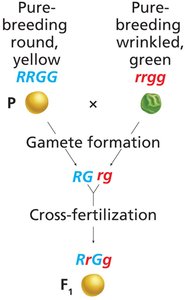
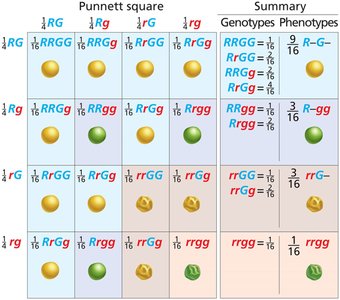
Dihybrid Cross Example: Crossing RrGg × RrGg yields a 9:3:3:1 phenotypic ratio in the F2 generation.
Trihybrid Crosses: Involve three traits and further demonstrate independent assortment.
Probability Theory in Genetics
Rules of Probability
Probability theory is essential for predicting the outcomes of genetic crosses. Mendel’s work anticipated the use of probability in genetics.
Product Rule (Multiplication Rule): The probability of two independent events both occurring is the product of their individual probabilities.
Sum Rule (Addition Rule): The probability of either of two mutually exclusive events occurring is the sum of their individual probabilities.
Conditional Probability: The probability of an event given that another event has occurred.
Binomial Probability: Used to calculate the probability of a specific combination of outcomes in a series of independent events.
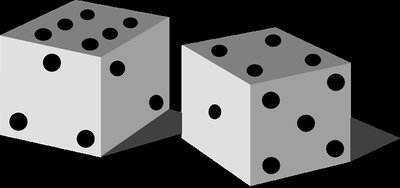
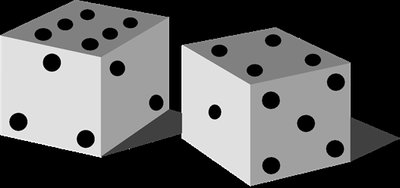
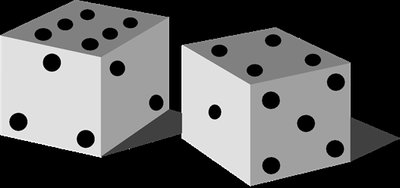
Example: The probability of rolling a 4 on a six-sided die is .
Product Rule Example: Probability of rolling two sixes with two dice: .
Sum Rule Example: Probability of rolling a 2 or a 5 on one die: .
Chi-Square Analysis
The chi-square () test is used to compare observed and expected results in genetic experiments.
Formula: , where O = observed values, E = expected values.
This test helps determine if deviations from expected ratios are due to chance.
Autosomal Inheritance and Pedigree Analysis
Autosomal Dominant and Recessive Inheritance
Autosomal inheritance refers to the transmission of genes located on autosomes (non-sex chromosomes). Pedigree analysis is used to trace inheritance patterns in families.
Autosomal Dominant: Trait appears in every generation, affected individuals have at least one affected parent, and both sexes are equally affected.
Autosomal Recessive: Trait often skips generations, affected individuals can be born to unaffected parents (carriers), and both sexes are equally affected.
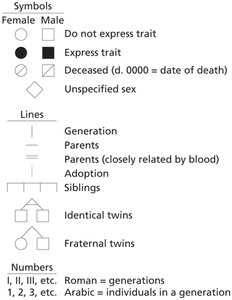
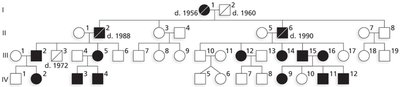
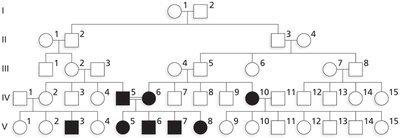
Pedigree Symbols and Interpretation
Circles represent females; squares represent males.
Filled symbols indicate individuals expressing the trait; open symbols indicate those who do not.
Horizontal lines connect parents; vertical lines descend to offspring.
Generations are labeled with Roman numerals; individuals within a generation are numbered.
Molecular Genetics of Mendel’s Traits
Gene Identification and Function
Modern molecular genetics has identified the genes underlying Mendel’s traits and explained their biochemical functions.
Trait | Gene and Product | Dominant Allele Function | Recessive Allele Function |
|---|---|---|---|
Seed shape | Sbe1 (starch-branching enzyme) | Converts amylase to amylopectin (round seeds) | Loss of enzyme function (wrinkled seeds) |
Stem length | Le (gibberellin 3β-hydroxylase) | Produces gibberellin, tall plants | Low enzyme activity, short plants |
Seed color | Sgr (stay-green, chlorophyll breakdown) | Breaks down chlorophyll, yellow seeds | Blockage of breakdown, green seeds |
Flower color | bHLH (transcription activator) | Activates anthocyanin synthesis, purple flowers | No activation, white flowers |
Mendel’s Four Postulates
Unit Factors in Pairs: Genes exist in pairs in individuals.
Dominance/Recessiveness: One allele may mask the effect of another.
Random Segregation: Allele pairs separate randomly during gamete formation.
Independent Assortment: Genes for different traits assort independently during gamete formation.
Practice Problems
If a pea plant of genotype GgRr is test-crossed, what phenotype ratios are expected among the progeny? Answer: 1:1:1:1
If a plant heterozygous for four unlinked genes (AaBbDdEe) is selfed, what proportion of the progeny will be genotypically AaBBddEe? Answer:
Based on the pedigree below for a single-gene trait, what is the probability that the next child born to these parents will have the trait? Answer: 1/4
