 Back
BackTransmission Genetics: Mendelian Principles, Chromosome Behavior, and Genetic Crosses
Study Guide - Smart Notes
 Tailored notes based on your materials, expanded with key definitions, examples, and context.
Transmission Genetics & Genomics
Overview of Transmission Genetics
Transmission genetics focuses on how genetic information is passed from one generation to the next, primarily through the behavior of chromosomes and the principles established by Gregor Mendel. This field connects the physical movement of chromosomes during cell division with the inheritance patterns of traits.
Cell Cycle and Chromosome Behavior
Major Stages of the Cell Cycle
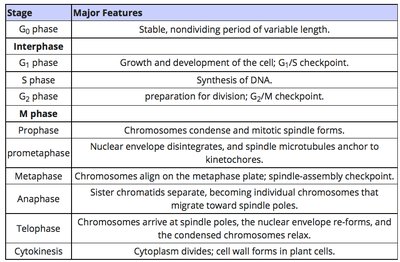
The cell cycle consists of a series of stages that prepare a cell for division and ensure the accurate transmission of genetic material. Understanding these stages is essential for grasping how chromosomes are duplicated and segregated.
Stage | Major Features |
|---|---|
G0 phase | Stable, nondividing period of variable length. |
G1 phase | Growth and development of the cell; G1/S checkpoint. |
S phase | Synthesis of DNA. |
G2 phase | Preparation for division; G2/M checkpoint. |
M phase | Prophase, prometaphase, metaphase, anaphase, telophase, cytokinesis (see below for details). |
Major Events in Meiosis
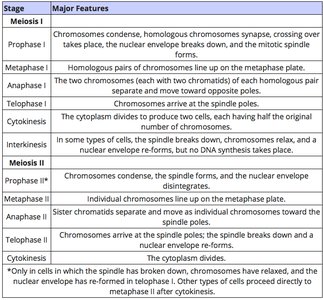
Meiosis is the process by which diploid cells produce haploid gametes, ensuring genetic diversity through recombination and independent assortment.
Stage | Major Features |
|---|---|
Prophase I | Chromosomes condense, homologous chromosomes synapse, crossing over occurs, nuclear envelope breaks down, spindle forms. |
Metaphase I | Homologous pairs align on the metaphase plate. |
Anaphase I | Homologous chromosomes separate and move toward opposite poles. |
Telophase I | Chromosomes arrive at spindle poles. |
Cytokinesis | Cytoplasm divides, producing two cells with half the original chromosome number. |
Meiosis II | Similar to mitosis; separates sister chromatids. |
Mitosis vs. Meiosis
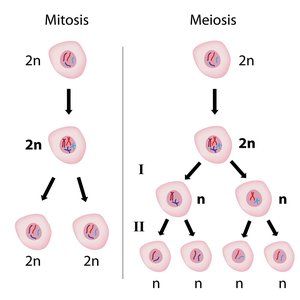
Mitosis and meiosis are two types of cell division with distinct outcomes. Mitosis produces genetically identical diploid cells, while meiosis produces genetically unique haploid gametes.
Mitosis: One division, produces two diploid cells (2n → 2n, 2n).
Meiosis: Two divisions, produces four haploid cells (2n → n, n, n, n).
Chromosome Number, Ploidy, and C-Value
Definitions and Examples
Chromosome number and ploidy are fundamental concepts in genetics, describing the number of chromosome sets in a cell.
Ploidy: The number of sets of complete chromosome complements (e.g., 1n, 2n, 3n, etc.).
Haploid number (n): The actual value of n, representing the number of chromosomes in one set (e.g., humans n=23).
C-value: The mass (in picograms) of DNA contained within a haploid nucleus.
Some organisms, such as certain plants and amphibians, are polyploid and can tolerate multiple sets of chromosomes.


Mendelian Genetics
Mendel’s Principles and Their Chromosomal Basis
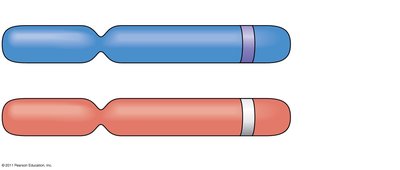
Gregor Mendel established foundational principles of inheritance, which were later connected to the behavior of chromosomes during meiosis.
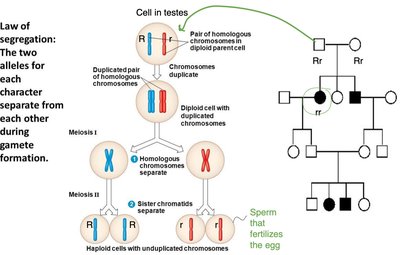
Law of Segregation: The two alleles for a heritable character separate during gamete formation and end up in different gametes.
Law of Independent Assortment: The segregation of alleles at one locus is independent of the segregation of alleles at another locus.
Dominance/Recessiveness: The dominant allele masks the effect of the recessive allele in heterozygotes.
Predicting Inheritance Patterns
Mendel’s laws allow geneticists to predict the outcomes of genetic crosses using Punnett squares, testcrosses, and probability rules.
Testcross: Mating an individual with a dominant phenotype to a homozygous recessive to reveal the unknown genotype.
True-breeding: Organisms that are homozygous for a trait and produce offspring with the same phenotype when self-crossed.
Application: Drosophila Genetics
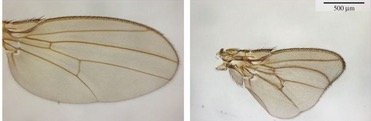
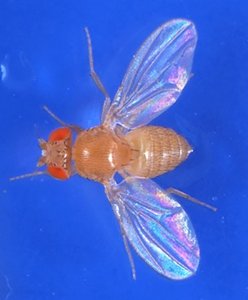
Fruit flies (Drosophila melanogaster) are a model organism for studying inheritance. Traits such as wing shape and eye color are used to illustrate dominance, recessiveness, and X-linked inheritance.
Example: The gene for eye color is X-linked; red is dominant to white.
Testcrosses can distinguish between homozygous and heterozygous individuals.

Genetic Crosses and Probability
Monohybrid and Dihybrid Crosses
Monohybrid crosses involve one gene, while dihybrid crosses involve two genes. The expected phenotypic ratios for a dihybrid cross (with independent assortment) are:
9/16: Both dominant traits
3/16: Dominant for trait 1, recessive for trait 2
3/16: Recessive for trait 1, dominant for trait 2
1/16: Both recessive traits
These ratios can be derived using the FOIL method or branch diagrams.
Trihybrid Crosses
Trihybrid crosses involve three independently assorting genes. The probability of a specific genotype or phenotype can be calculated by multiplying the probabilities for each gene independently.
Example: For three genes, each with a 3:1 dominant:recessive ratio, the probability of being dominant for all three is .
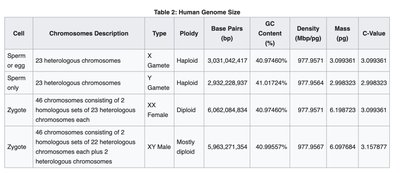
Summary Table: Human Genome Size
The human genome varies in size and composition depending on cell type and ploidy.
Cell | Chromosomes Description | Type | Ploidy | Base Pairs (bp) | GC Content (%) | Density (Mbp/pg) | Mass (pg) | C-Value |
|---|---|---|---|---|---|---|---|---|
Sperm or egg | 23 heterologous chromosomes | X Gamete | Haploid | 3,031,042,417 | 40.574607 | 977.9571 | 3.09881 | 3.09881 |
Sperm only | 23 heterologous chromosomes | Y Gamete | Haploid | 2,992,282,857 | 41.077476 | 977.9564 | 2.99323 | 2.99323 |
Zygote | 46 chromosomes (XX) | XX Female | Diploid | 6,062,284,314 | 40.826541 | 977.9567 | 6.19204 | 3.09602 |
Zygote | 46 chromosomes (XY) | XY Male | Mostly diploid | 5,963,277,354 | 40.955875 | 977.9567 | 6.09784 | 3.15787 |
Key Terms and Concepts
Allele: Different forms of a gene found at the same locus.
Locus: The specific location of a gene on a chromosome.
Homozygous: Having two identical alleles for a gene.
Heterozygous: Having two different alleles for a gene.
Hemizygous: Having only one allele for a gene in a diploid organism (e.g., X-linked genes in males).
Practice and Application
Sample Problems
Determine dominance by crossing true-breeding lines and analyzing F1 and F2 generations.
Use testcrosses to infer unknown genotypes.
Apply the laws of probability to predict outcomes of monohybrid, dihybrid, and trihybrid crosses.
Summary
Transmission genetics links Mendel’s principles to the physical behavior of chromosomes during cell division. Mastery of these concepts allows prediction of inheritance patterns and understanding of genetic diversity in populations.
