Pearson+ LogoPearson+ Logo
Ch. 8 - Genetic Analysis and Mapping in Bacteria and Bacteriophages
Klug - Essentials of Genetics 10th Edition
Klug10th EditionEssentials of GeneticsISBN: 9780135588789Not the one you use?Change textbook
Chapter 8, Problem 9

Describe the mechanism of transformation.

Verified step by step guidance
1
Start by defining transformation as a process by which a bacterial cell takes up foreign DNA from its environment and incorporates it into its own genome.
Explain that transformation involves the uptake of naked DNA fragments released from dead cells into a competent recipient cell, which is capable of binding and importing DNA.
Describe the initial step where the competent bacterial cell recognizes and binds the extracellular DNA at its surface using specific receptor proteins.
Outline how the DNA is then transported across the cell membrane, often involving the degradation of one strand of the DNA molecule while the other strand enters the cytoplasm.
Finally, explain that once inside, the single-stranded DNA can recombine with the host genome through homologous recombination, leading to genetic changes in the recipient cell.

Key Concepts

Here are the essential concepts you must grasp in order to answer the question correctly.

Definition of Transformation

Transformation is a genetic process where a cell takes up foreign DNA from its environment and incorporates it into its own genome, leading to a change in its genotype and phenotype. This mechanism is commonly observed in bacteria and is a key method of horizontal gene transfer.
Recommended video:
Guided course
05:48
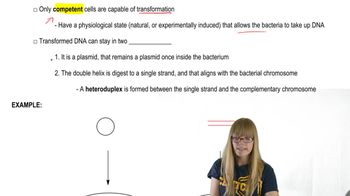
Transformation

Mechanism of DNA Uptake

During transformation, competent cells bind to extracellular DNA fragments, transport them across the cell membrane, and integrate the DNA into their chromosome or maintain it as plasmids. This process involves specific proteins that recognize and facilitate DNA uptake and recombination.
Recommended video:
Guided course
01:45
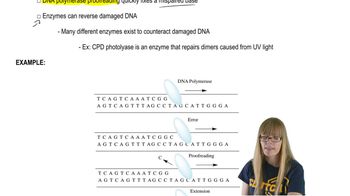
DNA Proofreading

Biological Significance and Applications

Transformation allows bacteria to acquire new traits such as antibiotic resistance or metabolic capabilities, contributing to genetic diversity and evolution. It is also widely used in molecular biology for cloning, gene expression studies, and genetic engineering.
Recommended video:
Guided course
09:03
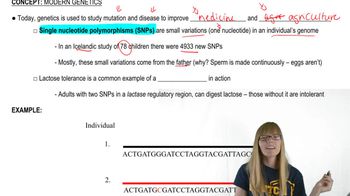
Modern Genetics