Back

Amide Formation definitions

Control buttons has been changed to "navigation" mode.
1/11
  • Amide

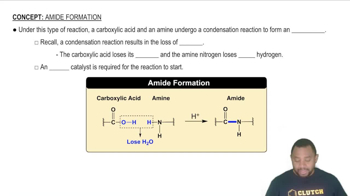
    A molecule featuring a carbonyl group single bonded to a nitrogen atom, formed from a carboxylic acid and an amine.
  • Condensation Reaction

    A chemical process where two molecules combine, resulting in the loss of a small molecule, typically water.
  • Carboxylic Acid

    An organic compound containing a carbonyl and hydroxyl group attached to the same carbon, serving as a reactant in amide formation.
  • Amine

    A compound derived from ammonia, containing a nitrogen atom with at least one hydrogen, essential for amide synthesis.
  • Water

    A byproduct released during the condensation reaction between a carboxylic acid and an amine.
  • OH Group

    A functional group from the carboxylic acid that is removed during amide formation.
  • Hydrogen

    An atom lost from the amine nitrogen during the condensation process to facilitate amide creation.
  • H+ Catalyst

    A proton that initiates the amide formation reaction by activating the reactants.
  • Carbonyl Group

    A functional group consisting of a carbon double bonded to oxygen, present in both carboxylic acids and amides.
  • Nitrogen Group

    A functional group in amines and amides, crucial for forming the bond with the carbonyl carbon.
  • Bond

    A connection formed between the carbon of the carboxylic acid and the nitrogen of the amine during amide synthesis.