Back

Atomic Mass (Conceptual) definitions

Control buttons has been changed to "navigation" mode.
1/14
  • Atomic Mass

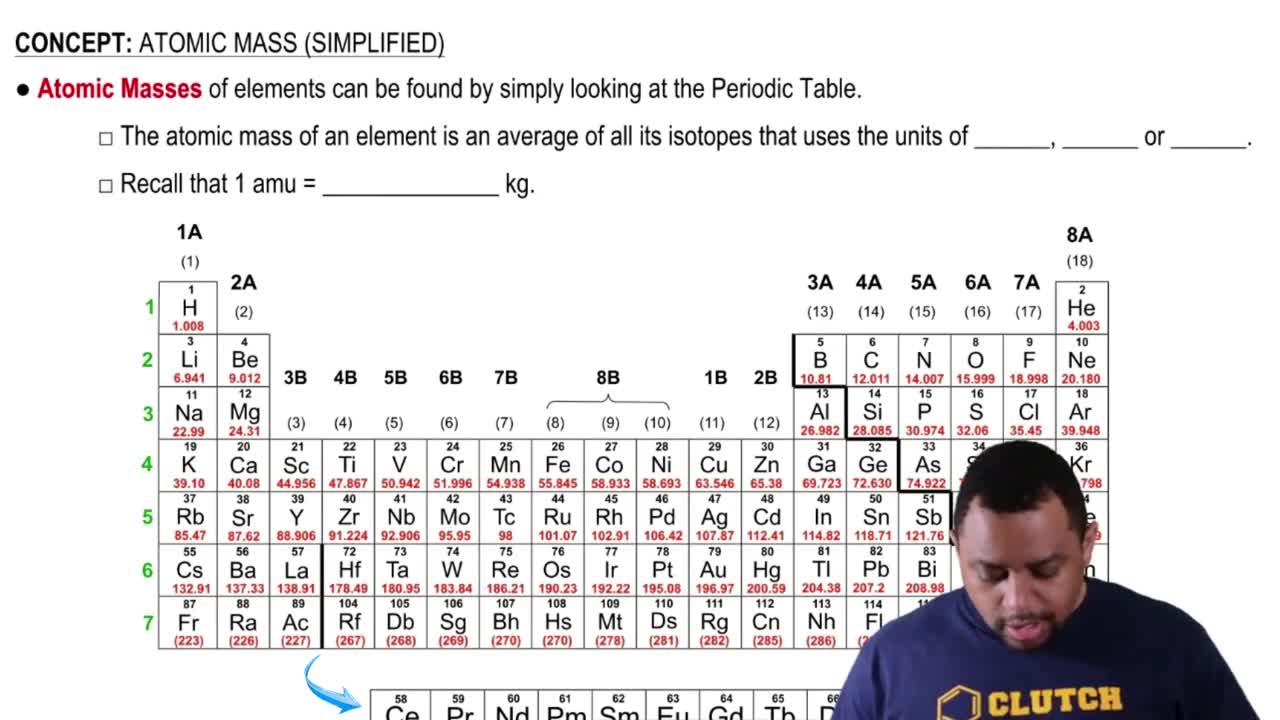
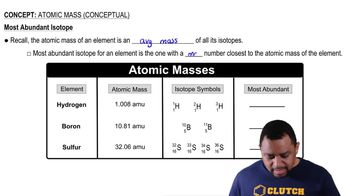
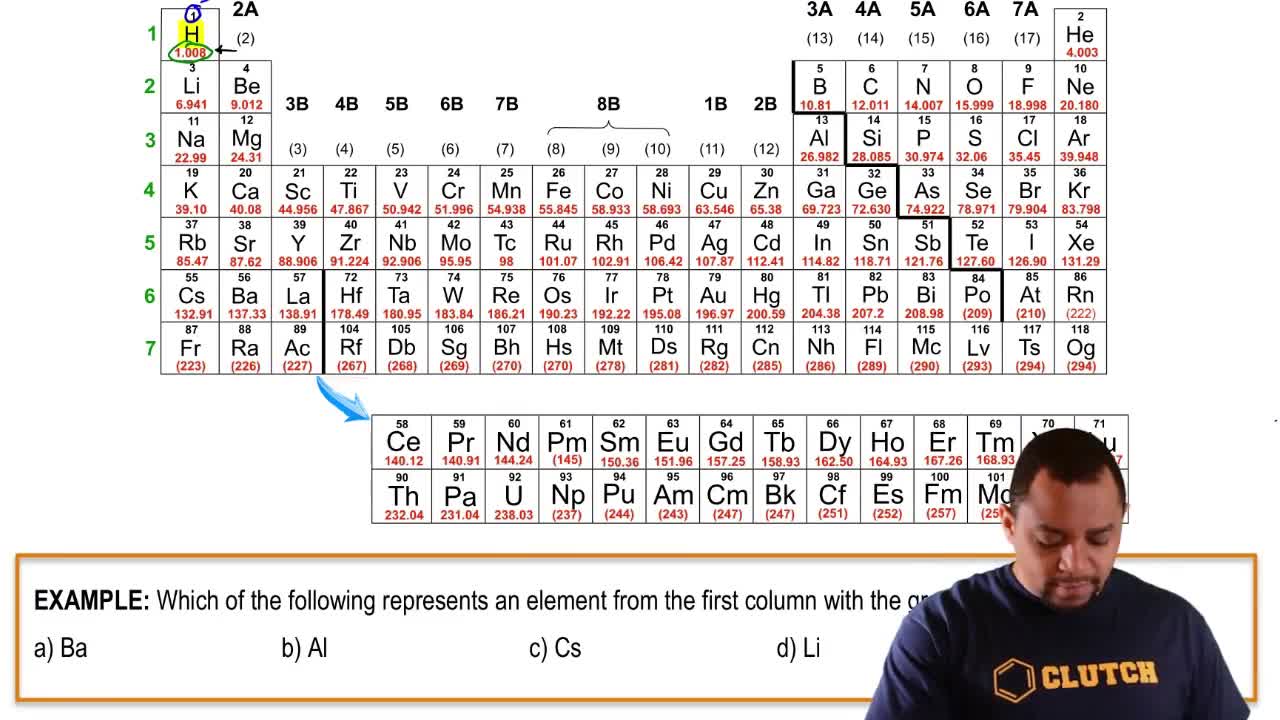
    Average mass of all isotopes of an element, typically not a whole number, found on the periodic table.
  • Isotope

    Variant of an element with the same number of protons but different numbers of neutrons.
  • Mass Number

    Sum of protons and neutrons in the nucleus of a specific isotope.
  • AMU

    Unit of atomic mass equal to 1.66 x 10^-27 kilograms, used to express atomic and molecular weights.
  • Dalton

    Alternative name for the atomic mass unit, commonly used in biochemistry.
  • Periodic Table

    Tabular arrangement of elements, displaying atomic numbers, symbols, and atomic masses.
  • Most Abundant Isotope

    Isotope whose mass number is closest to the atomic mass of the element.
  • Hydrogen-1

    Isotope of hydrogen with a mass number of 1, most closely matching hydrogen's atomic mass.
  • Boron-11

    Isotope of boron with a mass number of 11, most closely matching boron's atomic mass.
  • Sulfur-32

    Isotope of sulfur with a mass number of 32, most closely matching sulfur's atomic mass.
  • Deuterium

    Isotope of hydrogen with a mass number of 2, containing one proton and one neutron.
  • Tritium

    Isotope of hydrogen with a mass number of 3, containing one proton and two neutrons.
  • Proton

    Positively charged particle found in the nucleus, determining the atomic number of an element.
  • Neutron

    Neutral particle found in the nucleus, contributing to the mass number but not the atomic number.