Back

Balancing Redox Reactions: Acidic Solutions definitions

Control buttons has been changed to "navigation" mode.
1/15
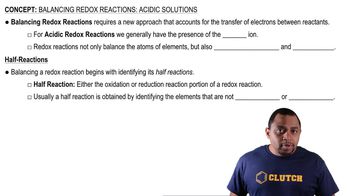
  • Redox Reaction

    A chemical process involving simultaneous electron transfer between two reactants, resulting in oxidation and reduction.
  • Oxidation

    The process where a reactant loses electrons, increasing its oxidation state within a chemical reaction.
  • Reduction

    The process where a reactant gains electrons, decreasing its oxidation state within a chemical reaction.
  • Electron Transfer

    Movement of electrons from one reactant to another, central to the mechanism of redox reactions.
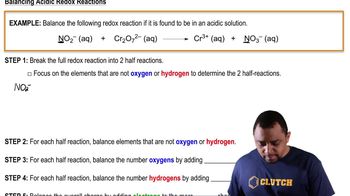
  • Acidic Conditions

    A reaction environment characterized by the presence of H+ ions, influencing how redox reactions are balanced.
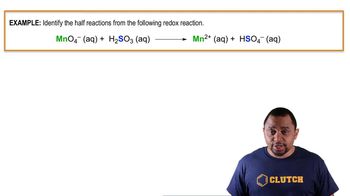
  • Half Reaction

    A portion of a redox process, representing either the oxidation or reduction component separately.
  • Oxidation State

    A value indicating the hypothetical charge an atom would have if all bonds were ionic in a compound.
  • Charge Balance

    Ensuring the total electrical charge is equal on both sides of a chemical equation during balancing.
  • Atom Balance

    Ensuring the number of each type of atom is the same on both sides of a chemical equation.
  • H+ Ion

    A hydrogen nucleus present in acidic solutions, often added to balance redox reactions under acidic conditions.
  • Basic Conditions

    A reaction environment where hydroxide ions are present, contrasting with acidic conditions in redox balancing.
  • Reactant

    A substance that undergoes change during a chemical reaction, participating in electron transfer.
  • Product

    A substance formed as a result of a chemical reaction, reflecting the outcome of electron transfer.
  • Oxygen

    An element often excluded when identifying key atoms for splitting redox reactions into half reactions.
  • Hydrogen

    An element typically not the focus when determining which atoms to use for dividing redox reactions.