Back

Chemistry Gas Laws definitions

Control buttons has been changed to "navigation" mode.
1/15
  • Ideal Gas Law

    A mathematical relationship connecting pressure, volume, temperature, and moles of a gas using a universal constant.
  • Boyle's Law

    A principle stating that pressure and volume of a gas are inversely proportional when temperature and moles are constant.
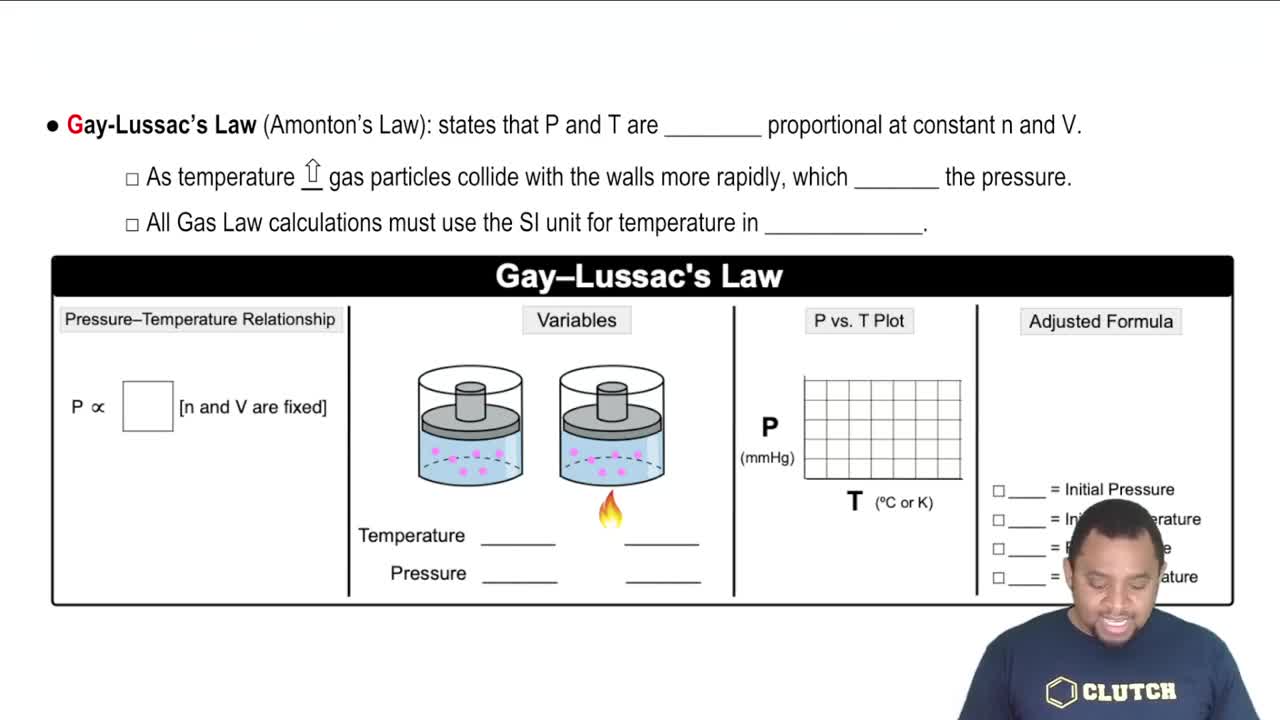
  • Gay Lussac's Law

    A rule describing the direct proportionality between pressure and temperature at constant volume and moles.
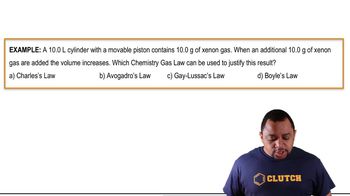
  • Avogadro's Law

    A statement that volume and moles of a gas are directly proportional when pressure and temperature are fixed.
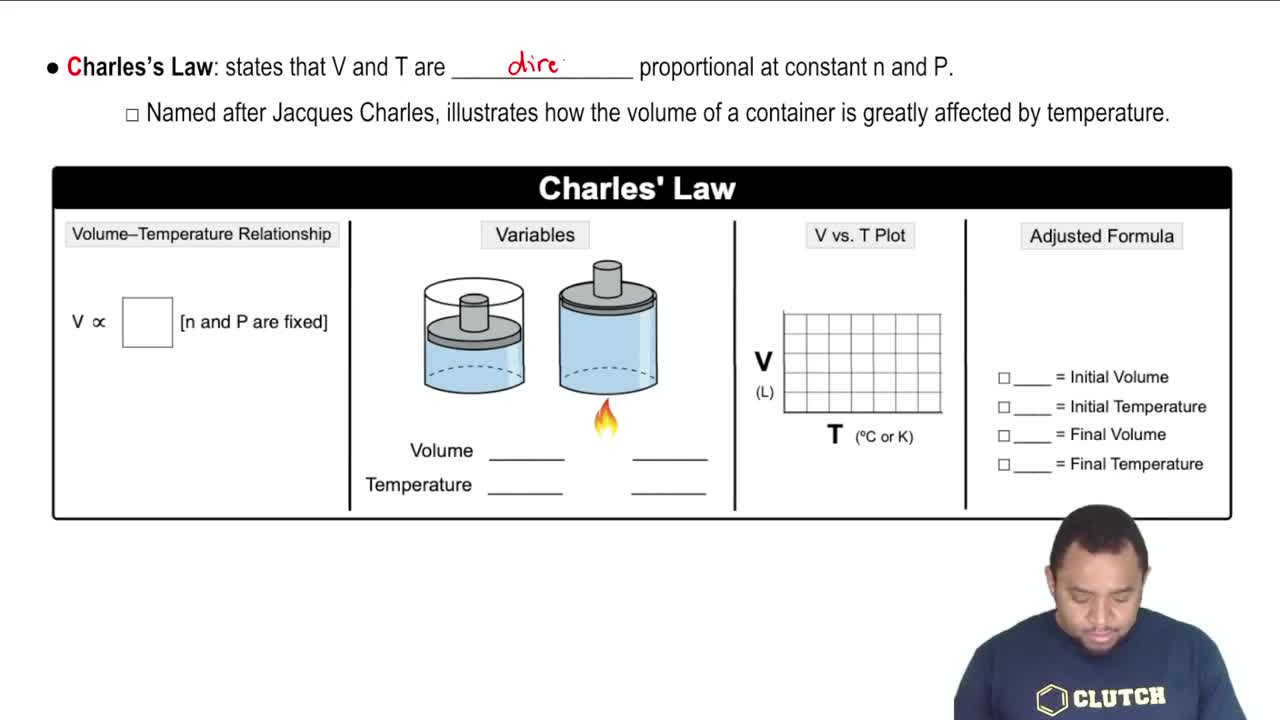
  • Charles' Law

    A law showing that volume and temperature of a gas are directly proportional at constant pressure and moles.
  • Pressure

    The force exerted per unit area by gas particles colliding with the walls of a container.
  • Volume

    The amount of three-dimensional space occupied by a gas within a container.
  • Temperature

    A measure of the average kinetic energy of gas particles, typically expressed in Kelvin for calculations.
  • Moles

    A quantity representing the number of particles or molecules present in a sample of gas.
  • Kelvin

    The SI unit for temperature, essential for gas law calculations to ensure proportional relationships.
  • Movable Piston

    A device in a container allowing volume changes, used to visualize gas law relationships experimentally.
  • Direct Proportionality

    A relationship where two variables increase or decrease together under constant conditions.
  • Inverse Proportionality

    A relationship where one variable increases as the other decreases, under fixed conditions.
  • Force

    The push or pull exerted by gas particles, contributing to the pressure inside a container.
  • Graphical Representation

    A visual depiction, such as a plot or line, illustrating how gas variables relate under different laws.