Back

Complete Ionic Equations definitions

Control buttons has been changed to "navigation" mode.
1/13
  • Complete Ionic Equation

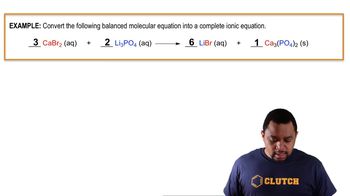
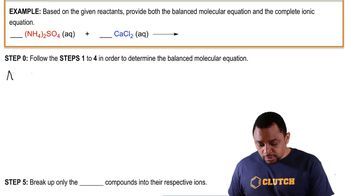
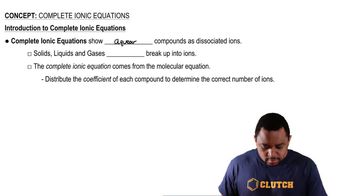
    Represents all aqueous compounds as dissociated ions, while solids, liquids, and gases remain as intact species.
  • Molecular Equation

    Initial representation of a reaction, showing all compounds together without indicating ionic dissociation.
  • Net Ionic Equation

    Highlights only the ions and compounds directly involved in the chemical change, omitting unchanged ions.
  • Spectator Ions

    Ions present on both sides of a reaction that do not participate in the actual chemical change.
  • Aqueous Compound

    Substance dissolved in water, capable of dissociating into ions in solution.
  • Solubility Rules

    Guidelines used to determine whether a compound will dissolve in water to form an aqueous solution.
  • Coefficient

    Number placed before a compound in an equation, indicating the quantity of molecules or ions involved.
  • Dissociated Ions

    Charged particles formed when an aqueous compound separates into its constituent ions in solution.
  • Solid

    State of matter in a reaction that remains intact and does not dissociate into ions.
  • Liquid

    State of matter in a reaction that remains as a whole substance and does not break into ions.
  • Gas

    State of matter in a reaction that does not dissociate into ions and remains as molecules.
  • Reactant

    Substance present at the start of a chemical reaction, found on the left side of an equation.
  • Product

    Substance formed as a result of a chemical reaction, found on the right side of an equation.