Back

Electronic Structure definitions

Control buttons has been changed to "navigation" mode.
1/13
  • Electronic Structure

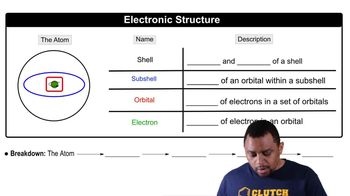
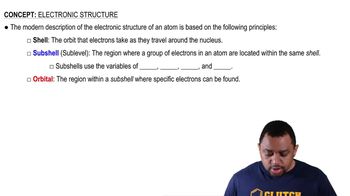
    Arrangement of electrons in shells, subshells, and orbitals, revealing their positions and spin within an atom.
  • Shell

    Principal energy level around the nucleus, indicating the size and energy of electron orbits.
  • Subshell

    Region within a shell, labeled s, p, d, or f, where groups of electrons are found and orbital shapes are defined.
  • Orbital

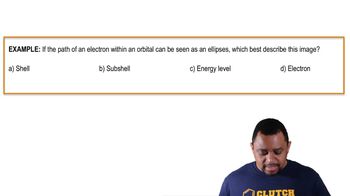
    Specific region within a subshell where a particular electron is most likely to be located, with defined orientation.
  • Electron

    Negatively charged particle found in orbitals, whose position and spin are central to atomic structure.
  • Nucleus

    Central part of an atom around which shells and electrons are arranged.
  • Spin

    Intrinsic property of electrons, describing their clockwise or counterclockwise rotation within an orbital.
  • s Subshell

    Type of subshell with a spherical shape, capable of holding up to two electrons.
  • p Subshell

    Type of subshell with a dumbbell shape, containing three orbitals and holding up to six electrons.
  • d Subshell

    Type of subshell with more complex shapes, containing five orbitals and holding up to ten electrons.
  • f Subshell

    Type of subshell with the most complex shapes, containing seven orbitals and holding up to fourteen electrons.
  • Energy Level

    Quantized state associated with a shell, determining the energy and distance of electrons from the nucleus.
  • Orientation

    Spatial arrangement of an orbital within a subshell, specifying the direction electrons occupy.