Back

Emission Spectrum (Simplified) definitions

Control buttons has been changed to "navigation" mode.
1/12
  • Emission Spectrum

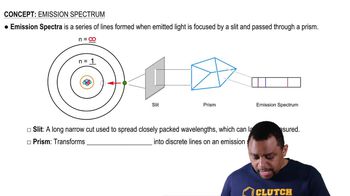
    A pattern of discrete colored lines produced when light from excited atoms is split into its component wavelengths by a prism.
  • Atom

    A basic unit of matter containing shells where electrons reside at various energy levels.
  • Shell

    A region within an atom where electrons can exist, each associated with a specific energy level.
  • Energy Level

    A quantized state within an atom that an electron can occupy, each with a distinct amount of energy.
  • Electron

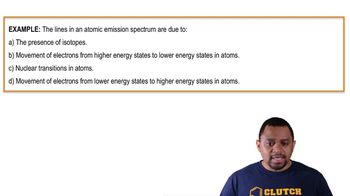
    A negatively charged particle that can move between shells, releasing energy as light when dropping to a lower state.
  • Ground State

    The lowest energy configuration of an electron within an atom, typically the first shell.
  • Slit

    A narrow opening used to focus emitted light, allowing closely packed wavelengths to be separated for analysis.
  • Prism

    A transparent optical element that splits focused light into its component wavelengths, forming distinct spectral lines.
  • Wavelength

    The distance between consecutive peaks of light waves, determining the color and energy of emitted light.
  • Frequency

    A measure of how many wave cycles pass a point per second, directly related to the energy of emitted light.
  • Discrete Line

    A distinct colored mark on the emission spectrum, each corresponding to a specific wavelength of emitted light.
  • Energy

    A quantifiable property released as light when an electron transitions to a lower shell within an atom.