Back

Galvanic Cell (Simplified) quiz

Control buttons has been changed to "navigation" mode.
1/15
  • What is another name for a galvanic cell?

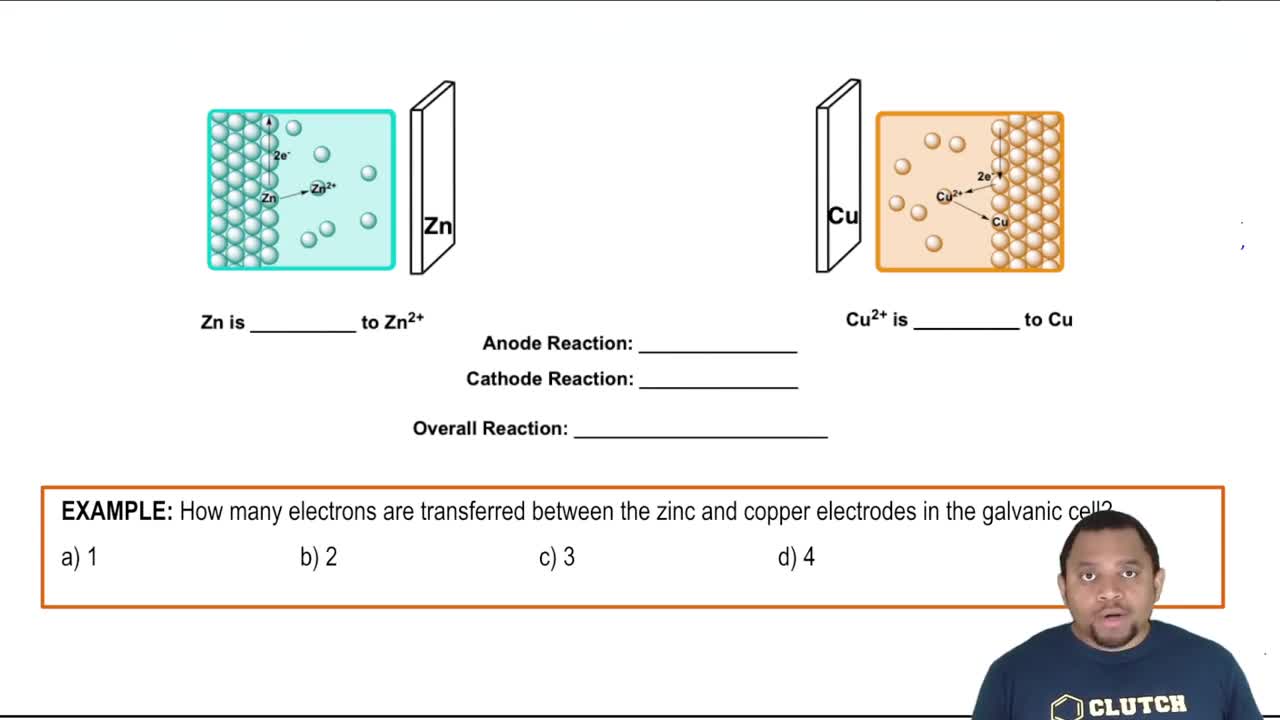
    A galvanic cell is also known as a voltaic cell.
  • What type of energy conversion occurs in a galvanic cell?

    A galvanic cell converts stored chemical energy into electrical energy.
  • Which electrode is negatively charged in a galvanic cell?

    The anode is negatively charged in a galvanic cell.
  • At which electrode does oxidation occur in a galvanic cell?

    Oxidation occurs at the anode in a galvanic cell.
  • What is the charge of the cathode in a galvanic cell?

    The cathode is positively charged in a galvanic cell.
  • What process occurs at the cathode in both galvanic and electrolytic cells?

    Reduction occurs at the cathode in both types of cells.
  • In which direction do electrons flow in a galvanic cell?

    Electrons flow from the anode to the cathode in a galvanic cell.
  • What is the function of the salt bridge in a galvanic cell?

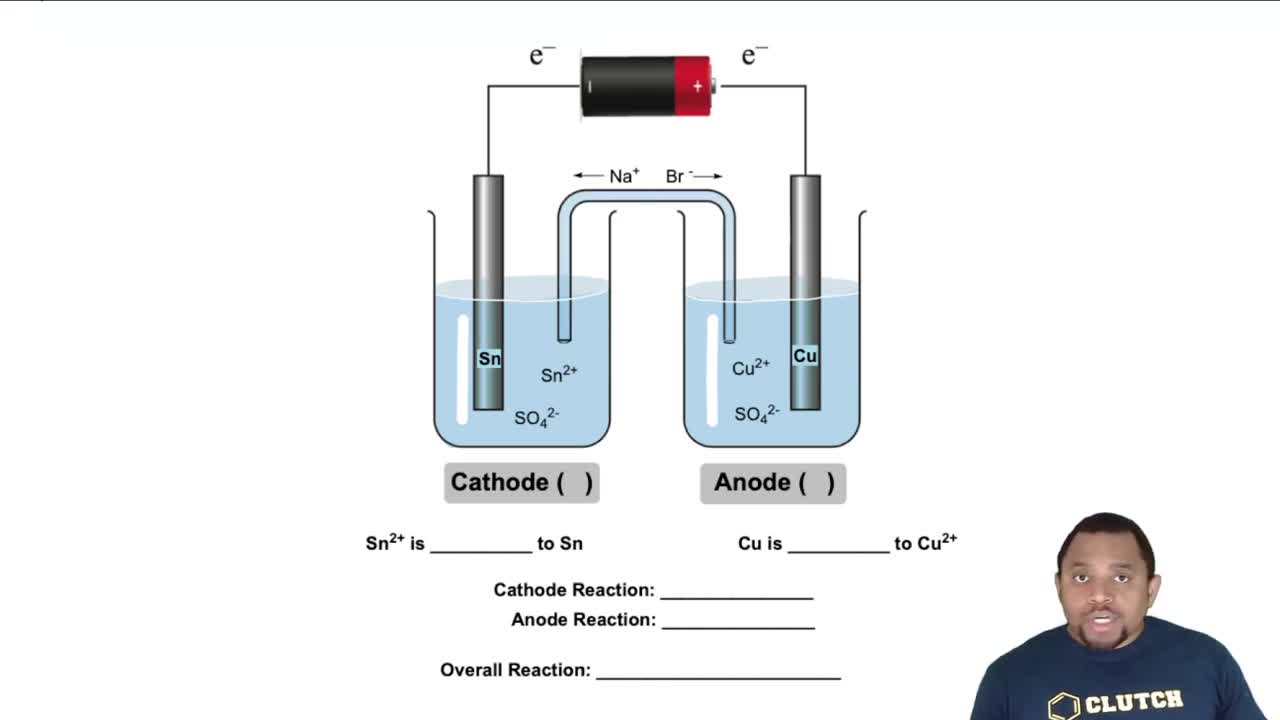
    The salt bridge allows the flow of neutral ions and helps close the electrical circuit.
  • Why must the ions in the salt bridge be neutral in a galvanic cell?

    The ions must be neutral to avoid introducing acidic or basic properties that could disrupt the cell's function.
  • How is the electricity generated by a galvanic cell measured?

    It is measured using a voltmeter.
  • What is the main difference in energy requirements between a galvanic cell and an electrolytic cell?

    A galvanic cell generates electricity spontaneously, while an electrolytic cell requires external electrical energy to operate.
  • How do the charges of the electrodes differ in an electrolytic cell compared to a galvanic cell?

    In an electrolytic cell, the cathode is negative and the anode is positive, which is the opposite of a galvanic cell.
  • What is the role of a battery in an electrolytic cell?

    A battery provides the external energy needed to drive the non-spontaneous reaction in an electrolytic cell.
  • What do both galvanic and electrolytic cells have in common regarding the anode and cathode?

    In both cells, the anode is the site of oxidation and the cathode is the site of reduction.
  • Give an example of a practical application of an electrolytic cell.

    Electrolytic cells are used in rechargeable batteries such as AA, AAA, and lithium batteries.