Back

Intro to Coenzymes definitions

Control buttons has been changed to "navigation" mode.
1/15
  • Dehydrogenases

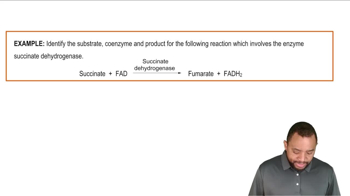
    A group of oxidoreductases that require coenzymes to catalyze redox reactions, especially in metabolic pathways.
  • Oxidoreductases

    Enzymes that facilitate electron transfer in redox reactions, often using coenzymes for activity.
  • Coenzymes

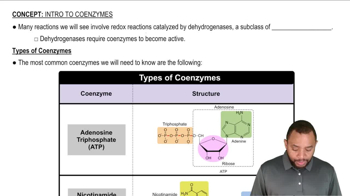
    Non-protein molecules essential for enzyme activity, often acting as carriers in metabolic reactions.
  • ATP

    A molecule with adenine, ribose, and three phosphates, serving as a universal energy currency in cells.
  • NAD+

    A coenzyme with adenosine diphosphate, CH2 group, ribosugar, and nicotinamide, crucial for redox reactions.
  • FAD

    A coenzyme containing adenosine diphosphate, ribitol, and flavin, involved in electron transfer.
  • Coenzyme A

    A molecule with adenosine diphosphate, pantothenic acid, and aminoethanethiol, vital for acyl group transfer.
  • Adenosine Diphosphate

    A core structural component found in several coenzymes, consisting of adenosine and two phosphate groups.
  • Nicotinamide

    A nitrogen-containing portion of NAD+ responsible for accepting electrons during redox reactions.
  • Ribose

    A five-carbon sugar present in ATP and other coenzymes, forming part of their backbone.
  • Ribitol

    An alcohol component of FAD, linking adenosine diphosphate to flavin.
  • Flavin

    A chemical group in FAD that participates in electron transfer during metabolic reactions.
  • Pantothenic Acid

    A vitamin-derived component of Coenzyme A, essential for acyl group activation.
  • Aminoethanethiol

    A sulfur-containing group in Coenzyme A, providing a reactive site for acyl group attachment.
  • Citric Acid Cycle

    A central metabolic pathway where coenzymes like NAD+ and FAD play key roles in energy production.