Back

Intro to Hydrocarbons definitions

Control buttons has been changed to "navigation" mode.
1/14
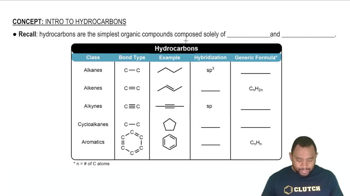
  • Hydrocarbon

    Organic molecule made only of carbon and hydrogen atoms, forming the foundation of organic chemistry.
  • Alkane

    Compound with only single bonds between carbons, allowing maximum hydrogen attachment and free bond rotation.
  • Alkene

    Compound featuring at least one carbon-carbon double bond, resulting in fewer hydrogens and restricted rotation.
  • Alkyne

    Compound containing a carbon-carbon triple bond, further reducing hydrogen count and preventing bond rotation.
  • Cycloalkane

    Ring-shaped molecule with only single bonds, sharing the same formula as alkenes but with a closed structure.
  • Aromatic Hydrocarbon

    Compound with a benzene ring structure, characterized by alternating double bonds and unique stability.
  • Benzene Ring

    Six-carbon ring with alternating double bonds, each carbon bonded to one hydrogen, showing a 1:1 C:H ratio.
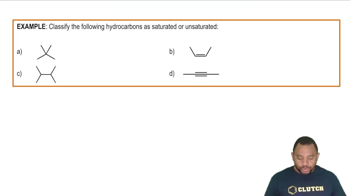
  • Saturated Hydrocarbon

    Molecule where all carbon bonds are single, maximizing hydrogen atoms attached to the carbon skeleton.
  • Unsaturated Hydrocarbon

    Molecule containing at least one double or triple bond, resulting in fewer hydrogens than the saturated form.
  • Pi Bond

    Type of bond formed in double or triple bonds, restricting rotation and reducing hydrogen attachment.
  • Hybridization

    Mixing of atomic orbitals in carbon, determining bond angles and structure, such as sp3, sp2, or sp.
  • Molecular Formula

    Representation showing the number of carbon and hydrogen atoms in a hydrocarbon, varying by bond type.
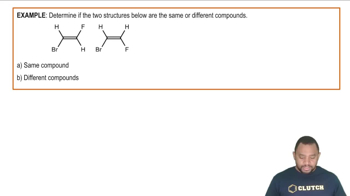
  • Free Rotation

    Ability of single bonds in alkanes to allow atoms or groups to spin around the bond axis.
  • Spatial Orientation

    Fixed arrangement of atoms in molecules with double or triple bonds, leading to distinct compounds.